
REVIEW · LISBON
Lisbon: Dolphin Watching with Marine Biologist – Small Group
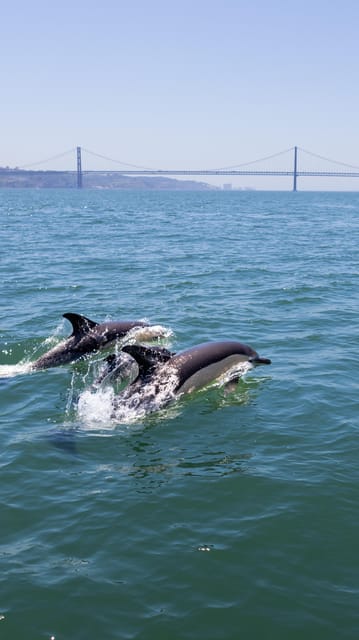
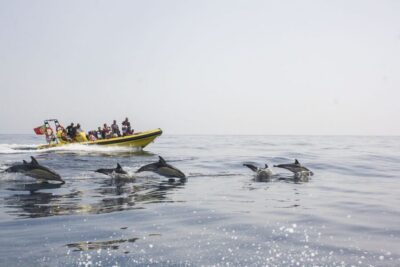
Seeing a pod of wild dolphins race beside a speedboat is the headline here, but the better story is how the trip finds a balance between excitement and respect for marine life. You leave Lisbon on the Tagus, head into open water, and learn from a marine biologist while the crew collects useful cetacean data for Oceanário de Lisboa and ICNF.
I like two things especially: the real conservation connection, and the way the return trip turns into a floating sightseeing tour, with views toward Belém Tower, the 25 de Abril Bridge, and the Fort of São Lourenço do Bugio. The main consideration is simple: dolphins are free animals, not performers, and rough seas can mean a bumpy ride or no sighting at all.
Key points to know
- Wildlife success rate: The operator reports dolphin sightings on 97% to 98% of trips, but no encounter is guaranteed.
- Marine biologist onboard: Expect facts about dolphin behavior, species, and the wider ocean environment in English, Portuguese, or Spanish.
- Three-hour route: The boat leaves Doca de Santo Amaro, crosses the Tagus, reaches the Atlantic near Cascais, and returns along Lisbon’s waterfront.
- More than dolphins: Whales, seabirds, sunfish, and other coastal wildlife may appear.
- Useful comfort detail: Windbreakers, coffee, tea, and pastel de nata may be available at the Oceanic Lounge, but bring warm layers anyway.
- Best for active visitors: This is a speedboat outing, so it suits people who enjoy movement and can handle wind, waves, and a firm boat seat.
From Mercedes-Benz lounge to open Atlantic water
Your meeting point is the Mercedes-Benz Oceanic Lounge at Doca de Santo Amaro, Armazém 17, below the 25 de Abril Bridge. The lounge gives you a more polished start than a simple dock departure. You can sit down, use the restroom, have coffee, and receive a safety briefing before boarding.
The lounge is also where you get your first introduction to the dolphins and the work behind the trip. The marine biologist explains what you may see and how to behave around wild animals. This matters because the aim is not to chase or feed dolphins. The crew keeps its distance, avoids touching marine life, and treats the boat as a research platform as well as a sightseeing vessel.
The boat is modern and operated by a professional skipper and crew. Exact boat capacity is not provided, but the activity is described as a small-group experience, with a private group option available. That generally means you should expect a more personal setting than a large sightseeing cruise, though you should confirm the exact group size when booking if that is important to you.
More Dolphin Watching Trips in Portugal
- Lisbon: Tagus River Cruise to the Ocean & Dolphin Watching
★ 4.0 · 3,019 reviews - From Funchal: Ecological Catamaran Dolphin Whale Watching
★ 4.5 · 8,204 reviews - Albufeira: Benagil Caves & Dolphin Watching Speed Boat Tour
★ 4.6 · 6,316 reviews
Crossing the Tagus beneath Lisbon’s landmarks
The boat first moves out from Doca de Santo Amaro and onto the Tagus River. This part is not just a transfer to the ocean. It gives you a fresh look at Lisbon’s waterfront, with the 25 de Abril Bridge overhead and the city opening behind you.
You may hear about the monuments as you pass them, especially on the return. The river section also gives the marine biologist time to explain the differences between river, coastal, and open-sea conditions. Keep your camera ready, but do not spend the whole crossing staring at your screen. The views change quickly, and the boat’s movement makes photography less easy than it looks from the dock.
The speedboat itself is part of the attraction. Several outings have included quick turns and playful movement over the waves, while skilled skippers have kept the ride controlled. That makes the trip feel like two experiences in one: a wildlife search and a lively boat ride across Lisbon’s water.
The tradeoff is comfort. Even on a hot summer day, the wind offshore can feel cold. The operator may provide windbreakers, but I would still bring your own light jacket and wear secure, comfortable shoes. High heels are not allowed, and loose or delicate clothing is a poor match for a fast boat.
Searching for dolphins in open water
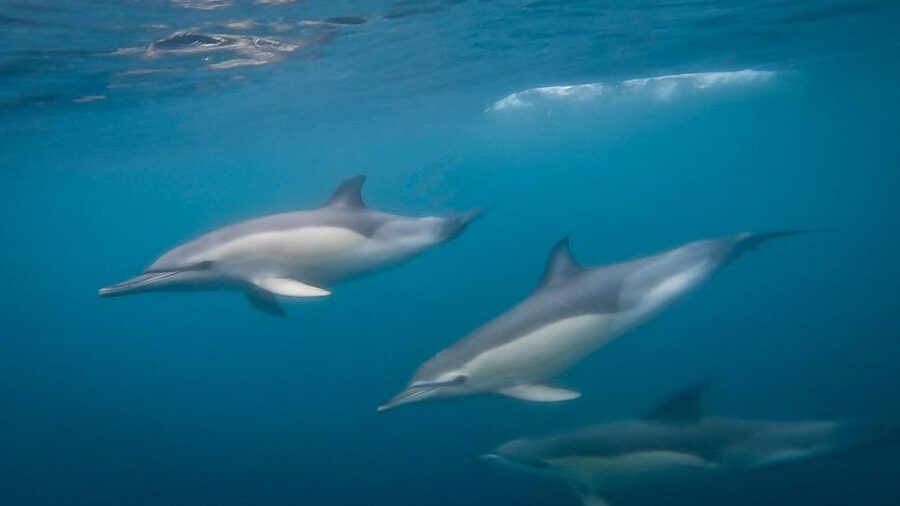
Once the boat reaches the Atlantic, the focus shifts fully to wildlife. The crew scans the water and communicates with other boats when useful. That network can help locate active pods, but it does not turn the animals into a scheduled attraction. You may see dolphins quickly, or you may spend much of the trip searching.
The operator reports a 97% to 98% sighting success rate from its own records. That is an unusually strong figure, but it should not be read as a promise for your particular departure. One especially useful point is that even a successful outing may involve a long wait. On one trip, the boat found no dolphins until roughly three-quarters of the way through the route, then located a pod of about 30 animals and watched them for around 20 minutes.
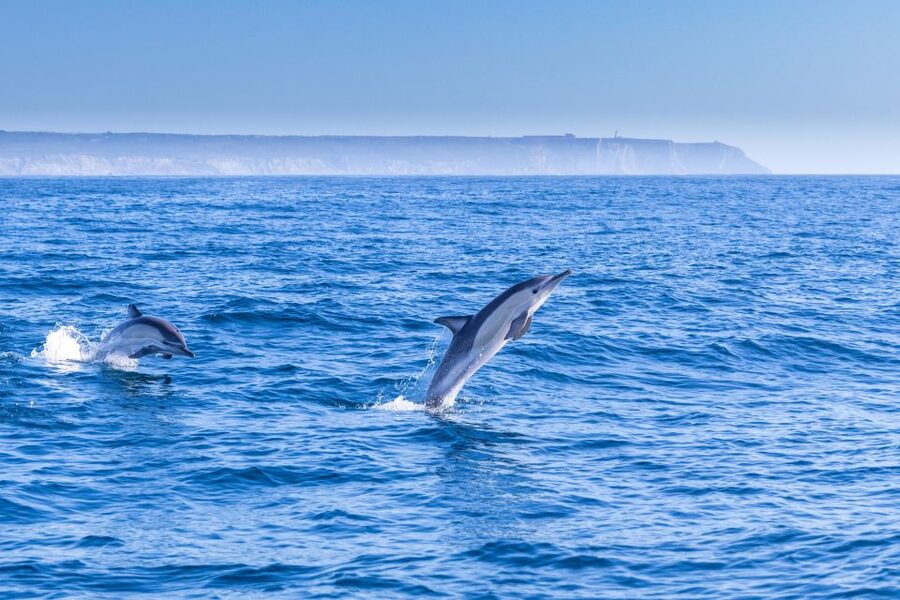
That is the right mindset for this activity. The search is part of the experience. You are watching the crew read the water, weather, and reports from other vessels. If a pod appears, the reward is a natural encounter, with dolphins swimming, leaping, feeding, or riding the wake. The best moments may last only seconds, so stay alert.
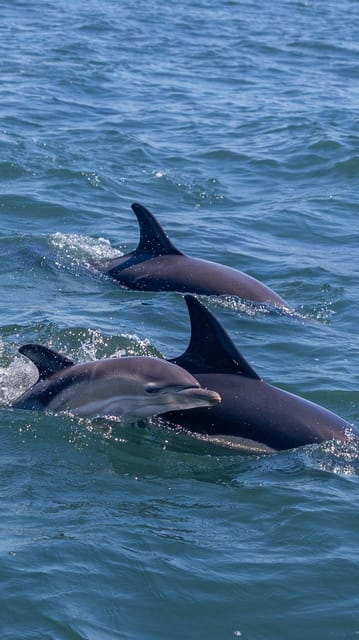
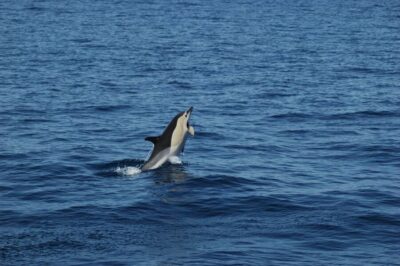
The animals can be common dolphins or bottlenose dolphins, and different pods may behave in very different ways. Some keep their distance. Others come close to the boat or play in the waves. Young dolphins and mothers have also been spotted, but sightings of babies, whales, or unusual species are luck rather than part of the standard promise.
What the marine biologist adds
The guide is not simply there to point at fins. The marine biologist explains dolphin types, habits, social behavior, and the pressures facing the ocean. The exact guide changes by departure, with names including Mariana, Vanessa, Maria, Inês, Raquel, and others appearing in the operating team.
Mariana has been praised for explaining the animals with warmth and energy, while Vanessa has been singled out for clear introductions and strong knowledge of underwater life. Raquel and her skipper have also been noted for explaining how to respect nature and our place in it. You should not assume one particular guide will lead your trip, but the marine biology role is a core part of the format.
The educational side makes the experience worthwhile even during a slow wildlife search. You learn to look for more than a dramatic jump. A fin pattern, a change in water movement, a cluster of seabirds, or the direction of other boats can all matter.
The trip also supports real-time cetacean monitoring through work connected with Oceanário de Lisboa and ICNF. Data collection gives the outing a purpose beyond entertainment. It does not make the activity a formal research expedition, but it does link your visit to ongoing marine observation in Portugal.
More Dolphin Watching Trips in Lisbon:
- Tenerife: Eco-Yacht Whale and Dolphin Watching and Swimming
★ 4.7 · 15,619 reviews - Los Cristianos Respectful No-Chase Whale and Dolphin Safari
★ 4.6 · 12,782 reviews - Benalmadena: Dolphin Watching Boat Tour
★ 4.4 · 5,786 reviews - Funchal: Dolphin and Whale Watching Catamaran Cruise
★ 4.5 · 5,697 reviews
Fort of São Lourenço do Bugio and the Atlantic edge
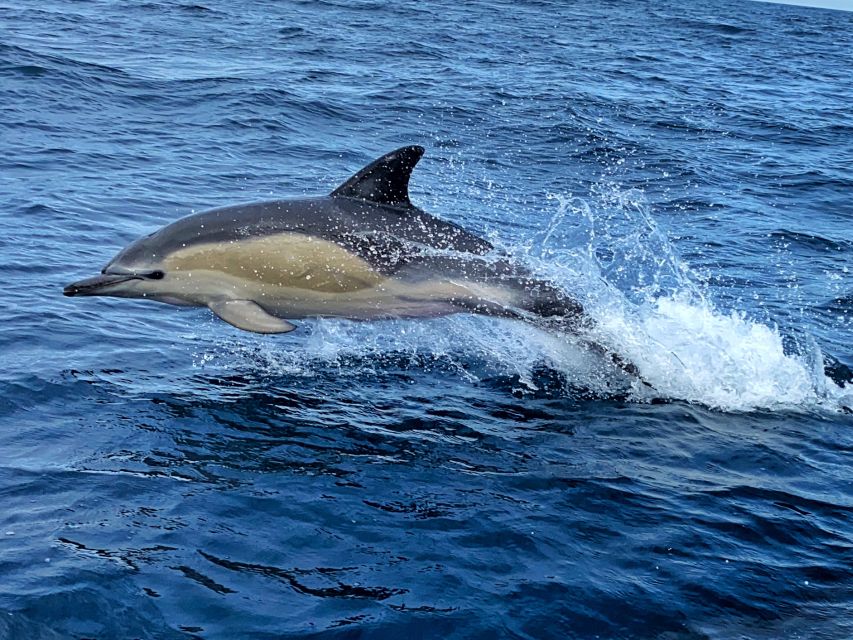
The Fort of São Lourenço do Bugio is one of the route’s most striking sights. Built offshore at the mouth of the Tagus, the circular fort marks the point where river traffic meets the Atlantic. From a boat, you get an angle that is very different from the usual city walk or road tour.
The fort is used as a scenic pass-by and photo stop rather than a land visit. You should not expect to disembark or explore its rooms. Its value here is visual: it gives the route a clear sense of place and shows how Lisbon’s river entrance was protected.
The open water around the fort can also bring stronger wind and more movement. If you are prone to seasickness, eat a good breakfast before departure and avoid milk and yogurt, as the operator advises. Keep your eyes on the horizon when the boat gets rough, and tell the crew if you feel unwell. One outing included a passenger who became seasick and received attentive care, but prevention is still your best plan.
Cascais coast and wildlife beyond dolphins
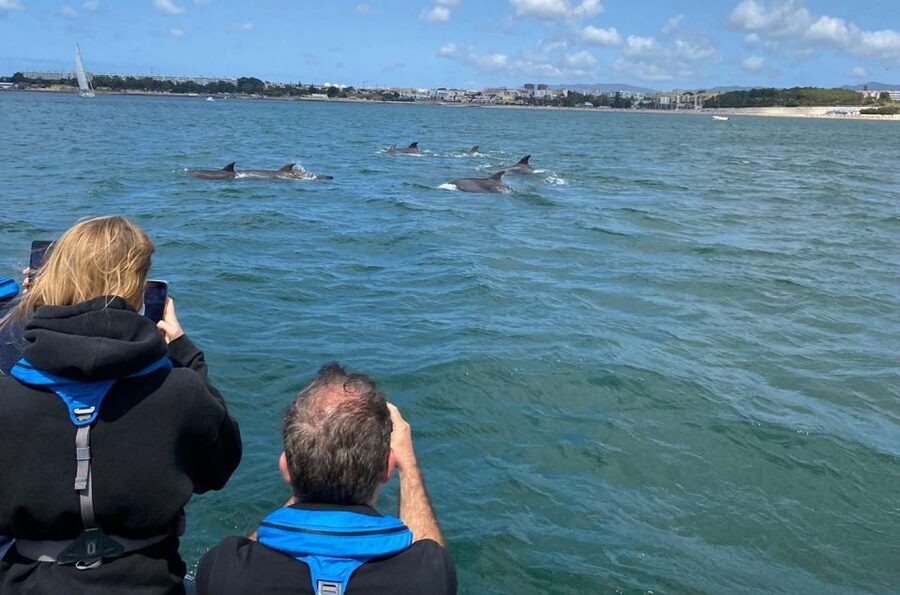
The route continues toward the Cascais area, identified in the itinerary as a photo stop near JJC6+RP Cascais. Here you get broad coastal views and a better sense of the Atlantic shore outside Lisbon’s urban waterfront.
This section is where extra wildlife may appear. Whales, seabirds, and sunfish have all been seen on different trips. There have also been sightings of multiple dolphin species, including bottlenose dolphins, and occasional reports of orcas or a minke whale. Those rarer animals are never guaranteed, so book this as a dolphin-watching tour, not as a whale or orca expedition.
The boat does not use food to draw animals closer. Feeding wildlife is prohibited, as is littering. That may sound basic, but it is important when a boat is operating close to wild creatures. The guide’s explanations help you understand why a calm approach and limited disturbance matter.
The farther you go from the city, the more weather becomes a factor. Wind, gusts, cloud cover, swell, wave height, and currents can change the feel of the trip. The company monitors conditions and may cancel for safety, offering another date or a full refund. Check the forecast yourself and keep some flexibility in your Lisbon schedule.
The return trip turns into waterfront sightseeing

After the wildlife search, the boat heads back toward Lisbon. This is when the outing changes character. You have already spent time watching open water, and now the city landmarks return in a new frame.
You may pass views of Belém Tower and the 25 de Abril Bridge, with the waterfront spread along the river. The return is a useful bonus because you get a city tour without sitting on a standard sightseeing bus. The river perspective also helps you understand Lisbon’s location, with the historic core facing a broad waterway that opens directly toward the Atlantic.
The skipper may add some lively turns near the end, depending on conditions and the crew’s judgment. That can be fun, especially for people who enjoy speedboats, but it is not the calmest possible way to finish. If you want a quiet cruise, this may feel more energetic than expected.
Back at the Oceanic Lounge, you can sit down and recover from the wind and motion. Coffee, tea, and pastel de nata have been offered after some departures, though food and drinks are not formally included in the listed package. Treat those refreshments as a possible lounge perk rather than something to rely on for lunch.
Is $61 a fair price?
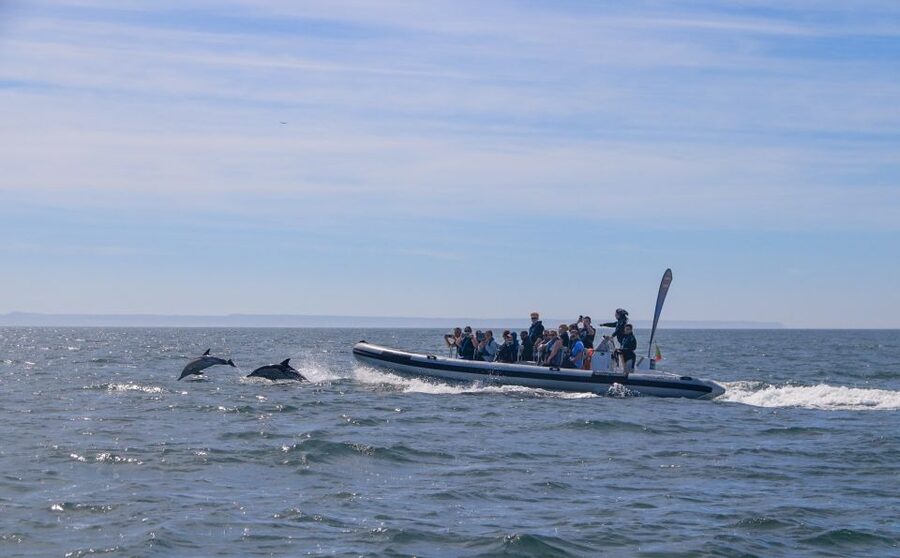
At $61 per person, the cost is reasonable for a three-hour small-group boat trip with a marine biologist, crew, fuel, insurance, life jackets, and lounge access. You are paying for much more than transport. The fee covers a fast boat ride, an organized search over river and ocean waters, an educational guide, and a chance to support marine monitoring.
The value is strongest if you would otherwise book both a Lisbon waterfront cruise and a separate wildlife activity. This does not replace a full city tour, since the monument commentary is only part of the return route, but it gives you an unusual view of Lisbon while pursuing a genuine nature experience.
The price feels less attractive if you need guaranteed wildlife, dislike sitting in a moving boat, or want a slow, quiet outing. No operator can control wild dolphins, and rough conditions may limit both comfort and visibility. For many people, the boat ride and city views still make the day worthwhile, but you should be honest about what kind of activity you enjoy.
Free cancellation is available up to 24 hours before departure, and you can reserve now and pay later. The advertised languages are English, Portuguese, and Spanish. Hotel pickup and drop-off are not included, so plan your way to Doca de Santo Amaro.
Who should book this dolphin tour?
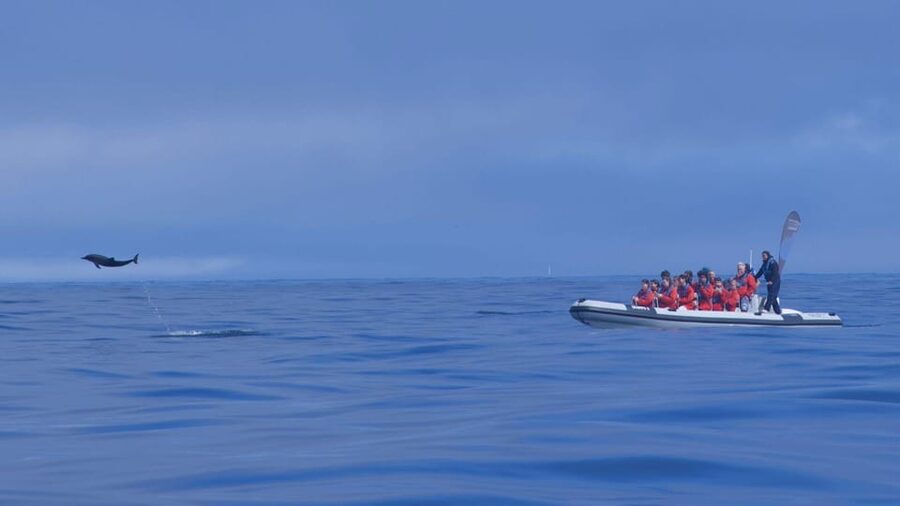
I would recommend it to nature lovers, first-time Lisbon visitors who want something beyond museums, families with children aged five and up, and anyone who enjoys an active boat ride. It works especially well for people who want wildlife encounters without giving up city sightseeing.
Children can have a wonderful time, but younger passengers may be more sensitive to wind, sun, and seasickness. Bring water, dress in layers, and explain beforehand that the dolphins are wild and may not appear on cue.
I would not choose it for children under five, pregnant people, wheelchair users, people with back problems, or anyone recovering from recent surgery. The boat ride can be firm and bumpy, and the activity is not suitable for every body.
Wear comfortable clothes and shoes, bring a windbreaker, and avoid alcohol before the trip. Smoking, drugs, feeding animals, touching marine life, and littering are not allowed. If the weather turns poor, the company may cancel at least 48 hours ahead and offer another date or a full refund.
Should you book it?
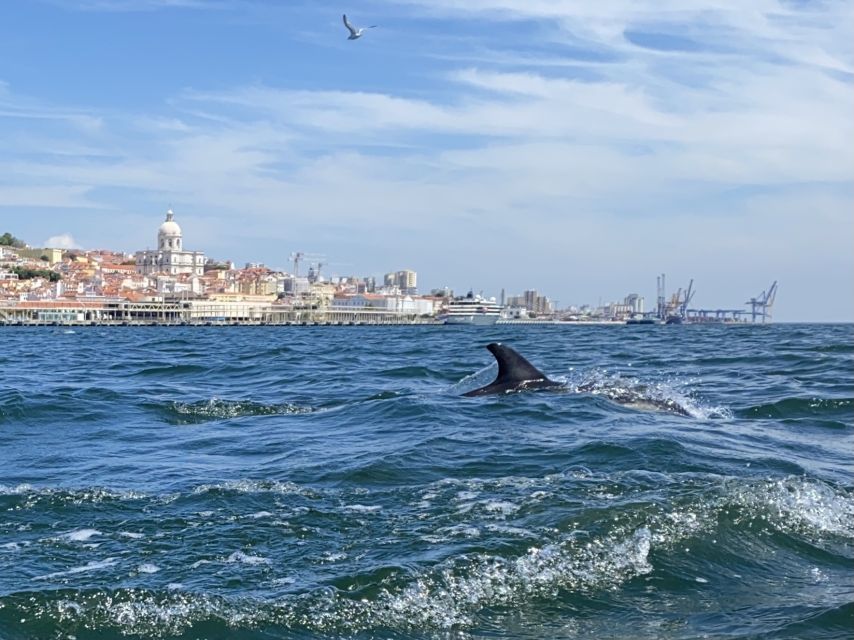
Book this tour if you want your dolphin encounter to feel natural, educational, and connected to conservation work. The reported sighting rate is high, the guides bring real marine science to the outing, and the return past Lisbon’s landmarks adds value to the three-hour route.
Skip it if you need a guaranteed animal sighting or find speedboats uncomfortable. For everyone else, $61 buys a memorable mix of ocean wildlife, useful learning, and some of Lisbon’s best waterfront views. Just bring a jacket, allow for changing conditions, and enjoy the search as much as the moment a pod finally appears.
FAQ
Where does the dolphin-watching tour meet?
You meet at the Mercedes-Benz Oceanic Lounge, Doca de Santo Amaro, Armazém 17, below the 25 de Abril Bridge.
How long does the activity last?
The boat experience lasts three hours.
What languages are available?
Live guides are available in English, Portuguese, and Spanish.
Is dolphin watching guaranteed?
No. Dolphins are wild animals and may not appear. The operator reports sightings on 97% to 98% of its tours based on its own records.
What other wildlife might I see?
You might see whales, seabirds, sunfish, and other coastal wildlife. Different dolphin species have also been observed.
What is included in the price?
The package includes Oceanic Lounge access, a marine biologist, the boat tour, insurance, a life jacket, crew, and fuel.
Is hotel pickup included?
No. Hotel pickup and drop-off are not included.
What should I bring?
Bring comfortable shoes, comfortable clothing, and a windbreaker. Even on a hot day, it can feel cold and windy on the ocean.
Who should not take this tour?
The activity is not suitable for children under five, pregnant women, people with back problems, wheelchair users, or people with recent surgeries.
Just added around Lisbon
- Lisbon: Tagus River Sailboat City Cruise★ 4.9 · 1,212 reviews
- Lisbon: Tagus River Cruise, Morning, Day, Sunset, or Night★ 4.9 · 640 reviews
- Lisbon: Tagus River Sunset Cruise with Drinks★ 5.0 · 330 reviews
- Lisbon: Sunset Sailing with Portuguese Wine and History★ 5.0 · 270 reviews
- Lisbon: Sunset Sailing Cruise with Wine★ 4.9 · 800 reviews
- Lisbon: Sunset Cruise with Drinks★ 4.8 · 549 reviews
- Lisbon: Sailboat Tour w/ Local Guide and Open Bar Green Wine★ 4.9 · 625 reviews
- Lisbon: Enjoy a Sunset or Night Tagus River Sailboat Cruise★ 4.9 · 306 reviews
Dolphin Watching, compared.
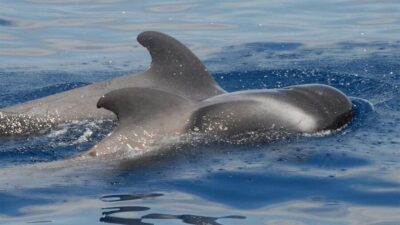
Eco-Yacht Whale and Dolphin Watching and Swimming
Read our review →
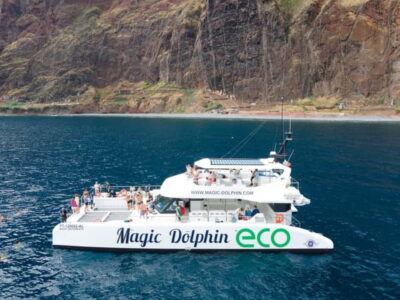
Benagil Caves & Dolphin Watching Speed Boat Tour
Read our review →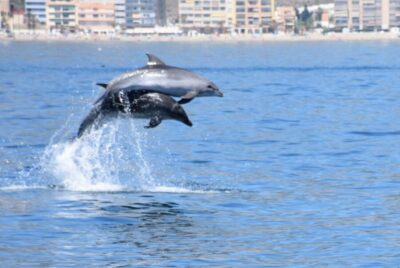
Whale & Dolphin Eco-Cruise with Snacks & Drinks
Read our review →
Catamaran Dolphin Watch Cruise with Snorkeling
Read our review →Browse the lists this tour appears in