
REVIEW · LISBON
Lisbon: River Tagus Sightseeing Cruise in Traditional Vessel
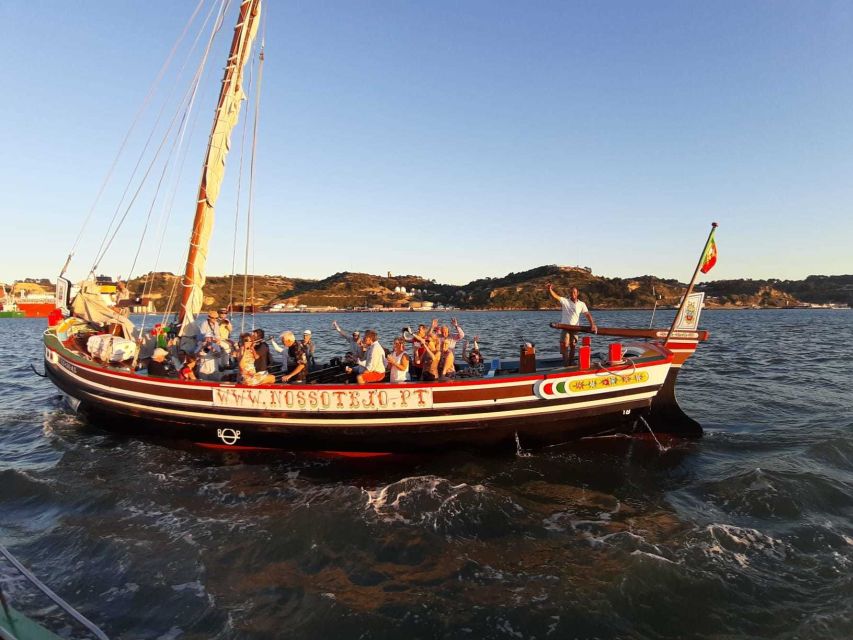
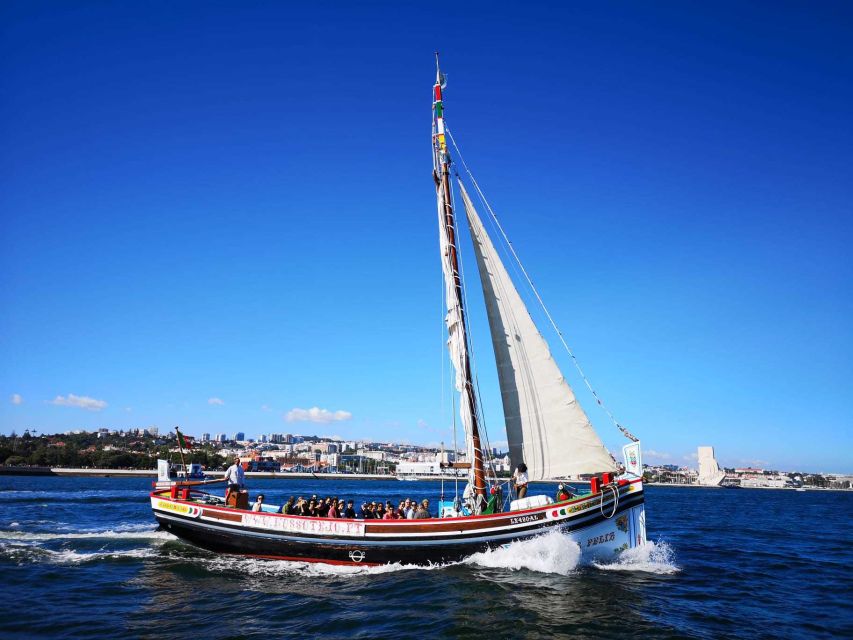
Lisbon looks different from the Tagus. This 1947 hand-painted cargo boat gives you a low-key, old-fashioned way to see the city from the water, rather than from a modern sightseeing vessel. Only seven boats of this size remain, and each is recorded by Portugal’s Navy Museum.
I like the cruise for two clear reasons: you get broad views of Lisbon’s hills and major monuments in one 105-minute ride, and the live guide helps turn a pretty boat trip into a useful introduction to the city. Blankets may be available if the wind picks up, but bring comfortable clothes and expect an open-water breeze.
The one drawback is that the guide may be speaking in several languages, so the commentary can feel brief. If you want a long, detailed history lesson, this may leave you wanting more. If you want an easy first look at Lisbon with excellent photo views, it is a strong choice.
Key points to know before you board
- A genuine 1947 vessel: The hand-painted flowers and traditional cargo-boat design give the ride more character than a standard modern ferry.
- A full 105-minute route: You see central Lisbon, the waterfront, Christ the King, and the main monuments of Belém without arranging several separate stops.
- Live commentary in four languages: English, Spanish, Portuguese, and French are available, though multilingual narration can limit the amount of detail.
- Excellent views of Lisbon’s hills: From the river, you can see Castelo de São Jorge, Lisbon Cathedral, and the city rising above the waterfront.
- Belém from the water: Jerónimos Monastery, Belém Tower, and the Discoveries Monument are especially easy to appreciate from this angle.
- A modest price: At $28 per person, the cruise offers good value if you want orientation, photos, and a relaxed ride in one outing.
Why this traditional boat makes the ride special
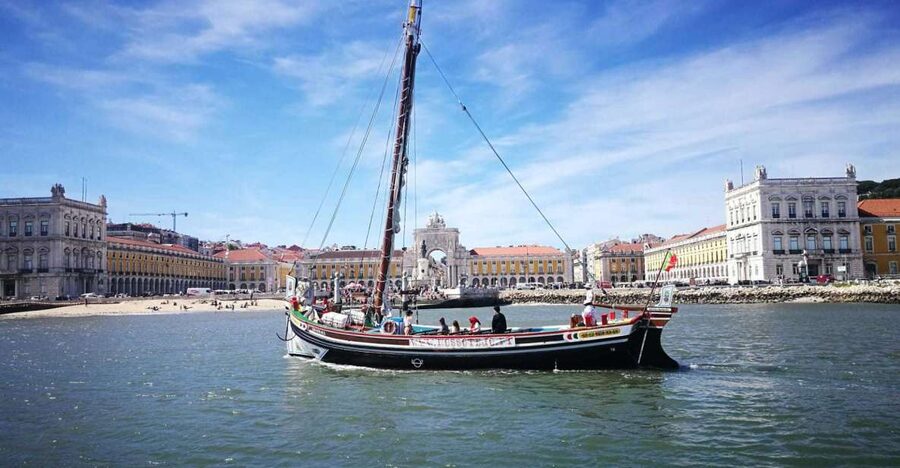
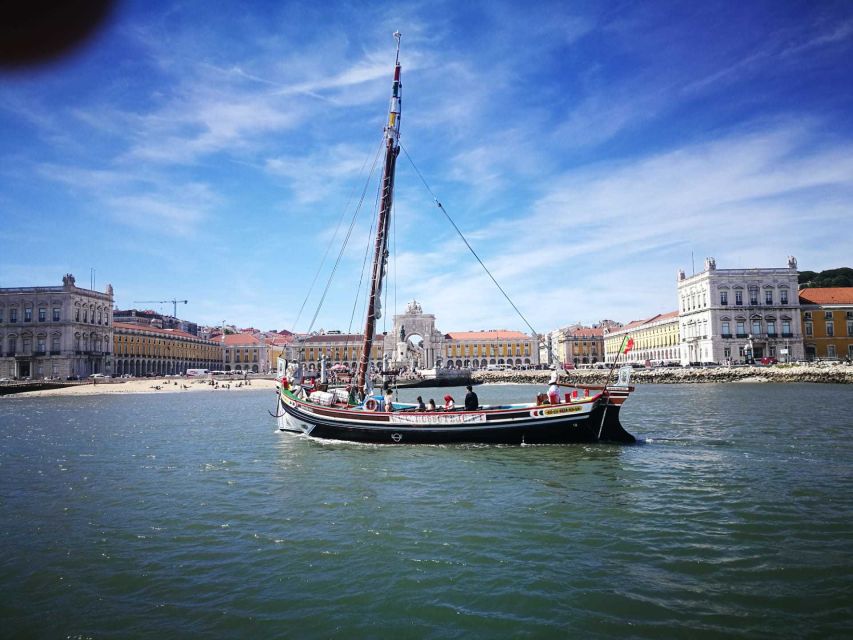
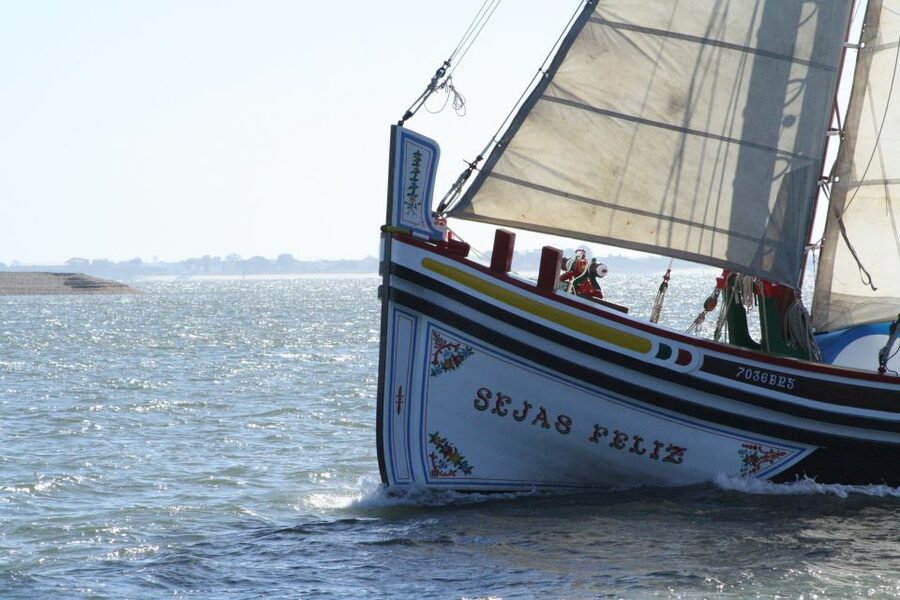
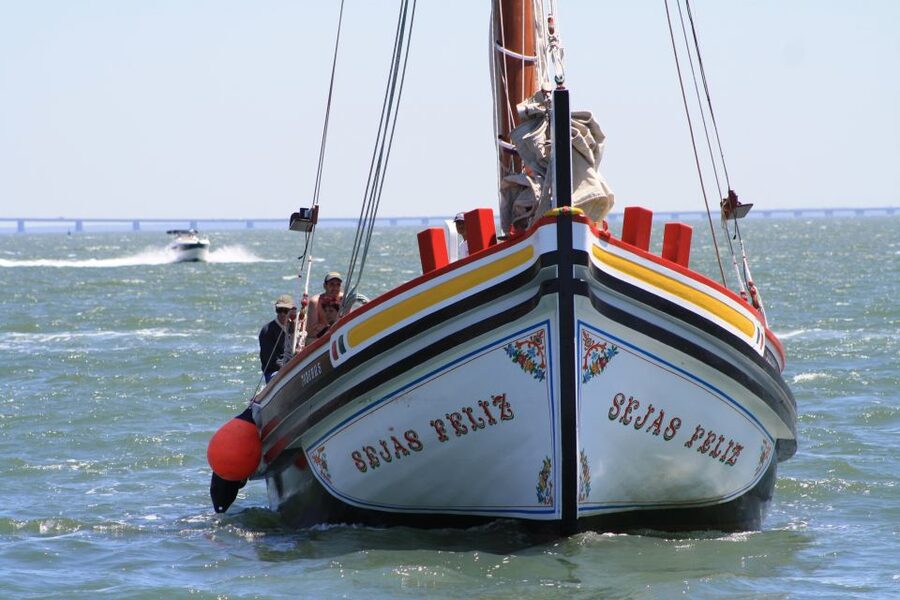
The boat is the main reason to choose this cruise. It is not simply transportation with a guide attached. It is a traditional cargo boat built in 1947, painted by hand with flowers. The decoration adds a touch of local character without turning the experience into a staged show.
Only seven boats of this size remain, and they are inscribed in the Navy Museum. That gives the vessel real historical value. You are riding on a surviving piece of Portugal’s working river life, not just looking at the Tagus from a generic tour boat.
I like this kind of detail because it changes how you see the ride. The boat itself becomes part of the sightseeing. Take a moment before departure to look at its shape, paintwork, and working-boat design. The vessel is smaller and more personal in feel than a large cruise ship, though the tradeoff is that wind and movement on the river can be more noticeable.
This is a sightseeing cruise, not a meal cruise or a luxury boat outing. Food and drinks are not included. You are paying for the historic vessel, the guide, and the route through Lisbon’s most important riverfront areas.
More Sightseeing Cruises in Lisbon:
- Lisbon: Tejo River Sightseeing Cruise
★ 4.2 · 2,799 reviews - Lisbon: Tagus River Sailboat City Cruise
★ 4.9 · 1,212 reviews - Budapest: City Highlights Sightseeing Cruise
★ 4.6 · 43,981 reviews
Starting at Praça do Comércio
The meeting point is beside Terreiro do Paço, also known as Praça do Comércio. Look for the first white building by the river on the left side of the square and ticket office number 8. You should arrive 15 minutes early, since finding the correct river office may take a little time in a large square.
Praça do Comércio is an excellent place to begin. The broad riverside square was rebuilt after the earthquake of 1755 and remains one of Lisbon’s best-known public spaces. From the boat, its grand buildings and open waterfront arrangement make more sense than they do from street level.
The first part of the route covers the waterfront between Praça do Comércio and Cais do Sodré, including Ribeira das Naus. This stretch is closely tied to Portugal’s seafaring past. Ribeira das Naus was where ships connected to Portuguese exploration were built, so the river here is more than a scenic backdrop.
The guide provides live commentary during the trip. English, Spanish, Portuguese, and French are offered. The quality of the explanation will depend partly on the pace of the language rotation. A guide may need to repeat information in three languages, which helps multilingual groups but leaves less time for lengthy stories in any one language.
That is worth knowing before you book. The commentary gives you useful context and points out the sights, but this is not designed as a specialist lecture. You will get the most from it if you also pay attention to the views and use the cruise as a first orientation to Lisbon.
Lisbon’s hills, castle, and cathedral from the Tagus
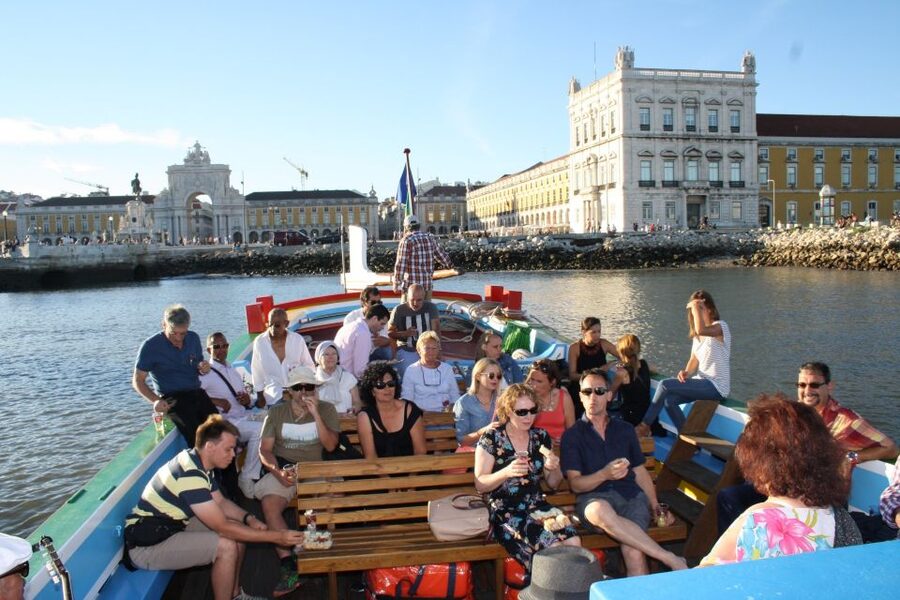
The river offers a clean view back toward the old center. Lisbon is built across seven hills, and from the Tagus you can see how sharply the city rises from the water. Streets, rooftops, churches, and lookout points stack above the waterfront in a way that is hard to grasp while walking through the narrow lanes.
Castelo de São Jorge is one of the main sights to watch for. The Moorish castle overlooks the historic center from high ground, and its position becomes especially clear from the river. You may not see every detail of the fortifications, but you will understand why the castle has such a commanding place in Lisbon’s skyline.
Lisbon Cathedral is another key landmark. Built in 1147, it is the city’s oldest church. From the boat, the cathedral helps you connect the lower riverfront with the older quarters above it. You will not tour the interior on this cruise, so consider the river view an introduction rather than a replacement for a visit.
The Church of Santa Engrácia also comes into view. This 17th-century monument now serves as the National Pantheon. Its large form is easy to pick out from the water, and the river gives you a useful sense of how the building sits among Lisbon’s older neighborhoods.
These views are one of the cruise’s strongest points. You can sit back and take in several major landmarks without climbing Lisbon’s hills or stopping for street traffic. The limitation is equally clear: you are seeing the monuments from a distance, not entering them. Plan separate visits if you want interiors, exhibits, or close architectural details.
Christ the King and the changing river view
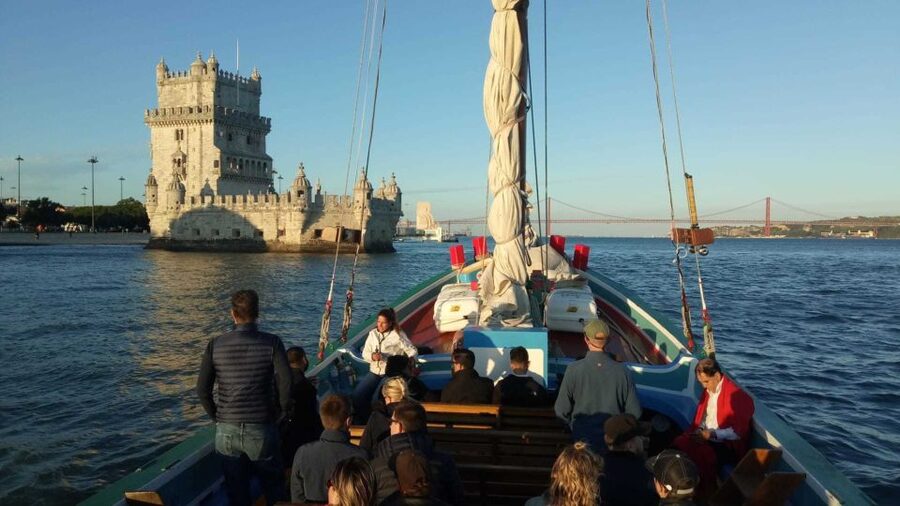
As the boat continues, look across the Tagus toward Christ the King. The monument is based on the Christ the Redeemer figure in Rio de Janeiro and has its own place in Lisbon’s story. From the water, its position across the river is easy to understand, and the guide explains its background during the cruise.
This section shows why a river route works so well in Lisbon. The city is not confined to one bank. The water opens the view, bringing central Lisbon, the south bank, bridges, monuments, and hills into the same picture.
The open setting can also make the ride cooler and windier. One cruise passenger found the brisk wind reduced the comfort of the trip, although blankets were offered for extra warmth. I would bring a light layer even on a pleasant day. Comfortable clothes are recommended, and a simple jacket can make the difference between sitting outside for photos and retreating from the breeze.
Water was offered during one reported trip, but food and drinks are not part of the listed inclusions. Do not board expecting a café service. Have any snacks or drinks you want before departure unless the crew advises otherwise.
A few more boat days around Lisbon worth a look
- Lisbon: Sunset Boat Party Cruise with DJ and Open Bar
★ 4.5 · 10,378 reviews - Lisbon: Sunset Boat Tour with Music and Drinks
★ 4.6 · 3,908 reviews - Lisbon: Tagus River Cruise with Welcome Drink
★ 4.2 · 3,717 reviews - Lisbon: Sunset Cruise with Welcome Drink and Snacks
★ 4.4 · 3,021 reviews
Belém’s monuments from the river
The cruise then reaches Belém, the part of the route most likely to produce your best photographs. Belém is home to two major World Heritage monuments: Mosteiro dos Jerónimos and Belém Tower. Both are linked to Portugal’s age of exploration and are known for Gothic Manueline design.
Jerónimos Monastery is impressive even from the river. You will not get the close view of carved stone that you would have on foot, but the water helps you appreciate the building’s size and place along the shore. The Manueline style is highly decorative, and the guide can point out why the monastery matters.
Belém Tower is one of Lisbon’s most recognizable sights. Seen from the Tagus, it feels connected to the river rather than simply placed beside it. That perspective matters, since the tower served as part of the city’s defensive and maritime setting.
You will also see Padrão dos Descobrimentos, the Discoveries Monument. It recalls the ships that departed to trade with the East and presents Portugal’s seafaring past in a bold, highly visible form. From the water, the monument’s position facing the river is particularly clear.
This is the point where you should keep your camera ready. The boat gives you a wide view, but light and wind can change quickly. If photography is a priority, sit where you have an unobstructed line of sight and avoid waiting until the last moment to take pictures.
What the guide adds, and where the format has limits
A live guide is included, and that is important because the route passes many sights without stopping. The guide identifies monuments and provides background in four languages. You are not left to guess which church, castle, or monument you are seeing.
The multilingual format is practical for mixed groups, but it can affect the rhythm. One guide may switch between English, Spanish, Portuguese, and French, and the commentary may feel shorter than you expect. Some passengers would prefer more detail about Lisbon’s history, even while appreciating the guide’s effort to translate clearly.
I would treat the narration as a helpful framework. Listen for the names and stories that interest you, then make a note of the places you want to revisit on foot. The cruise is especially useful at the start of a Lisbon visit, when you are still learning how the city fits together.
The boat driver and guide are included in the tour. There are no guide names provided for this experience, so you should not book expecting a particular host. The standard is a live, multilingual explanation rather than a named specialist.
Is $28 a fair price for 105 minutes?
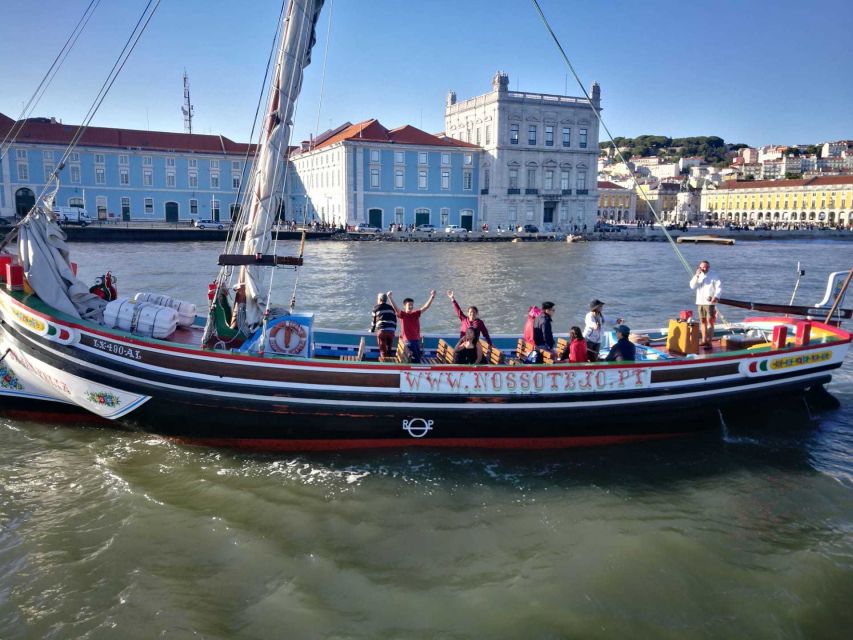
At $28 per person, the value is good if you want several things at once: a historic boat, a guided route, city views, and an easy way to reach Belém by water. You are paying about the cost of a casual meal for nearly two hours of sightseeing, without the effort of walking between distant monuments.
The price is less attractive if you want a detailed historical tour or an indoor, weather-proof activity. The ride is exposed enough for wind to affect your comfort, and you do not get food, drinks, hotel pickup, or entry to any monument.
Still, the route covers a lot. A single cruise connects Praça do Comércio, Ribeira das Naus, the old center, Christ the King, and Belém. For a first visit, that broad view can help you decide where to spend your limited sightseeing time.
The experience also has a quality that a standard transport ticket does not. You are riding a rare 1947 boat with hand-painted flowers and Navy Museum registration. That makes the price easier to justify for anyone who values local character over the newest equipment.
Who should book this Tagus cruise?
I would recommend it to first-time visitors who want a clear view of Lisbon before tackling its hills. It also suits couples, families with accompanied children, and anyone who enjoys taking photographs without rushing from one monument to the next.
It is a good choice if you have already planned to visit Belém on foot and want to see the district from another angle first. You can note the buildings from the water, then return later for the interiors and closer views.
Children must be accompanied by an adult, and unaccompanied minors are not allowed. The boat is not wheelchair accessible, so wheelchair users should not book this activity.
I would be more cautious if you dislike wind, have limited mobility, or want a long, detailed lecture. The multilingual commentary may be compact, and the ride is focused on views rather than extensive historical instruction.
Practical details that affect your day
The cruise lasts 105 minutes and returns to the meeting point. Check the available starting times before booking, since the exact departure time is not fixed in the information provided.
Arrive 15 minutes early at the first white building beside the river on the left side of Praça do Comércio, ticket office number 8. Wear comfortable clothes and bring an extra layer for the open-water breeze. Blankets may be available, but your own light jacket is the safer plan.
Free cancellation is available up to 24 hours before departure, and you can reserve now and pay later. These options help if your Lisbon schedule is still shifting, but they do not change the main practical points: arrive early, dress for wind, and confirm the start time.
My call: a charming, useful Lisbon introduction
You should book this cruise if you want a relaxed view of Lisbon’s major riverfront sights and like the idea of traveling on a rare traditional vessel. The combination of the 1947 cargo boat, seven-hill views, Belém monuments, and live commentary gives you plenty for $28.
Skip it if you need wheelchair access, dislike exposed boats, or expect a full historical lecture. For most visitors, though, this is an easy way to get your bearings, take memorable photos, and see how closely Lisbon’s identity is tied to the Tagus.
FAQ
How long is the Tagus River cruise?
The cruise lasts 105 minutes, or 1 hour and 45 minutes.
Where does the cruise start?
Meet at the first white building by the river on the left side of Terreiro do Paço, also called Praça do Comércio. Look for ticket office number 8.
Where does the cruise finish?
The activity ends back at the meeting point.
What kind of boat is used?
The cruise uses a traditional cargo boat from 1947. The boat is hand-painted with flowers, and only seven boats of this size remain. They are inscribed in Portugal’s Navy Museum.
Which languages are available on the cruise?
Live commentary is available in English, Spanish, Portuguese, and French.
Is food or drink included?
No. Food and drinks are not included in the activity.
Is the cruise wheelchair accessible?
No. The activity is not suitable for wheelchair users.
Can children take the cruise?
Yes, but children must be accompanied by an adult. Unaccompanied minors are not allowed.
How early should I arrive, and what should I wear?
Arrive 15 minutes before departure. Wear comfortable clothes, and consider bringing a light layer because the river can be brisk and windy.
Just added around Lisbon
- Lisbon: Tagus River Sailboat City Cruise★ 4.9 · 1,212 reviews
- Lisbon: Tagus River Cruise, Morning, Day, Sunset, or Night★ 4.9 · 640 reviews
- Lisbon: Tagus River Sunset Cruise with Drinks★ 5.0 · 330 reviews
- Lisbon: Sunset Sailing with Portuguese Wine and History★ 5.0 · 270 reviews
- Lisbon: Sunset Sailing Cruise with Wine★ 4.9 · 800 reviews
- Lisbon: Sunset Cruise with Drinks★ 4.8 · 549 reviews
- Lisbon: Sailboat Tour w/ Local Guide and Open Bar Green Wine★ 4.9 · 625 reviews
- Lisbon: Enjoy a Sunset or Night Tagus River Sailboat Cruise★ 4.9 · 306 reviews
Sightseeing Cruises, compared.



By Night Sightseeing Cruise with Welcome Drink
Read our review →
Daytime or Sunset Sightseeing Cruise & Audio Guide
Read our review →
City Archipelago Sightseeing Cruise with Guide
Read our review →
1-Hour Guadalquivir River Sightseeing Eco Cruise
Read our review →
Browse the lists this tour appears in