
REVIEW · PARIS
Paris: Big Bus Hop-on Hop-off Tour and Seine River Cruise
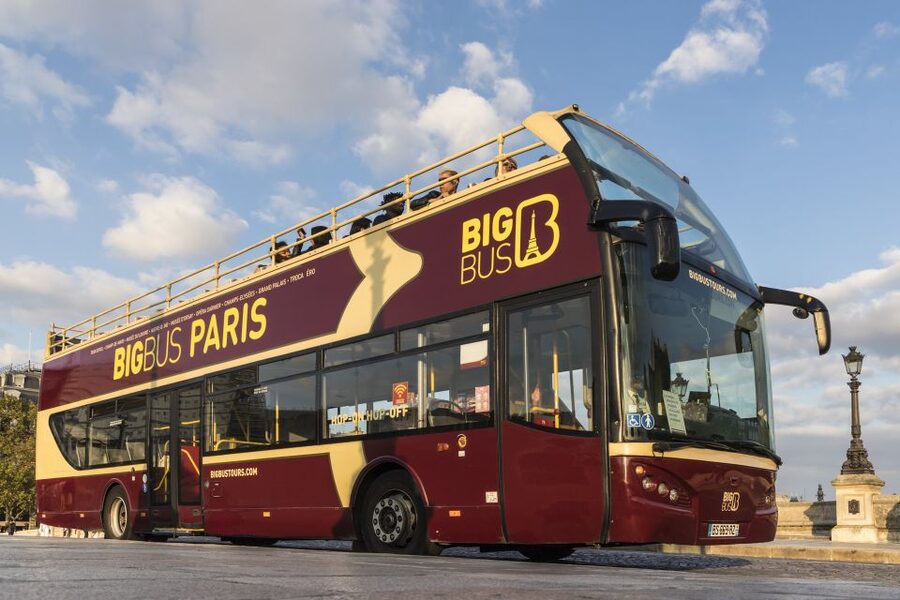
Paris makes more sense from above street level and from the river. This combined open-top bus tour and Seine cruise gives you a quick look at the Eiffel Tower, Louvre, Notre Dame, Arc de Triomphe, and more than 50 other sights without asking your feet to cross the whole city. I like the freedom to hop off for a museum or monument, then use the next bus when you are ready.
I especially like the easy orientation on a first day and the one-hour boat ride, which shows Paris from a calmer angle. The main drawback is traffic: a three-stop bus ride can take 45 minutes, and cruise queues can stretch to 60 or 90 minutes at busy times. Plan loosely, and do not schedule a tight museum appointment after boarding the bus.
Key points at a glance
- Start anywhere on the route: Use the Louvre, Eiffel Tower, Notre Dame, Invalides, Opéra, or other listed stops rather than returning to one central meeting point.
- Choose 24 or 48 hours: The longer pass works best if you want to spread sightseeing across two days.
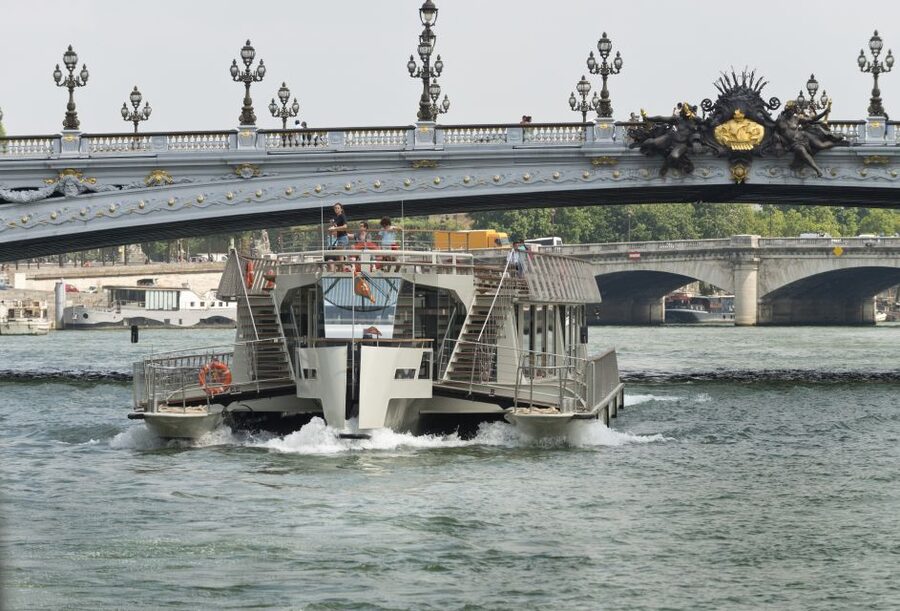
- See Paris from the Seine: The one-hour Les Bateaux Parisiens cruise leaves from Pontoon 3 at Port de la Bourdonnais, near the Eiffel Tower stop.
- Use the app as your travel tool: Live bus tracking, digital commentary, booking management, and cruise time selection are all available there.
- Expect traffic and queues: The bus is convenient, but Paris roads can slow the route, while the boat may be crowded.
- Good for families and slower walkers: The bus reduces long walks, and every bus has a wheelchair ramp.
Why this tour works best as your Paris introduction
I would use this tour early in a Paris stay, especially if you have only one or two days. The full circuit lets you see how the main districts fit together before you decide where to spend more time.
You can remain on the bus for a broad city tour, listening to commentary through provided headphones. Or you can treat the bus as moving transport between major sights. That second approach is often the most useful. Paris has an excellent Metro, but the bus keeps you above ground and lets you watch the avenues, bridges, monuments, and building fronts as you move.
The pass is active for either 24 or 48 hours. A 24-hour ticket can be surprisingly useful because you can ride in the morning, visit sights during the day, and return later for another stretch of the route. One visitor used the pass with an elderly mother in the morning, then rode again alone at night to see the Christmas lights. That is a smart way to get more value from one day.
The 48-hour choice gives you breathing room. You can spend the first day on the full circuit and use the second for selected stops. At $61 per person, the value depends on how much you ride. If you only want a single circuit and a boat ride, it is not the cheapest way to move around Paris. If you use the bus repeatedly, avoid several separate taxi trips, and include the cruise, the price becomes easier to justify.
More River Cruises in France
- Paris: 1-Hour Seine Cruise departing from the Eiffel Tower
★ 4.4 · 77,472 reviews - Paris: Evening River Cruise with Music
★ 4.4 · 22,721 reviews - Paris: Tootbus Hop-on Hop-off (Optional River Cruise)
★ 4.3 · 15,279 reviews
Following the route from the Louvre to Notre Dame
The published stops begin around the Louvre and Opéra, then move toward the Seine, the Champs-Elysées, Invalides, and the Eiffel Tower. You can begin at any Big Bus stop, but the Louvre-Pyramide information center at 11 Avenue de l’Opéra is useful if you need help activating your ticket.
At Louvre-Pyramide, you are close to the museum, the Palais Royal area, and the grand axis running west through Paris. The Louvre itself can consume most of a day, so I would not try to combine a serious museum visit with too many other stops. Use the bus here for orientation, then return later if you have a timed Louvre entry.
The Louvre, Pont des Arts stop at 56 Quai François Mitterand places you beside the Seine. Pont des Arts is a pleasant crossing with views toward the riverbanks and central Paris. This is a strong place to leave the bus for a walk, though road traffic and pedestrian crowds can slow boarding nearby.
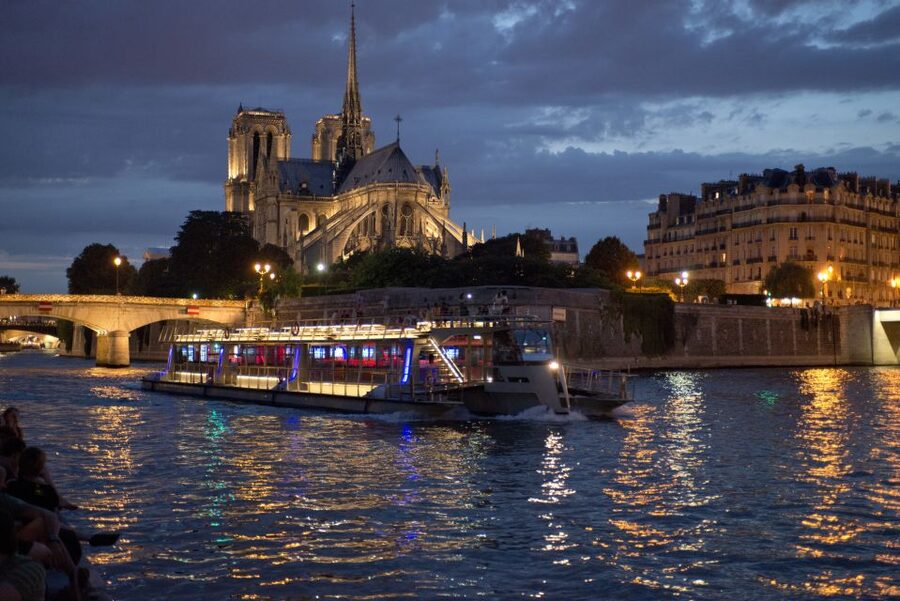
At Notre Dame, the stop is at 3 Rue Lagrange. From here, you are near Île de la Cité and the historic center. Notre Dame is one of the sights that gives the cruise its best moments too, so seeing it from both street level and the river helps you understand its position in the city.
The Musée d’Orsay stop at 58 Place Henry de Montherlant is handy for the former railway station turned art museum. Even if you do not enter, the building itself is a striking part of the riverfront. The bus route is helpful here because the museum, Louvre, and Eiffel Tower can feel close on a map but take time to connect on foot.
From the Champs-Elysées to the Eiffel Tower
The Champs-Elysées stop at 156 Avenue des Champs-Elysées places you on Paris’s best-known grand avenue. This is a good stop for a walk toward the Arc de Triomphe, shops, cafés, and long views down the avenue. It is also one of the areas where traffic can make the bus run unpredictable.
At Grand Palais, on Avenue Winston Churchill, you are near the Seine, the Petit Palais, and the broad open space between the avenue and the river. This stop can work well if you want a shorter visit away from the heaviest concentration of shops and traffic.
The Iena stop on Avenue Iéna brings you closer to the Eiffel Tower district and several major museums. From here, the route moves toward the tower, where timing matters. The Eiffel Tower area is one of the busiest parts of the circuit, so allow extra time if you plan to leave the bus and walk around.
The main Eiffel Tower stop is on Quai Branly, at Entrance 2. This is also the practical point for the Seine cruise. The boat departs from Pontoon 3 at Port de la Bourdonnais, close to the bus stop. You must select a cruise time before boarding, so do not simply arrive at the dock and hope to walk onto the next boat.
You can choose the cruise slot in the Big Bus app, through the booking management page, or with a Big Bus staff member. Departures are every 45 minutes from 10:30 a.m. to 9 p.m., and every 30 minutes on weekends. Those intervals sound generous, but queues can still be long. One recorded experience involved about 500 people waiting for the same departure, with a total wait of 60 to 90 minutes.
My practical advice is to book the boat time early in your day and build the bus sightseeing around it. If you leave the cruise until late, a delay on the road could put the boat out of reach. Evening sailing can be especially attractive, since Paris looks very different as the lights come on, but it can also be a popular choice.
The nearby Champ de Mars stop on Avenue Joseph Bouvard gives you another way to approach the Eiffel Tower lawns. This is the better choice if you want open space and photographs rather than arriving directly beside the tower entrance.
Invalides, Opéra, and the stops worth planning
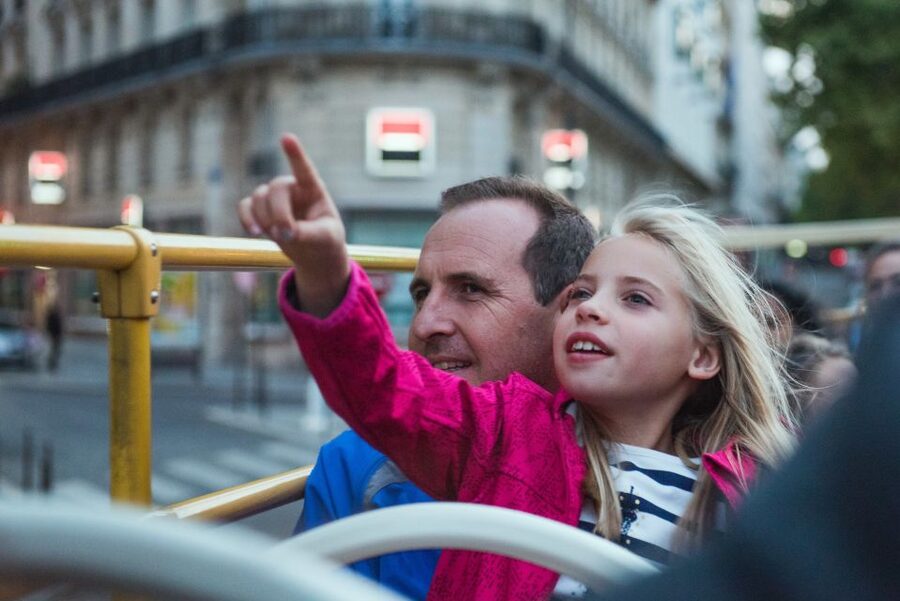
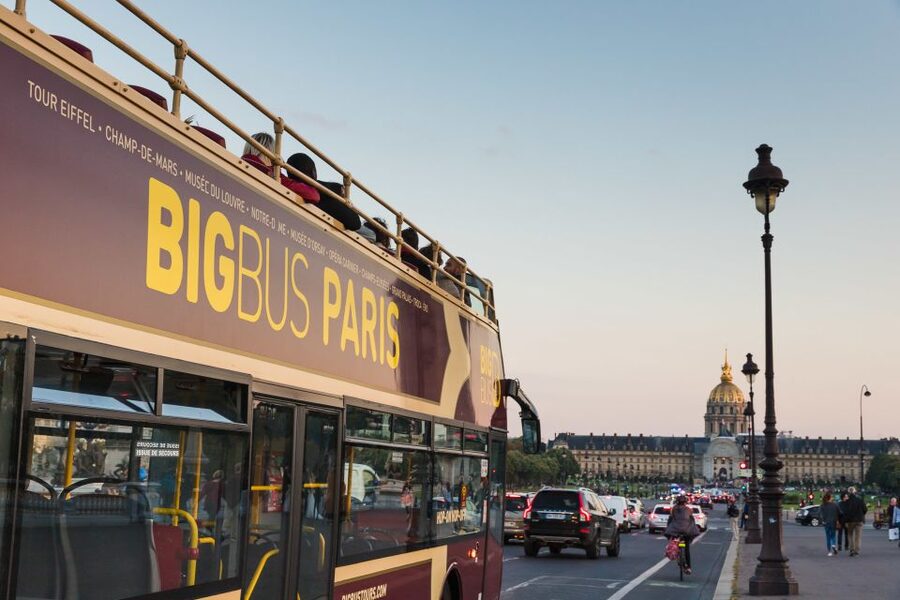
The Invalides stop at 2 Avenue de Tourville places you near the grand complex with its golden dome and military museums. This is a useful stop for architecture, broad avenues, and a quieter break from the Eiffel Tower area.
The Opéra Garnier stop faces 15 Rue Scribe. The opera house is one of Paris’s most ornate buildings, and the surrounding streets are convenient for department stores and central cafés. It also makes a practical end point if you are staying near the Opéra district.
The route’s value comes from choice. You can make the Eiffel Tower the main event, use the Louvre and Orsay for art, stop at Notre Dame for the medieval center, or stay on board for an overall city view. You do not need to follow the route in the order listed.
Still, do not treat every stop as an efficient transfer point. Paris traffic is part of the experience, but it can also eat your schedule. One bus could move quickly while the next crawls. Another ride took 45 minutes to cover only three stops because the driver approached traffic lights slowly. Use the live tracking in the app, and keep fixed reservations separate from the bus timetable.
More River Cruises in Paris
- Paris: Illuminations River Cruise with Audio Commentary
★ 4.3 · 12,340 reviews - Paris: Seine Cruise & Crepe Tasting near the Eiffel Tower
★ 4.4 · 11,231 reviews - Paris: Seine River Panoramic Views Dinner Cruise
★ 4.3 · 10,611 reviews - Paris: Louvre Museum Entry Ticket With Host and River Cruise
★ 4.6 · 9,926 reviews
What the open-top bus is really like
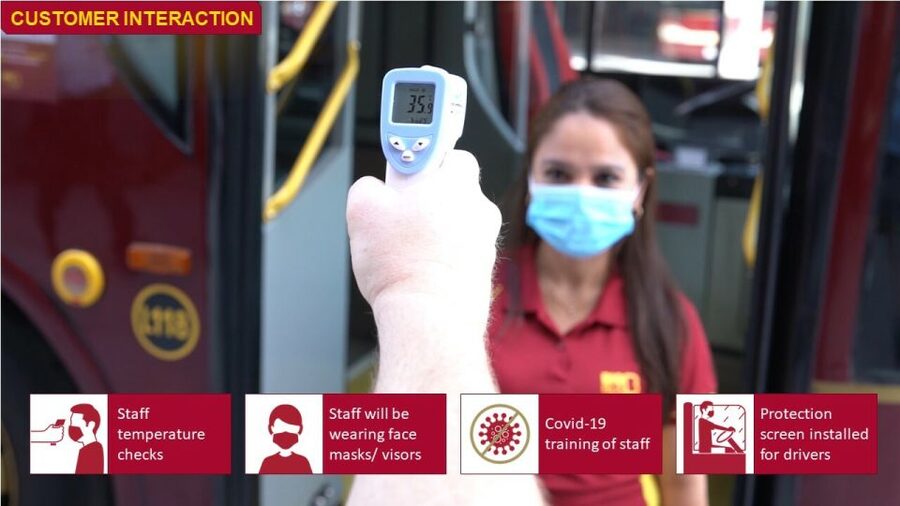
The open upper deck gives you the best views of monuments and rooflines, but it is exposed to rain, cold, and wind. One useful criticism is that the upper level is not always covered enough in poor weather. Bring a layer and plan for the possibility of sitting downstairs.
The buses are described as wheelchair accessible, with ramps on every bus. That is helpful, though crowded conditions can affect how much space is available. Families also get a practical benefit: children can see the sights without walking between every district, and the bus offers a break during hot weather.
Audio commentary is available in Spanish, Chinese, English, French, German, Italian, Portuguese, Russian, and Korean. Headphones are provided. The commentary can add useful context, but it is not perfectly consistent from bus to bus. One ride had commentary that did not always match the location outside, while another had working narration and clear information.
You may also encounter a quieter soundtrack with more music and less narration later in the day. If the audio matters to you, check the headphone connection when you board and tell staff if it does not work. Switching buses solved the problem for one passenger.
Drivers speak English and French, and staff are positioned at stops to help with boarding and directions. That assistance matters in Paris, where a nearby stop can be on a different side of a wide avenue than you expect.
Seeing Paris from the Seine at Pontoon 3
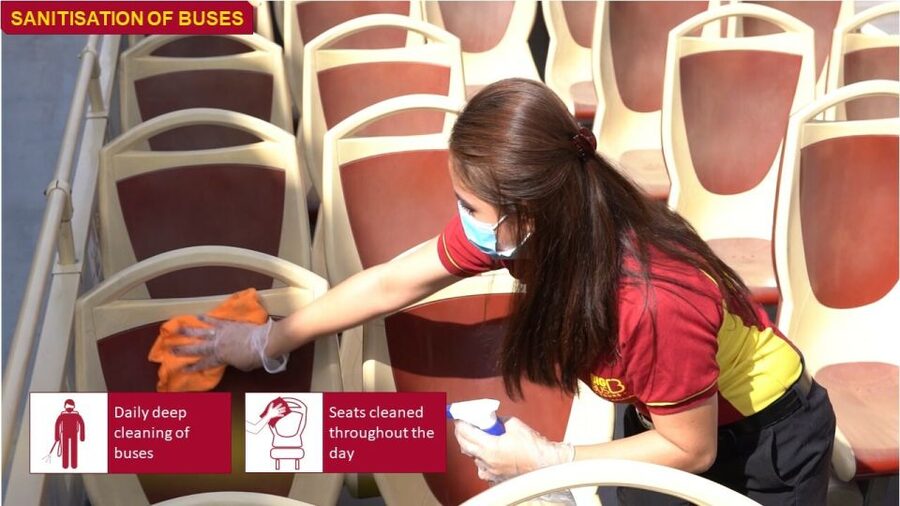
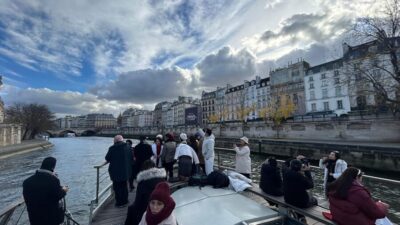
The cruise is not just an add-on. It changes the scale of the city. From the river, you pass Notre Dame, the Musée d’Orsay, major riverfront buildings, and Paris bridges without traffic lights or crowded pavements.
The one-hour ride is easy to fit into a day, but the boarding process needs planning. Departure is from Pontoon 3 at Port de la Bourdonnais, near the Eiffel Tower stop. You need a time slot, and the boat can be crowded even when the bus feels manageable.
I would choose a seat or standing spot with a clear view of both banks, then listen to the cruise commentary. The boat narration is described as clear and informative, and it tends to stay better connected to what you are seeing than the bus commentary can.
A daytime cruise shows the stone façades and bridges clearly. An evening cruise brings a different mood, with illuminated monuments and reflections on the water. The choice depends on your schedule, but do not assume that the later sailing will be quiet. Evening departures can draw a large crowd.
How to get the best value from $61
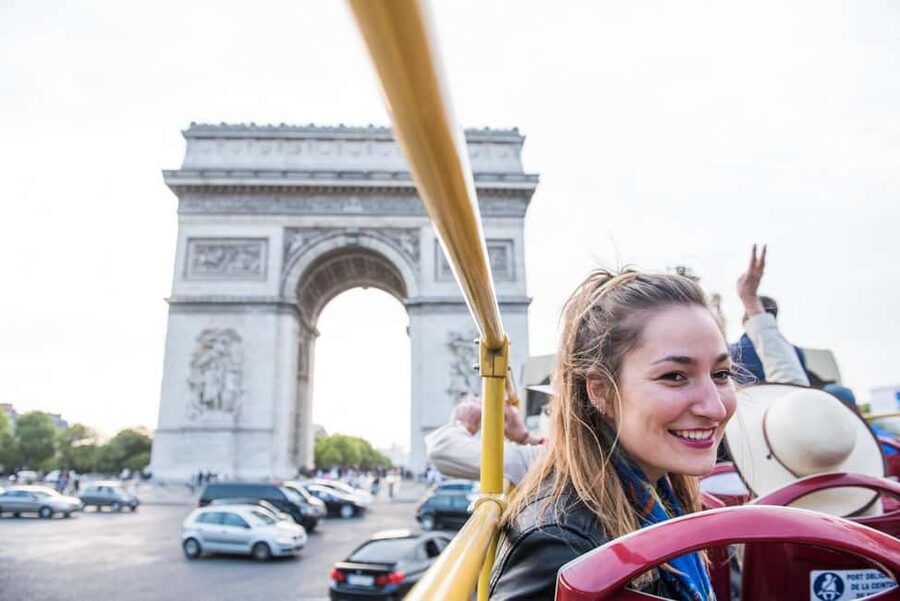
The price makes sense when you use the pass as both sightseeing and transport. Ride the full circuit once, then hop off at two or three places that genuinely interest you. Add the cruise, and you have a full day with several distinct views of Paris.
The ticket is less appealing if you plan to enter only one attraction and walk everywhere else. The bus can be slowed by traffic, and central Paris is often pleasant on foot when distances are short. You are paying for convenience, orientation, commentary, and the ability to change plans.
The 48-hour option is the better fit if you want to visit the Louvre, Orsay, Notre Dame, Eiffel Tower, and Invalides without rushing. The 24-hour option suits a first look, a compact itinerary, or a day when you want to combine morning sightseeing with an evening ride.
You can activate the ticket in the Big Bus app by entering the activity reference number, or show your mobile or printed voucher at 11 Avenue de l’Opéra or to staff at a stop. The app also provides live bus tracking and access to cruise booking. WiFi is available onboard, though I would still keep your ticket details accessible offline.
Who should book this Paris bus and boat combination
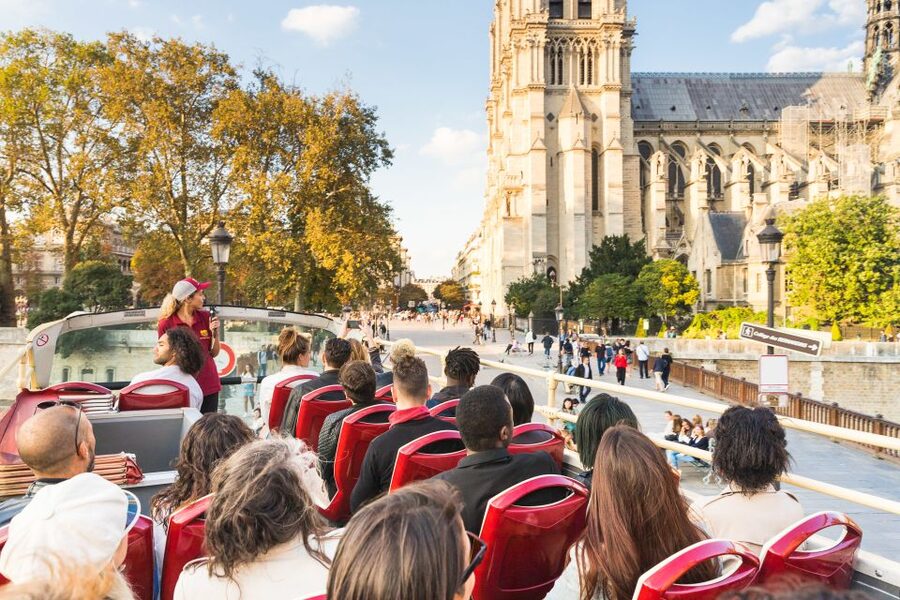
I would recommend it most strongly to first-time visitors, families with children, older people, and anyone with limited time. It reduces long walks and gives you a clear sense of Paris before you commit to individual museums and neighborhoods.
It also suits anyone who likes flexibility. You can stay on for the commentary, hop off for a landmark, or ride again later for the city lights. The cruise adds variety without requiring another full excursion.
I would be more cautious if you dislike queues, need precise arrival times, or prefer quiet local transport. Traffic is unpredictable, the boat can fill quickly, and the open upper deck is weather dependent. You will get the best result by treating the pass as a flexible sightseeing framework, not as a tightly timed shuttle.
Should you book this tour?
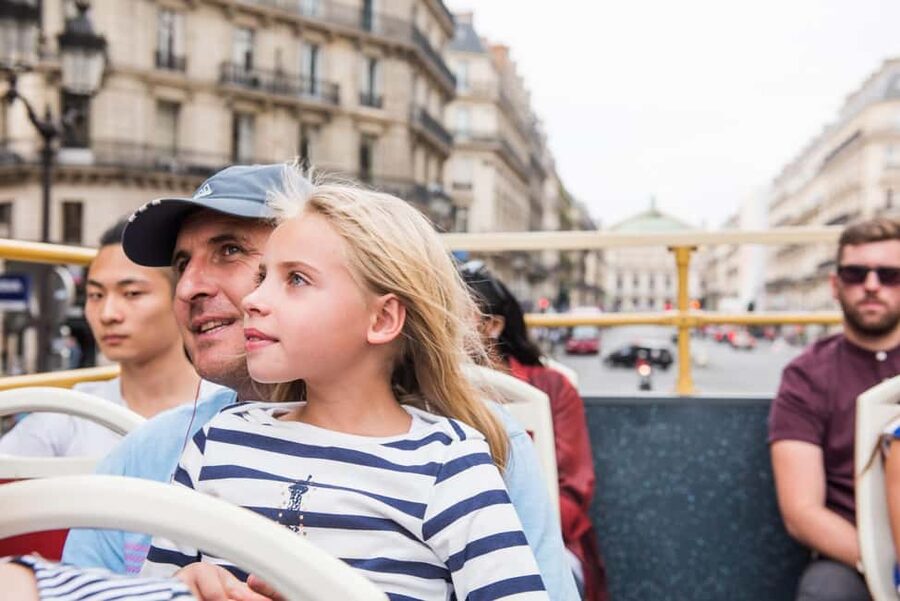
Book it if you want a broad first look at Paris, easy access to the major monuments, and a river ride in the same ticket. The strongest plan is to use the bus early, reserve the Seine cruise in advance, and leave extra time for traffic and boarding queues.
Skip it if you already know Paris well, plan to spend most of your time inside museums, or prefer to build your day around the Metro and walking. For everyone else, $61 is fair when you use the pass actively. The best feature is not the bus alone or the boat alone, but the freedom to switch between both when Paris traffic, weather, or your energy level changes.
FAQ
How long does the Paris Big Bus and Seine cruise experience last?
You can choose a 24-hour or 48-hour hop-on hop-off pass. The Seine River cruise itself lasts one hour.
What sights can I see from the bus?
The route includes access to major sights such as the Eiffel Tower, Louvre, Arc de Triomphe, Notre Dame, Musée d’Orsay, Champs-Elysées, Grand Palais, Invalides, Opéra Garnier, and Champ de Mars. It covers more than 50 points of interest.
Can I start the bus tour at any stop?
Yes. You can begin at any Big Bus stop along the route. Listed stops include Louvre-Pyramide, Notre Dame, Musée d’Orsay, Champs-Elysées, Eiffel Tower, Invalides, and Opéra Garnier.
Where does the Seine cruise depart?
The cruise departs from Pontoon 3 at Port de la Bourdonnais, near the Eiffel Tower bus stop.
How often do the Seine cruises depart?
Cruises depart every 45 minutes from 10:30 a.m. to 9 p.m. On weekends, departures are every 30 minutes.
Do I need to reserve a cruise time?
Yes. You must choose a time slot before boarding. You can do this in the Big Bus app, online through booking management, or with a Big Bus staff member.
What languages are available for the audio guide?
The digital commentary is available in Spanish, Chinese, English, French, German, Italian, Portuguese, Russian, and Korean.
Is the bus wheelchair accessible?
Yes. All buses have a ramp for wheelchair access.
Just added around Paris
- Paris: Seine River Cruise with 3-Course Dinner & Live Music★ 4.5 · 570 reviews
- Paris: 3-Course Lunch Cruise on the River Seine★ 4.3 · 1,416 reviews
- Paris: Picasso Museum Ticket & Optional Seine River Cruise★ 4.7 · 277 reviews
- Paris: Seine River Cruise & Eiffel Tower Visit★ 4.7 · 297 reviews
- Paris: Seine River Champagne Dinner Cruise with Live Music★ 4.4 · 287 reviews
- Paris: Seine River Panoramic Cruise★ 4.4 · 1,312 reviews
- Paris: Opera Garnier and Seine River Cruise Tickets★ 4.5 · 957 reviews
- Paris: Grèvin Wax Museum and Seine River Cruise Tickets★ 4.4 · 282 reviews
River Cruises, compared.

1-Hour Seine Cruise departing from the Eiffel Tower
Read our review →

Douro Valley w/ Boat Tour, Wine Tasting & Lunch
Read our review →
Illuminations River Cruise with Audio Commentary
Read our review →
Seine Cruise & Crepe Tasting near the Eiffel Tower
Read our review →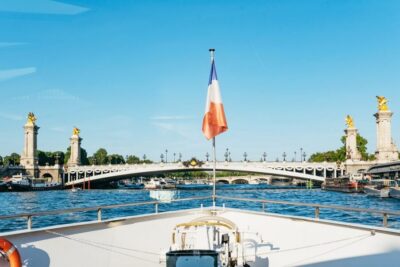
1-Hour Guadalquivir River Sightseeing Eco Cruise
Read our review →Browse the lists this tour appears in