
REVIEW · PARIS
Paris: Hop-On Hop-Off Seine Cruise Pass with 9 Stops
Paris is at its best from the Seine, where the city opens up in one long postcard view. This Batobus pass lets you ride between nine stops, hop off for the Eiffel Tower, Louvre, Notre-Dame, or a café, then continue without dealing with traffic or Metro stairs.
I like the flexibility and the simple sightseeing rhythm: ride, explore, rest, ride again. I also like the heated glass cabin and outdoor terrace, which make this useful in cool weather and good for photos. The main drawback is that a full loop takes about two hours, and the glass can feel hot or look blurry on sunny days.
Key points to know before you board
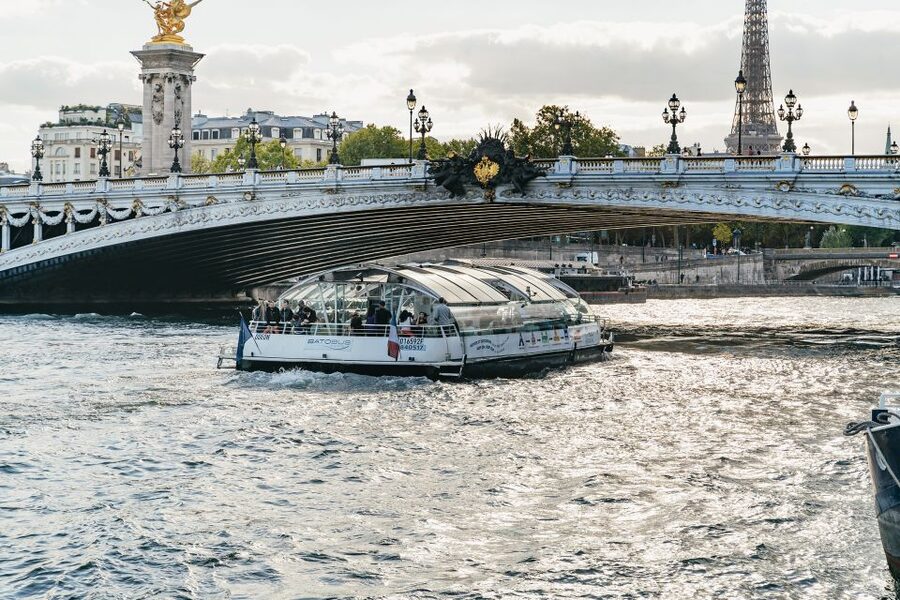
- Nine useful Seine stops: Reach the Eiffel Tower, Musée d’Orsay, Saint-Germain-des-Prés, Notre-Dame, Hôtel de Ville, Louvre, Place de la Concorde, Invalides, and Jardin des Plantes.
- One ticket, two travel speeds: Choose 24 or 48 consecutive hours, starting when you first scan the pass.
- A calm alternative to the Metro: You avoid traffic, crowded streets, and many of Paris’s stairs.
- Heated cabin plus terrace: The enclosed boat works in cold weather, while the terrace gives you clearer photos when conditions are good.
- Five-language webapp: Commentary and practical information are available in English, French, Italian, Spanish, and German.
- Best value comes from repeated use: The pass makes the most sense when you use it for sightseeing and transport, not just one scenic ride.
Why the Seine works so well for Paris sightseeing
The Batobus is not a guided cruise in the usual sense. It is a river shuttle with sightseeing built in. That distinction matters. You are not tied to a fixed two-hour boat ride or a commentary track. You can get off when a museum catches your eye, spend a few hours in a neighborhood, and board again when your feet need a break.
The route follows the central Seine and connects several major sights. Paris traffic can slow a bus or taxi, but the boat moves along its own clear route. You still need to walk from the pier to each attraction, yet the stops are generally placed within a practical walk of the sights.
The pass costs about $27 per person. That is a fair price if you use the boat several times across a day, and the 48-hour option is especially useful if you want a gentler schedule. A single scenic circuit gives you pleasant views, but repeated rides are what turn this from a cruise into useful city transport.
Boats usually come at intervals of roughly 20 to 25 minutes, though you should still check the current departure information. A complete loop takes about two hours. Start with one full circuit if you want to understand the route, then plan your stops on the next round.
More River Cruises in France
- Paris: 1-Hour Seine Cruise departing from the Eiffel Tower
★ 4.4 · 77,472 reviews - Paris: Evening River Cruise with Music
★ 4.4 · 22,721 reviews - Paris: Tootbus Hop-on Hop-off (Optional River Cruise)
★ 4.3 · 15,279 reviews
Starting at the Eiffel Tower
The main starting point is Port de la Bourdonnais, directly beside the Eiffel Tower. You can also board at any of the other stops, so you are not required to begin here. Still, the Eiffel Tower pier is a sensible first stop because it is easy to identify and puts you right beside one of Paris’s central sights.
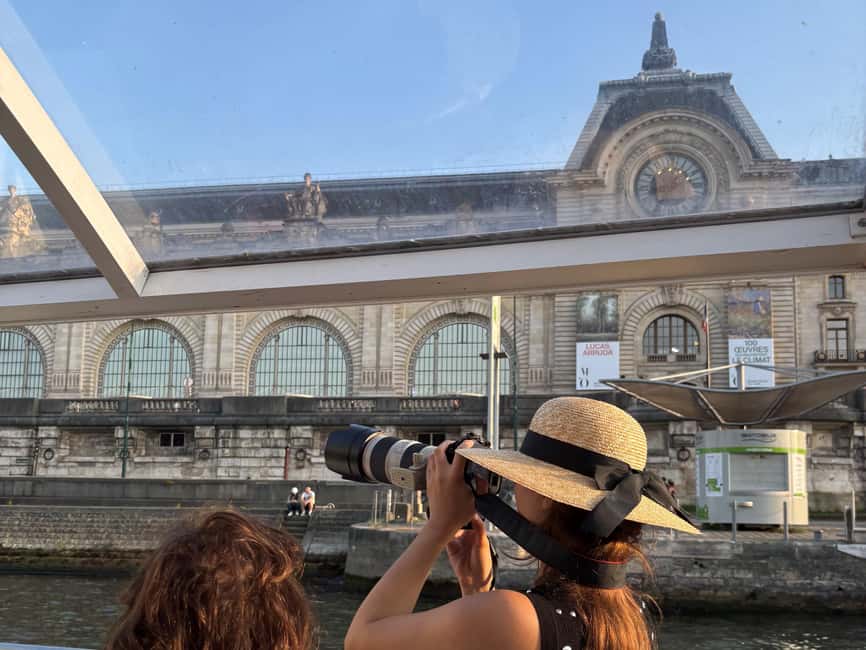
From the boat, the tower looks different than it does from street level. The open terrace is the better place for photos, although the view depends on the weather and how busy the boat is. Inside, the glass-covered cabin protects you from cold air, but it can become warm on sunny days.
Near this stop is the Cité de l’Architecture, a museum focused on French architecture from the 12th to the 18th century. It is an easy add-on if you have already seen the tower or want a museum that is less obvious than the Louvre.
Musée d’Orsay and Saint-Germain-des-Prés
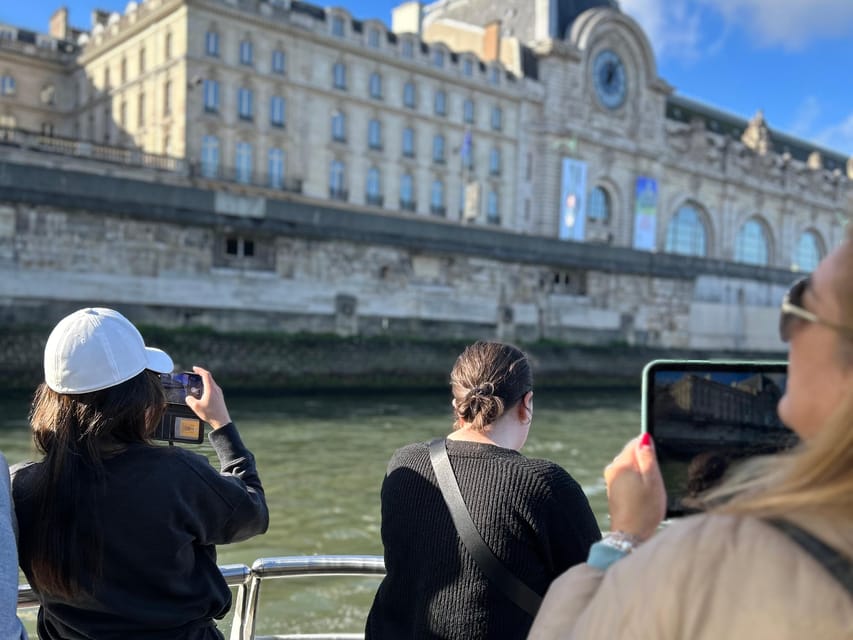
The Musée d’Orsay pier sits at Quai de Solférino. The museum is famous for its Impressionist collection, including work by Monet, Renoir, and Van Gogh. If you plan to visit, allow much more time than the boat ride itself. This is a stop for a proper museum visit, not a quick photo break.
The next stop, Saint-Germain-des-Prés at Quai Malaquais, opens onto one of the city’s most recognizable café and literary districts. The Institut de France is nearby, and Café de Flore and Les Deux Magots are within reach. You can wander the smaller streets, browse bookshops, or simply stop for breakfast or coffee before returning to the river.
This is one place where the Batobus schedule helps. You do not need to rush through a café or museum visit just to catch a particular bus. Check the next boat time before walking away from the pier, then enjoy the neighborhood at your own pace.
Notre-Dame and the Latin Quarter
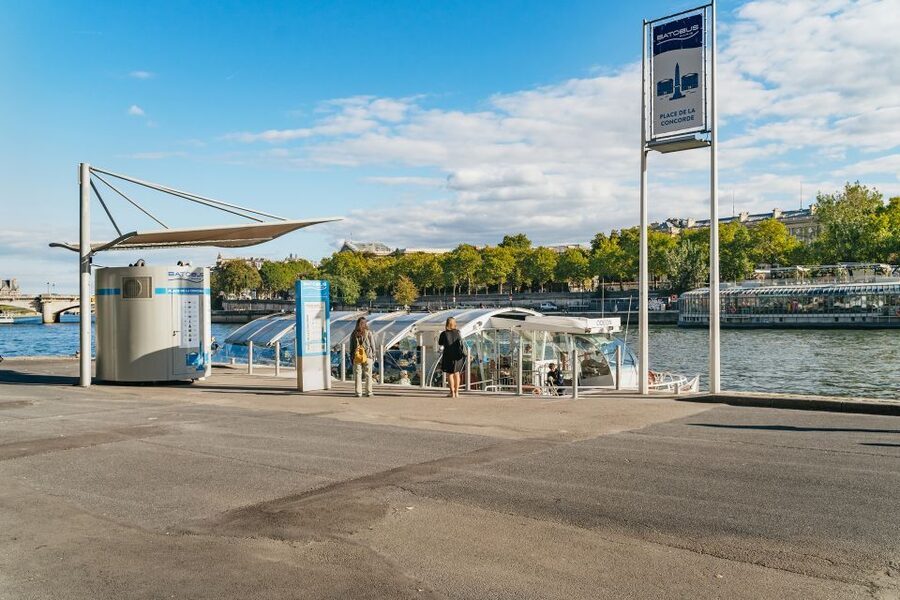
At Quai de Montebello, the Notre-Dame stop puts you beside the cathedral and the Latin Quarter. Notre-Dame remains one of Paris’s essential sights, while the surrounding streets offer cafés, bookshops, and plenty of places to pause.
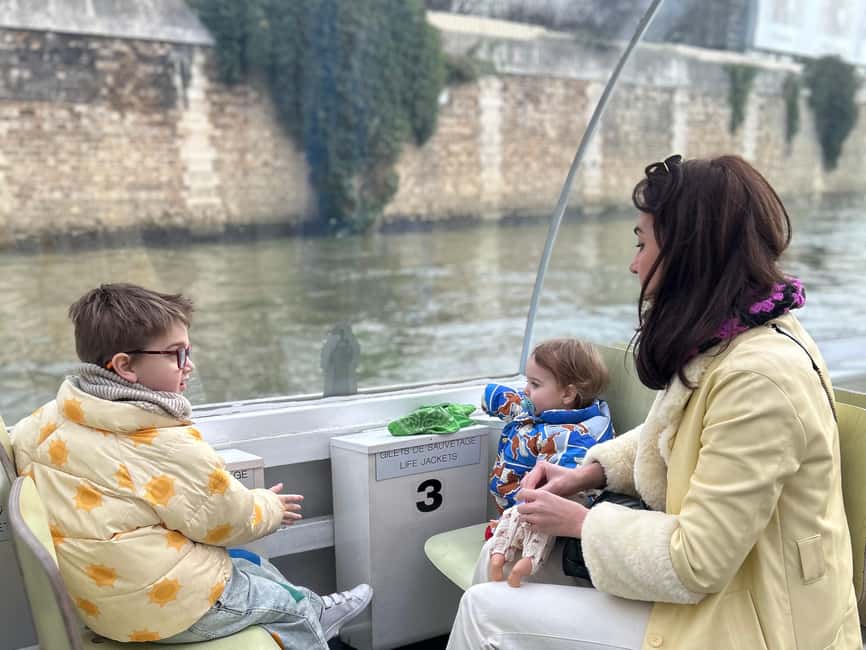
The stop is also useful for exploring the riverbanks on foot. You can combine the cathedral with a walk through the Latin Quarter, then return to the Seine rather than crossing the city by Metro. If you are traveling with children or simply want a break from walking, this stretch of the route is particularly handy.
The boat does not replace an admission ticket or a timed entry for any attraction. It only gets you close. Plan separate time for Notre-Dame, the Louvre, or the Musée d’Orsay if those are priorities.
More River Cruises in Paris
- Paris: Illuminations River Cruise with Audio Commentary
★ 4.3 · 12,340 reviews - Paris: Seine Cruise & Crepe Tasting near the Eiffel Tower
★ 4.4 · 11,231 reviews - Paris: Seine River Panoramic Views Dinner Cruise
★ 4.3 · 10,611 reviews - Paris: Louvre Museum Entry Ticket With Host and River Cruise
★ 4.6 · 9,926 reviews
Jardin des Plantes and Cité de la Mode
The Jardin des Plantes stop is at Quai Saint-Bernard. Paris’s main botanical garden gives you a quieter change of pace after the heavy sightseeing around Notre-Dame and the Louvre. It is a good place to stretch your legs, especially on a two-day pass when you do not need to pack every sight into one afternoon.
The Cité de la Mode et du Design is also nearby. Its modern design creates a sharp contrast with the older stone buildings along the river. This stop is less central to a first-time Paris visit, but it can be worthwhile if you have extra time or want something different from classic monuments.
Because the route is not only about headline attractions, the 48-hour pass has an advantage here. You can include a less urgent stop without feeling that it has taken time away from the Eiffel Tower or Louvre.
Hôtel de Ville and the Marais
At Pont d’Arcole, the Hôtel de Ville stop brings you close to Paris City Hall and the Pompidou Centre. You can also walk into the Marais, a district known for galleries, boutiques, cafés, and historic streets.
This is a strong afternoon stop. The Marais rewards wandering rather than ticking off one single building, so you can leave the pier with a loose plan and return when you are ready. Keep your phone charged so you can check the webapp and the next boat time.
The boat is also useful here as a rest stop. Paris sightseeing can mean several miles of walking in a day. Sitting on the Seine for part of the route gives you a change of pace without losing access to the central sights.
The Louvre and Pont Royal
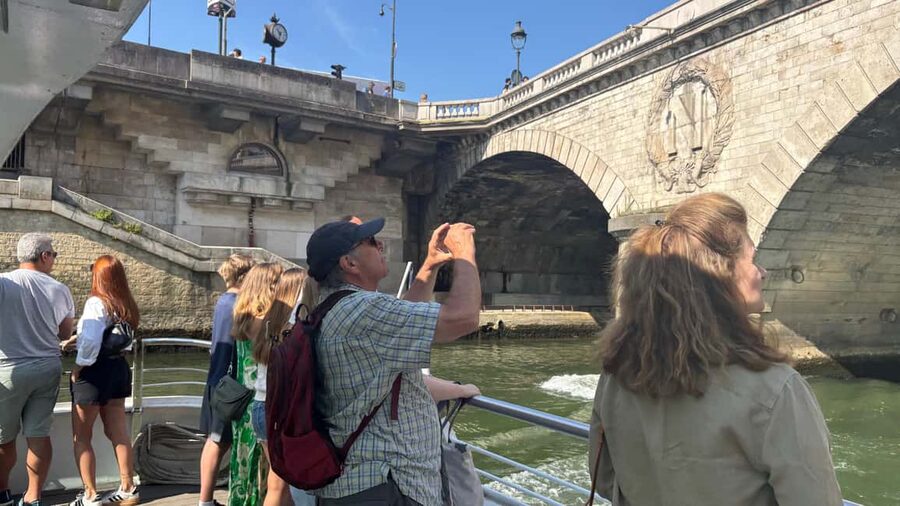
The Louvre stop is at Quai du Louvre, near Pont Royal and Pont du Carrousel. For many people, this is the most valuable stop on the route. The museum is enormous, and even a short visit requires planning. Use the Batobus to arrive, but do not expect to see the Louvre and continue on the next boat.
The Seine gives you a fine approach to the museum, with views of the long riverside façade and the historic bridges. The outdoor terrace is useful for photos, though the cabin windows can be less clear if they need cleaning.
If you are visiting the Louvre, think of the boat as your transport connection rather than part of the museum visit. A 48-hour pass works well here because you can devote a full block of time to the museum and still use the boat later for another part of Paris.
Place de la Concorde and the Grand Palais
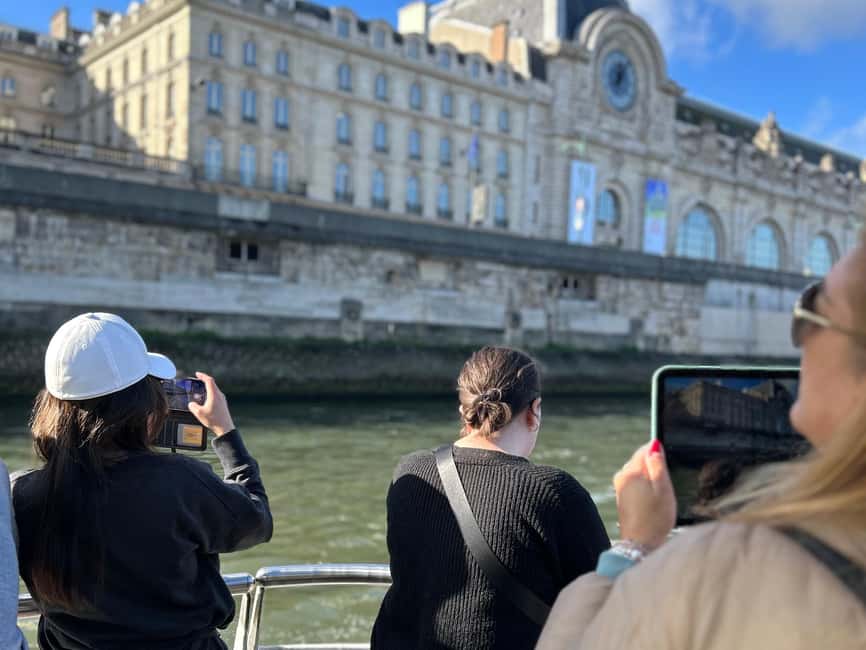
The Place de la Concorde stop gives you access to one of Paris’s grandest squares. From here, you can walk toward the luxury shops on Avenue Montaigne or visit the Grand Palais and Petit Palais.
This stop is well placed for an early evening ride. The river views become especially attractive as the light softens, and the boat offers a break after a day inside museums. The terrace is the obvious place for photos, but the covered cabin may be more comfortable in wind or rain.
The schedule matters at the end of the day. Seasonal hours change, and the listed winter timetable gives first departures from the Eiffel Tower at 10 a.m., with final departures at 5 p.m. Monday through Thursday and 7 p.m. Friday through Sunday between November 3, 2025, and March 31, 2026. Check the current hours before building your evening around the boat.
Invalides and Pont Alexandre III
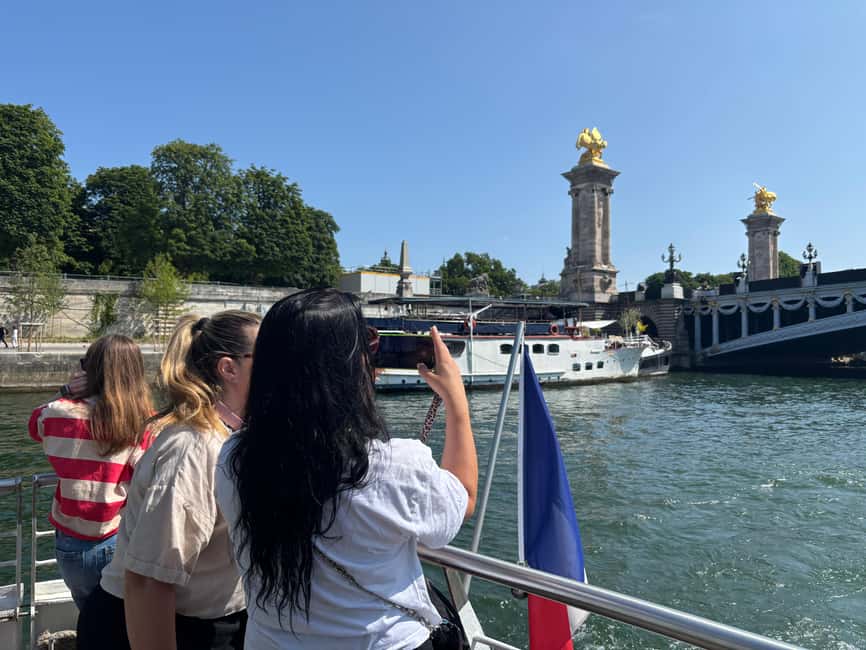
The Invalides stop is at Port des Invalides, near Hôtel des Invalides and Pont Alexandre III. Invalides houses Napoleon’s tomb, while the bridge is one of the most ornate crossings on the Seine.
This is a rewarding stop for architecture and river views. The bridge itself deserves a look from both the bank and the boat. If you enjoy grand monuments, this section of the route gives you some of the best contrasts between formal Parisian design and the relaxed movement of the river.
The route returns to Port de la Bourdonnais near the Eiffel Tower. You can stay aboard for the full loop or get off earlier at the stop that fits your hotel or dinner plans.
What the boat is like in real use
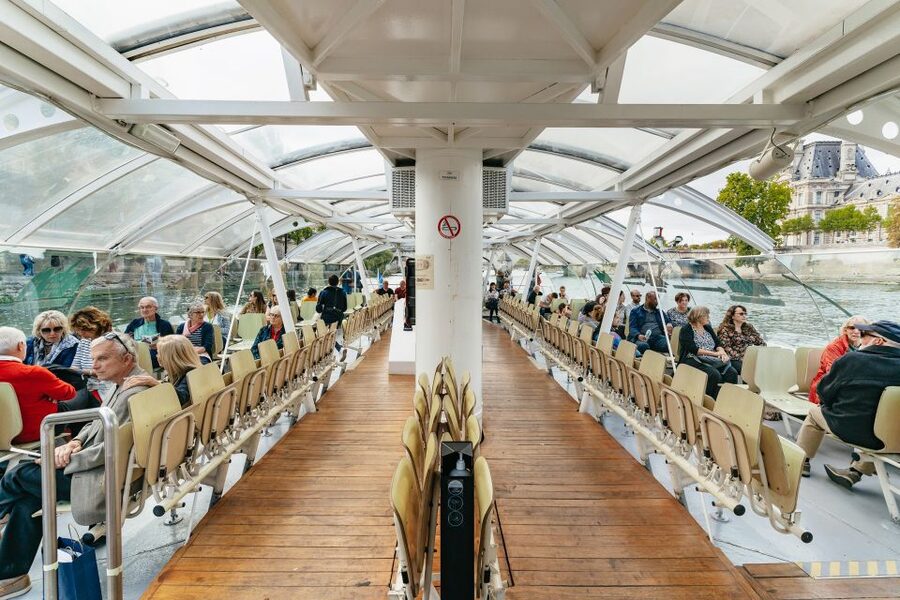
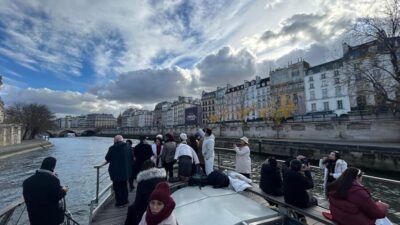
The boats have heated interiors, glass-covered sections, and a terrace. That combination makes the service usable in more seasons than an open sightseeing bus. In winter, the warm cabin is a real benefit. In summer, the glass can trap heat, and there is limited shade in some areas.
Bring a charged smartphone. The interactive webapp provides information about monuments and things to do around the stops in five languages. It is not the same as having a live guide explain every building as you pass, so download or open the material before boarding if you want context during the ride.
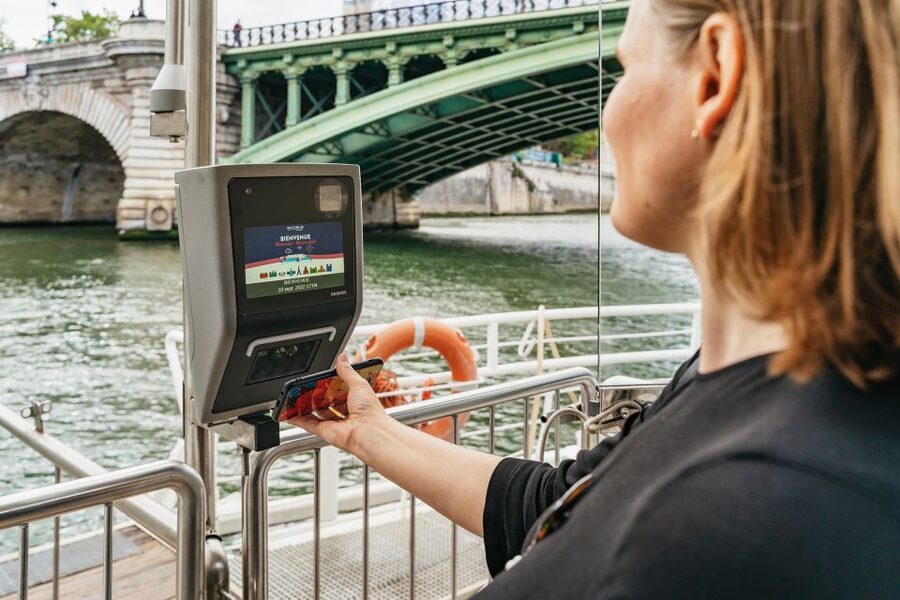
Staff and hosts speak French, English, Spanish, German, and Italian. You can expect help at the stops, and the piers are generally easy to find. Scan your ticket each time you board. The pass starts when you first use it, not necessarily on the date selected during booking, and it remains valid for 24 or 48 consecutive hours.
Boats are clean and generally spacious, but busy departures can fill quickly. Pushchairs must fold, large bags and luggage are not allowed, and non-folding strollers cannot come aboard. The service is not suitable for wheelchair users, so check carefully if step-free access is essential.
Choosing 24 or 48 hours
The 24-hour pass suits a focused day built around the Seine. You might start at the Eiffel Tower, visit the Musée d’Orsay, stop at Saint-Germain-des-Prés for lunch, and continue to Notre-Dame or the Louvre. It also works well if you mainly want transport between a few major sights.
The 48-hour pass gives you more breathing room. You can use one day for the Eiffel Tower, Invalides, and the Musée d’Orsay, then spend another day around Notre-Dame, the Louvre, Hôtel de Ville, and the Marais. You can also take a full loop without feeling that you are wasting valuable sightseeing time.
I would choose 48 hours if you are in Paris for several days, traveling with children, or trying to avoid long walks in hot weather. I would choose 24 hours if your schedule is tight and the boat fits directly into your sightseeing route.
Who will get the most from Batobus
This pass is a good match for first-time visitors who want a clear route through central Paris. It also works for repeat visitors because the boat connects districts without forcing you into the usual tourist circuit.
Families can use it as a simple way to pause between attractions. Older visitors and anyone who finds Metro stairs tiring may prefer the river, although the service is not suitable for wheelchair users and busy boats may have limited seating.
You should think twice if you want a fully narrated cruise, guaranteed open-air seating, or late-night transport. The webapp provides useful commentary, but you need your own charged phone. The boat is also a poor choice for carrying suitcases because luggage and large bags are not allowed.
Should you book this Seine pass?
Book it if you want sightseeing and transport in one ticket, especially if you plan to use the boat several times. The most highly praised features are the convenient stops, short waits, clean boats, friendly multilingual staff, and the chance to escape traffic and crowded Metro routes.
Choose the 48-hour pass when you want an unhurried Paris visit. Choose 24 hours for a compact itinerary. Just remember that the boat is not a replacement for walking, museum tickets, or a detailed guided tour. It is a calm, scenic way to connect the city’s major sights, and at about $27, it can be excellent value when you ride more than once.
FAQ
How long is the Batobus pass valid?
You can choose a 24-hour or 48-hour consecutive pass. Its validity begins when you first board and scan the ticket.
Where can I board the Batobus?
You can board at any of nine stops: Tour Eiffel, Musée d’Orsay, Saint-Germain-des-Prés, Notre-Dame, Invalides, Jardin des Plantes, Hôtel de Ville, Louvre, and Place de la Concorde.
Does the boat stop near the Eiffel Tower?
Yes. The Eiffel Tower stop is at Port de la Bourdonnais, directly near the tower.
Can I use the pass for a full scenic circuit?
Yes. You can remain on board for the loop, which takes about two hours according to the supplied operating information.
Are boats heated?
Yes. The boats have heated interiors and glass-covered sections, along with a terrace.
Is there an audio guide?
The experience includes an interactive webapp with information about monuments and nearby activities. It is available in English, French, Italian, Spanish, and German.
Do I need a smartphone?
Bring a charged smartphone to use the interactive webapp and access information during your visit.
Can I bring a baby carriage?
Yes, but it must be a fold-up carriage. Non-folding strollers are not allowed on board.
Can I bring luggage or large bags?
No. Luggage and large bags are not allowed.
Is the Batobus suitable for wheelchair users?
No. The activity is listed as unsuitable for wheelchair users.
Just added around Paris
- Paris: Seine River Cruise with 3-Course Dinner & Live Music★ 4.5 · 570 reviews
- Paris: 3-Course Lunch Cruise on the River Seine★ 4.3 · 1,416 reviews
- Paris: Seine River Cruise & Eiffel Tower Visit★ 4.7 · 297 reviews
- Paris: Seine River Champagne Dinner Cruise with Live Music★ 4.4 · 287 reviews
- Paris: Picasso Museum Ticket & Optional Seine River Cruise★ 4.7 · 277 reviews
- Paris: Opera Garnier and Seine River Cruise Tickets★ 4.5 · 957 reviews
- Paris: Seine River Panoramic Cruise★ 4.4 · 1,312 reviews
- Paris: Grèvin Wax Museum and Seine River Cruise Tickets★ 4.4 · 282 reviews
River Cruises, compared.

1-Hour Seine Cruise departing from the Eiffel Tower
Read our review →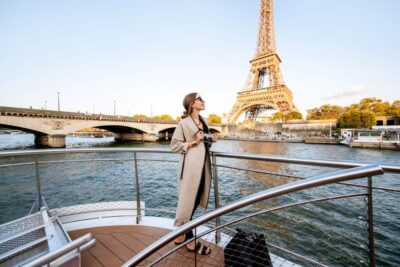

Douro Valley w/ Boat Tour, Wine Tasting & Lunch
Read our review →
Illuminations River Cruise with Audio Commentary
Read our review →
Seine Cruise & Crepe Tasting near the Eiffel Tower
Read our review →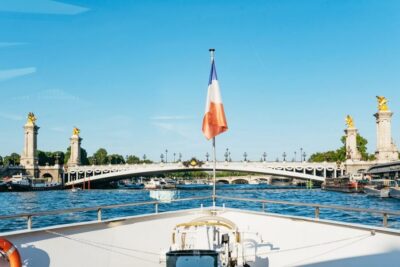
1-Hour Guadalquivir River Sightseeing Eco Cruise
Read our review →Browse the lists this tour appears in