
REVIEW · CHICAGO
Chicago Architecture Center River Cruise aboard First Lady
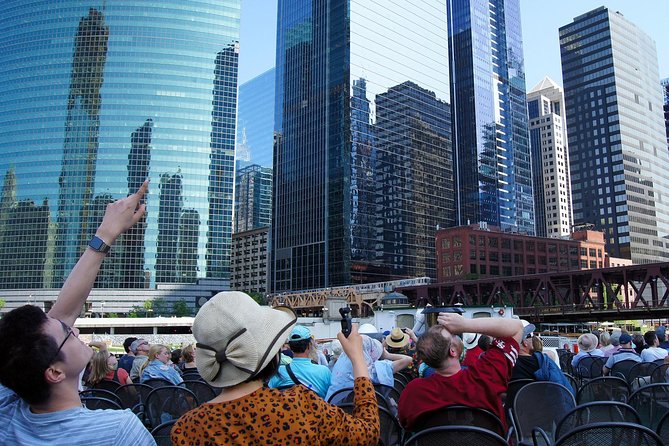
Chicago’s best introduction may be a slow turn along its river, where towers rise on both sides and the city’s story unfolds building by building. This 90-minute Chicago Architecture Center cruise aboard Chicago’s First Lady gives you a clear view of Marina City, Willis Tower, Navy Pier, and some of the city’s boldest modern structures.
I like the excellent docent narration and the way the river makes Chicago’s architecture easy to read. I also like the heated lower salon, full bar, and choice of departure times. The main drawback is the fixed ticket: it cannot be refunded or moved to another departure, and open-air seating can feel chilly in the shade.
Key points to know before you book
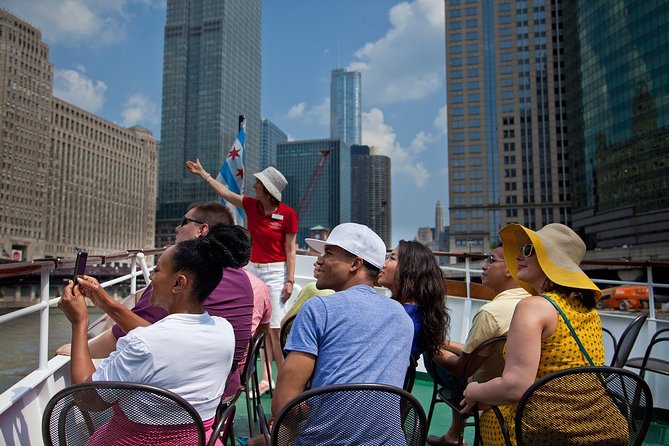
- A docent-led lesson on the river: Guides such as Cynthia, Laura, Amy, Russell, Nick, and Mark have led departures, though your guide will vary.
- A strong first-day activity: You see a broad section of central Chicago in 90 minutes, then recognize the buildings as you explore on foot.
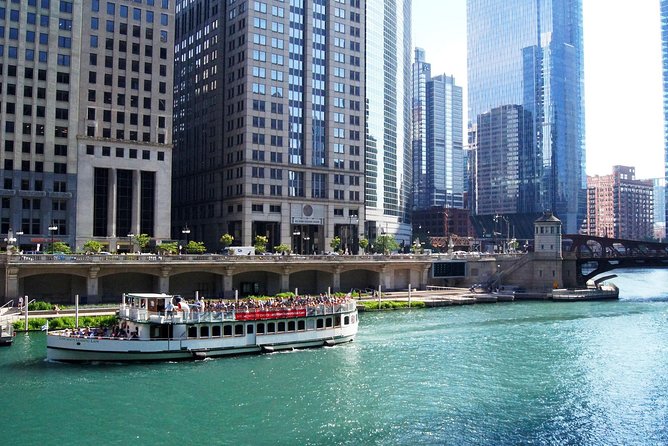
- Two levels for changing weather: The upper deck is open to the air, while the lower salon is climate controlled and lined with large windows.
- General admission seating: Seats are not assigned, so arriving at least 30 minutes early gives you a better choice.
- A full bar onboard: Drinks and light snacks are available for purchase, including hot chocolate on some departures.
- A strict ticket policy: Tickets are non-refundable and cannot be transferred to another sailing.
Why the Chicago River is the right classroom
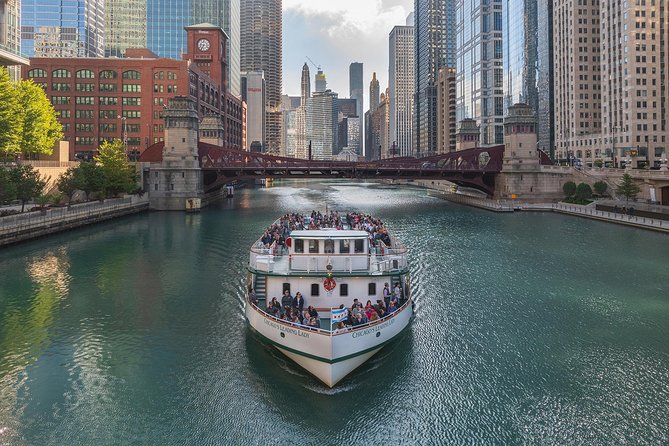
Chicago’s river is not just a waterway beside the skyscrapers. It is the thread tying together the city’s industrial past, transportation network, building boom, and current public life.
From the boat, you get a view that streets rarely provide. Instead of looking up at one facade at a time, you can see how a tower meets the river, how its neighbors frame it, and how different periods of design sit side by side. That is the central strength of this cruise.
Your docent explains the city in plain language, connecting architecture with business, politics, engineering, and urban change. The best guides make the buildings feel less like a list of famous names and more like decisions made by people with specific goals.
The cruise is also a useful orientation. I recommend taking it early in your Chicago visit. Afterward, you will have a mental map of the Loop, the river branches, Wacker Drive, and several major towers. That makes later walks easier and gives you a reason to pause when you see a building from street level.
The cruise is offered in English, and the commentary continues throughout the ride. The strongest part of the experience is the explanation, not simply the view. You can take skyline photos from many places in Chicago, but you will not get the same sense of how the city fits together without a guide.
More River Cruises in Chicago:
- Chicago Architecture River Cruise
★ 5.0 · 15,756 reviews - Chicago: Architecture River Cruise Skip-the-Ticket Line
★ 4.8 · 4,325 reviews - Chicago: 45-Minute Family-Friendly Architecture River Cruise
★ 4.7 · 2,304 reviews
Boarding at the Riverwalk
The departure point is at 112 E. Wacker Drive, along the Chicago Riverwalk. The entrance is at street level near the northeast corner of Michigan Avenue and Wacker Drive, about three blocks north of Millennium Park and close to the Magnificent Mile.
Allow at least 30 minutes before departure. You need time to reach the dock, collect the proper boarding ticket if required, and join the line. One important practical detail: a mobile confirmation is not necessarily the final boarding ticket. Follow the instructions at the ticketing office rather than heading straight to the boat with only your phone ready.
The dock does not have elevator access. You will use stairs to reach the boat, so this matters if you have mobility concerns or heavy bags. Luggage cannot be brought onboard, and there is no dockside storage. Leave suitcases at your hotel.
Seating is general admission. Any seat numbers printed on your ticket can be ignored. Board early if sitting with your group matters or if you want a particular angle for photographs.
The boat can hold up to 250 people, so this is not a tiny, intimate outing. Still, the vessel is described as clean, spacious, and comfortable, with room to move between the two levels.
Choosing between the open deck and lower salon
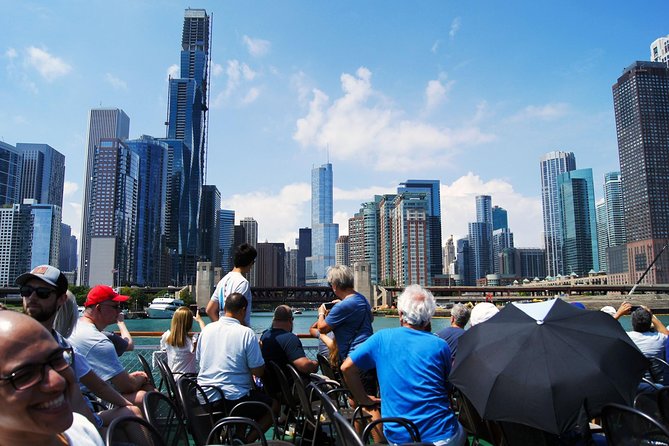
The upper deck gives you the clearest photographs and the most direct sense of the buildings around you. It is the place to be on a mild, sunny day, especially if you want an unobstructed view of the upper floors.
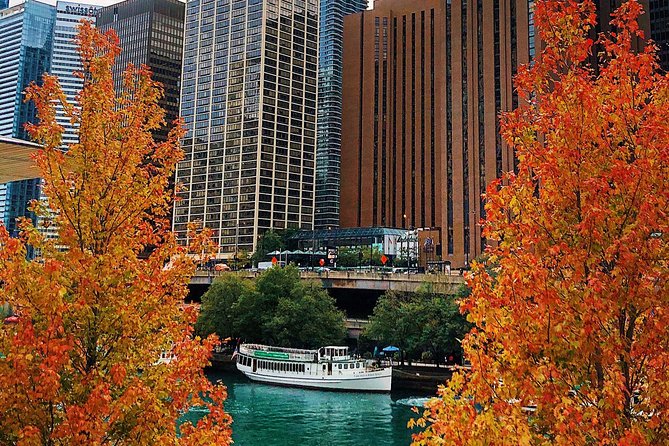
The tradeoff is exposure. The river corridor can be shaded even when the weather is pleasant, and several departures have felt cold in the shade. Bring a jacket, sunglasses, and a cap or visor. Sun glare can interfere with your view of the buildings, so sunglasses are genuinely useful.
The lower salon is enclosed and climate controlled. Large windows let you continue watching the river while staying warm or dry. This is especially helpful on rainy days, since the cruise operates in all weather conditions.
I would not treat the lower level as a second-rate option. It is a smart choice in cold weather, and it provides a calmer place to listen to the docent. You may want to spend part of the trip outside for photographs, then return indoors when the wind picks up.
There are restrooms onboard. For safety, they close 15 minutes before the tour ends. A full bar is also available, with drinks and light snacks for sale. A warm drink can be welcome on a cool evening, though purchases are not included in the $57 ticket.
What you see along the Chicago River
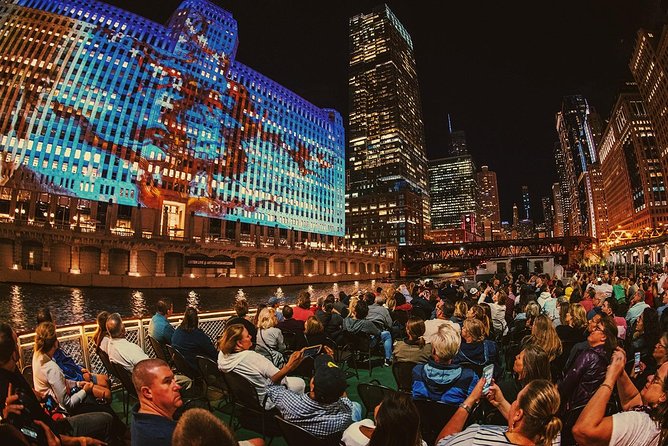
The route covers a useful stretch of central Chicago. Specific vessels and routes can change, but the cruise typically presents a run of major buildings and riverfront landmarks.
A few more boat days around Chicago worth a look
- Chicago River: 1.5-Hour Guided Architecture Cruise
★ 4.8 · 8,046 reviews - Chicago: 1.5-Hour Lake and River Architecture Cruise
★ 4.7 · 2,050 reviews - Chicago by Night River and Lake Cruise
★ 4.6 · 791 reviews - Chicago: Shoreline Lake Michigan Skyline Cruise
★ 4.6 · 758 reviews
Navy Pier and adaptive reuse
Navy Pier is one of the city’s best examples of a place that has changed purpose over time. It has served as a naval base, university campus, shipping hub, and entertainment destination.
From the river, you see Navy Pier as part of Chicago’s working waterfront and public waterfront, not merely as a place for rides and restaurants. The docent places it within the wider story of reuse, showing how old infrastructure can take on new roles.
Marina City’s concrete cylinders
Marina City is one of the cruise’s most memorable sights. Bertrand Goldberg designed the twin cylindrical towers as an urban experiment intended to bring middle-class residents back to the city during a period of suburban migration.
The unusual shape is easy to appreciate from the water. Rather than presenting a flat wall to the river, the towers curve outward in repeated concrete forms. Your guide explains the social goal behind the design, which makes the buildings more interesting than a quick photo stop.
Trump International Hotel & Tower
The Trump International Hotel & Tower provides a lesson in context. Its glass and steel exterior reflects the buildings and river around it, and the docent uses that relationship to explain how a new tower can respond to its surroundings.
This is one of the more useful parts of the tour because it asks you to compare buildings rather than judge each one alone. Look beyond the name and focus on the structure’s materials, height, and position along the river.
Mies van der Rohe’s Modernism
One of the last American projects designed by Ludwig Mies van der Rohe occupies a prominent place along the Chicago River. The building offers a sharp contrast to the rounded forms of Marina City and the more expressive towers nearby.
Here, the tour turns toward Modernist ideas: restraint, structure, steel, glass, and carefully controlled lines. You do not need an architecture degree to follow the explanation. The river gives you time to compare the buildings at a steady pace.
150 North Riverside
150 North Riverside looks almost impossible at first glance. Its narrow base and wider upper floors create the impression that the tower is balancing above the ground.
The building is as much an engineering story as an architectural one. From the boat, you can study its unusual proportions without the obstruction of nearby streets. This is a good example of why the river route works so well: the water opens a direct sightline to the entire structure.
Boeing International Headquarters
The boat also passes 100 N. Riverside Plaza, home to Boeing International Headquarters. It is one of several buildings that help fill out the larger picture of the river corridor.
Not every stop will be a famous landmark, and that is a strength. The guide points out how office buildings, older commercial structures, and newer towers work together to create Chicago’s recognizable riverfront.
Willis Tower
For nearly 25 years after completion, Willis Tower, formerly the Sears Tower, was the world’s tallest building. From the river, its height becomes easier to understand because you can see it rising well above the surrounding blocks.
The narration connects the tower with Chicago’s long competition to build bigger and higher. Even if you have already seen Willis Tower from the Skydeck or from the street, the water offers a different scale and angle.
The former Marshall Field’s wholesale warehouse
Size mattered in Chicago’s commercial past. Completed in 1930, the former Marshall Field’s wholesale warehouse was once the largest building in the world and served as a place where retailers bought stock.
This stop adds needed variety. The cruise is not only about glamorous glass towers. It also shows how commerce shaped the city and how large, practical buildings supported businesses far beyond the downtown core.
Chicago Mercantile Exchange Building
At 20 S. Wacker Drive, the Chicago Mercantile Exchange Building represents the financial side of the city’s identity. The docent explains how buildings along the river reflect Chicago’s role in trade, markets, and business.
The river route makes these connections easier to follow because the buildings appear in sequence. You are not jumping between unrelated sights. You are watching one part of the city develop around the water.
Chicago Tribune Freedom Center
The Chicago Tribune Freedom Center completes the tour’s look at the riverfront’s changing uses. The building belongs to the city’s media story and adds another layer to the mix of commerce, industry, and public life.
By this point, the cruise has shown you residential experiments, corporate towers, Modernist design, engineering tricks, financial buildings, and older commercial architecture. Ninety minutes passes quickly because the subject keeps changing.
The quality of the docent makes the difference
The boat and views matter, but the docent determines how much you take away. The Chicago Architecture Center’s guides are trained volunteers and presenters who focus on the reasons behind the buildings.
Named guides on past departures have included Cynthia, Laura, Amy, Russell, Nick, and Mark. The style will vary from one sailing to another. Some guides lean toward city history, while others focus more on engineering, design, or the personalities behind the projects.
The best presentations are lively without becoming theatrical. You can expect clear explanations of architects, building dates, urban change, and the way one structure responds to another. The guides also keep the pace moving, which helps the 90 minutes feel full without feeling rushed.
This is not an audio recording you can pause or replay. If you miss a point while taking a photograph, you may not get it again. I suggest listening closely during the first pass through an area, then using the open deck for pictures when the boat slows or turns.
Is $57 a fair price?
At $57 per person, this is not the cheapest way to see Chicago. You are paying for a guided cruise, the boat, the route, and the live interpretation rather than simply transportation.
The value is strongest if you care about architecture or have limited time in the city. A 90-minute outing covers a broad collection of major buildings without asking you to walk several miles or arrange separate stops. It also gives you context that a basic sightseeing cruise may not provide.
The price makes less sense if you only want a quick boat ride and photographs. You could spend less on some general cruises, but you would likely get less architecture-focused commentary. This outing earns its price through the docent and the quality of the route.
Admission to the Chicago Architecture Center across Wacker Drive is discounted to $5 when you show your cruise ticket. That makes a visit before or after the cruise a sensible add-on, especially if you want to continue learning about Chicago’s buildings.
Who should book this cruise?
I recommend it for first-time visitors, architecture fans, couples, families with older children, and anyone who wants an efficient introduction to central Chicago. The activity is not recommended for children younger than 12, and children must be accompanied by an adult.
It also works well for a short Chicago stay. You see a large part of the central riverfront in one sitting, then use the rest of your visit to explore the buildings that caught your attention.
Families should know that the subject is architectural history, not a children’s entertainment show. Older children who enjoy city views and stories about buildings should manage well, while younger children may find the steady narration demanding.
The cruise is accessible to most participants, but the lack of elevator access to the dock is important. Service animals are allowed, but pets are not. Strollers can come onboard after children are removed, and staff store folded strollers in the salon.
Booking advice and final call
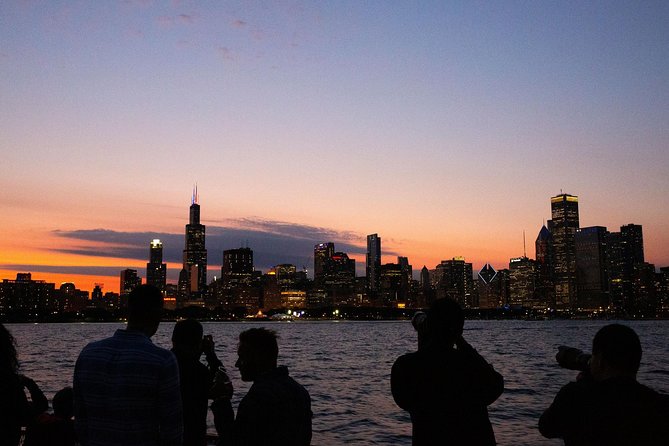
Reserve ahead if your schedule is tight. The cruise is often booked about a week in advance, and popular times can fill. Choose an evening sailing if you want softer light on the buildings, or a daytime trip if clear photographs are your priority.
Arrive 30 minutes early, dress for wind and shade, and leave luggage at your hotel. Since tickets cannot be refunded, transferred, or changed, check the forecast and your schedule before purchasing. The cruise still operates in rain, and the enclosed lower salon makes poor weather manageable, but you should be comfortable committing to the departure.
Book this tour if you want Chicago’s architecture explained rather than simply displayed. The combination of river views, strong guides, heated indoor seating, and a well-chosen route makes it one of the most useful first activities in the city. Skip it only if you dislike guided commentary, need flexible plans, or want a shorter and cheaper sightseeing ride.
FAQ
Where does the Chicago Architecture Center River Cruise depart?
The cruise departs from 112 E. Wacker Drive along the Chicago Riverwalk. The entrance is near the northeast corner of Michigan Avenue and Wacker Drive.
How early should I arrive?
Arrive 30 minutes before departure. Allow extra time during summer, when the area can be busy.
Is seating assigned?
No. Seating is general admission and boarding is first come, first served. Any seat numbers printed on tickets are not valid.
Does the boat have indoor seating?
Yes. The lower salon is enclosed and climate controlled, with large windows. The upper deck is open-air.
Does the cruise operate in rain?
Yes. The cruise operates in all weather conditions. Dress appropriately, and use the lower salon for shelter from rain or cold.
Can I buy food or drinks onboard?
Yes. A full bar is available, and drinks and light snacks can be purchased onboard.
Can I bring luggage or a pet?
No luggage storage is available at the dock or on the boat, so leave luggage at your hotel. Pets are not allowed, but service animals are permitted.
Is the Chicago Architecture Center nearby?
Yes. It is directly across Wacker Drive from the docks. You can receive discounted admission of $5 per person by showing your river cruise ticket.
Just added around Chicago
- City Cruises Chicago: Seadog Lakefront Speedboat Ride★ 4.4 · 642 reviews
- City Cruises Chicago: Premier Lunch or Dinner Cruise★ 4.3 · 334 reviews
- City Cruises Chicago: 75-min Speedboat Architecture Cruise★ 4.5 · 268 reviews
- Chicago: Shoreline Lake Michigan Skyline Cruise★ 4.6 · 758 reviews
- Chicago: 1.5-Hour Scenic Sunset Lake Cruise★ 4.7 · 739 reviews
- Chicago by Night River and Lake Cruise★ 4.6 · 791 reviews
- Chicago: Narrated Sightseeing River and Lake Cruise★ 4.7 · 268 reviews
- Chicago: Fireworks Cruise with Lake or River Viewing Options★ 4.3 · 551 reviews
River Cruises, compared.

1-Hour Seine Cruise departing from the Eiffel Tower
Read our review →

Douro Valley w/ Boat Tour, Wine Tasting & Lunch
Read our review →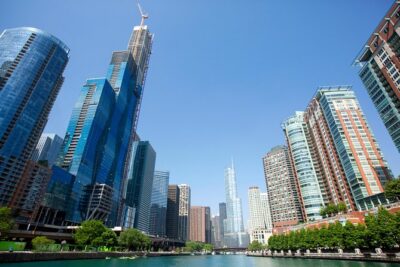
Illuminations River Cruise with Audio Commentary
Read our review →
Seine Cruise & Crepe Tasting near the Eiffel Tower
Read our review →
1-Hour Guadalquivir River Sightseeing Eco Cruise
Read our review →Browse the lists this tour appears in