
REVIEW · NEW ZEALAND
Whale Watching in Kaikoura by Boat
Kaikoura’s sperm whales are not passing visitors. They live in the rich waters just offshore, where steep underwater canyons bring food close to the coast. This 3.5-hour catamaran trip gives you a strong chance to see one in its natural setting, often along with dolphins, seals, and albatross.
I like the 80% refund promise if no whale appears, and I like the running commentary that explains what you are seeing instead of leaving you to stare at empty water. The bus transfer between the station and marina also keeps the outing simple.
The catch is the sea. Even on a decent day, the ride can be rough, and seasickness is a real possibility. Bring warm clothes, wear flat shoes, and take motion sickness medicine before departure if you are prone to feeling queasy.
What makes this Kaikoura whale trip worth considering
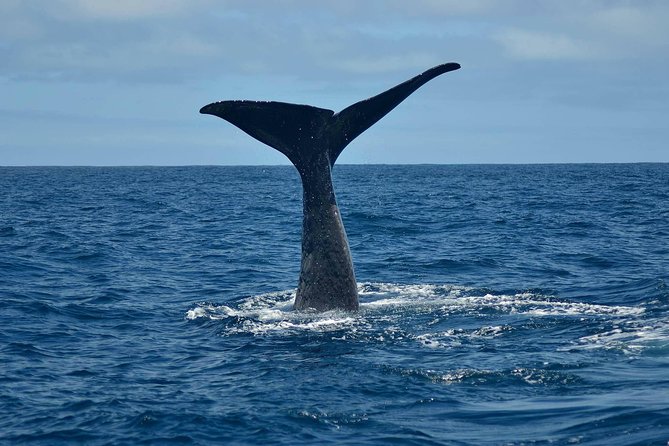
- Sperm whales are the main event: Kaikoura offers a rare chance to see these huge animals close to shore in their natural feeding grounds.
- Up to 2.5 hours on the water: The full experience takes about 3.5 hours, including check-in, safety instructions, and bus transfers.
- A strong sighting guarantee: The operator reports a 95% whale-sighting success rate and provides an 80% refund if you see no whale.
- Wildlife beyond whales: You might also see dusky dolphins, orca, humpback whales, pilot whales, fur seals, albatross, petrels, and other seabirds.
- Live interpretation throughout: Crew members explain whale behavior, Kaikoura’s underwater canyons, and the animals’ life cycles.
- Weather affects everything: Departures can be delayed or canceled for sea conditions, and the minimum age may rise above three in rough weather.
Kaikoura’s unusual setting gives the trip its edge
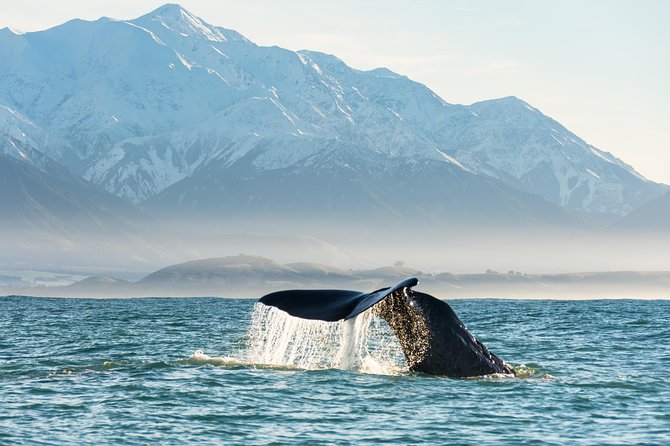
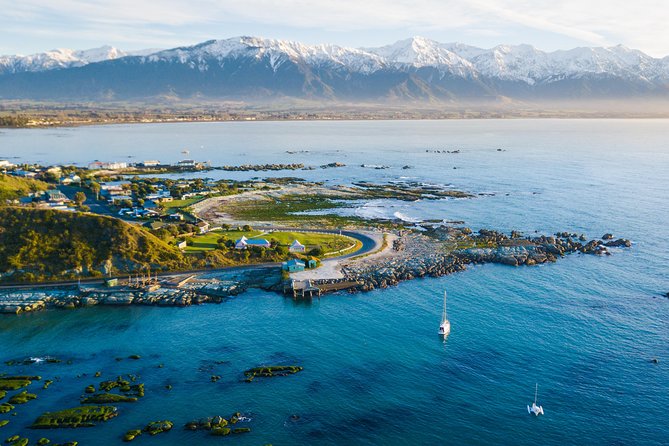
Kaikoura is not simply a coastal town with a whale tour attached. It sits beside an unusual meeting point of mountains, ocean currents, and underwater canyons. The sea floor drops sharply offshore, creating feeding conditions that bring sperm whales close enough to reach by boat.
That geography is the reason this experience can work in a half day. You are not spending hours racing toward a distant whale-watching zone. The animals live in the area, and the crew searches within waters that have supported whale sightings throughout the year.
The setting also carries cultural meaning. In Māori tradition, the ancestor Paikea reached New Zealand with the help of a whale. The whale remains central to Kaikoura’s identity, and the commentary helps connect the wildlife outing with the town’s older traditions and its modern role as an eco-tourism center.
You will also get fine views of the Kaikoura ranges from the sea. The mountains rise sharply behind the town, while the open Pacific stretches in front of you. It is a memorable place to watch wildlife, even during a quiet spell when the animals stay below the surface.
More Whale Watching Trips in New Zealand:
- Kaikoura: Whale Watching Cruise
★ 4.6 · 3,089 reviews - Auckland: Whale and Dolphin Watching Half-Day Eco Cruise
★ 4.5 · 1,072 reviews - Auckland: Tikapa Moana Whales, Dolphins and Islands Cruise
★ 3.9 · 292 reviews
Check-in, transfer, and the first ride out
The meeting point is Whale Watch Kaikoura at Whaleway Station Road. Check-in times are listed as 7:15 a.m., 10:00 a.m., 12:45 p.m., and 3:30 p.m. from November through March. These are check-in times, not invitations to arrive early and wait around, so plan your morning accordingly.
A bus takes you between the station and the marina. That small detail matters because you do not need to organize a separate transfer or find parking beside the boat. The tour ends back at the original meeting point.
The full outing takes about 3.5 hours, but the actual time on the water can be up to 2.5 hours. The remaining time covers check-in, a safety briefing, and the bus ride. Keep that timing in mind if you are connecting with a train, long drive, or another booked activity.
The boats are purpose-built catamarans, designed for whale watching rather than simply adapted from a fishing or sightseeing vessel. They offer indoor seating during the faster ride out and outdoor deck areas when you want a clearer view or a photograph. The maximum listed group size is 116 people, so this is a substantial operation rather than a small private boat trip.
Finding the sperm whales offshore
The crew heads toward the whale area while providing commentary about the ocean, local canyons, and the animals you may encounter. The trip is not silent travel between sightings. Onboard animations and explanations help fill the time and give you a better idea of why sperm whales spend time in this part of the sea.
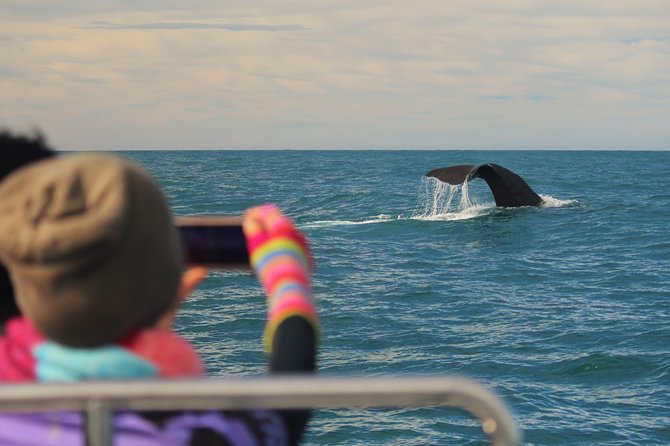
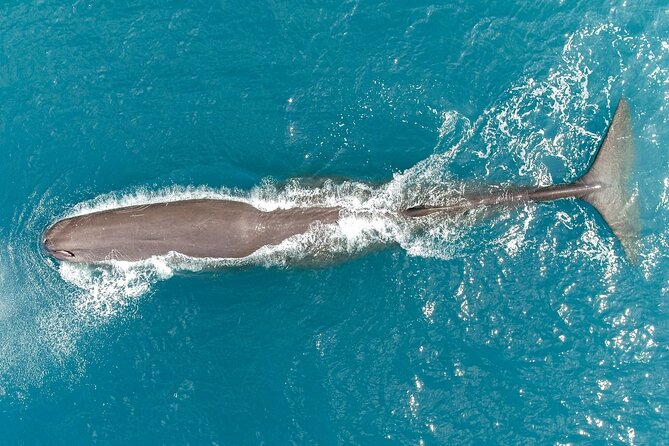
A typical sperm whale sighting is not a television wildlife sequence. You may first see a spout, then a dark back resting at the surface. If the timing works, the whale raises its tail before slipping beneath the water. One reported encounter lasted around ten minutes, with the whale resting calmly before showing its tail and disappearing.
That is the right expectation to bring. You may see only a back, a blow, or a tail. The animal decides how long it stays visible, and the crew cannot stage a closer or more dramatic moment. The reward is seeing a wild whale behave on its own terms.
The captain adjusts the route based on current sightings. Captains Malena and Fred have been singled out for spotting ability, local knowledge, and clear commentary, though the crew on your departure may be different. The operation depends on constant communication between the boat and staff tracking activity in the area.
The 95% success rate is unusually reassuring for a wildlife trip, but it is not a promise that every outing will produce several whales or perfect photographs. If no whale is seen, the 80% refund gives the price some protection. You still need to accept that wildlife remains unpredictable.
Dolphins, seals, albatross, and surprise sightings
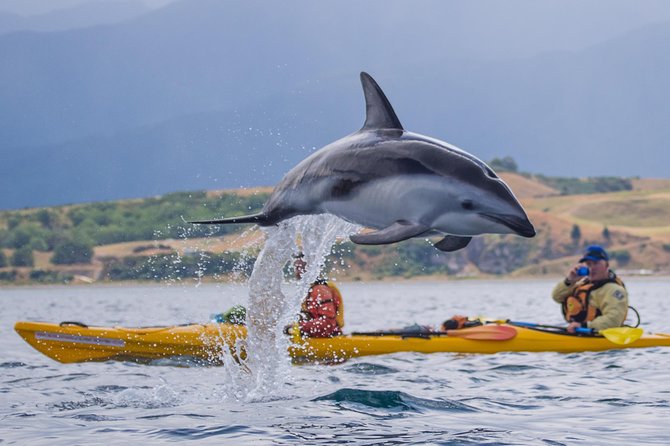
The non-whale wildlife can turn a good outing into a superb one. Dusky dolphins are a regular highlight, and large pods may race beside the boat, leap, and twist through the water. In some conditions, the dolphins are more active and entertaining than the whales.
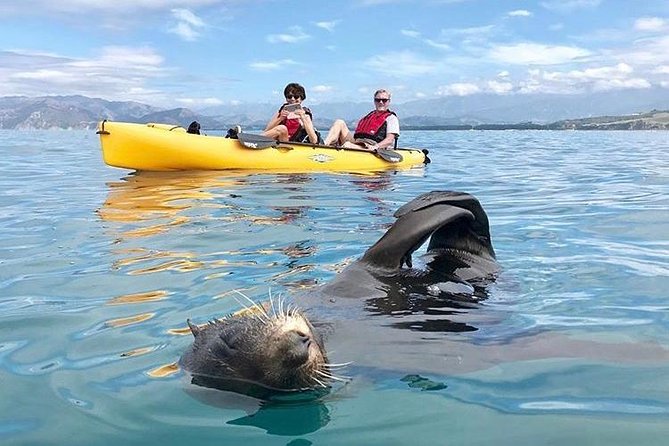
You might also see fur seals near the boat, along with albatross and petrels overhead. Albatross sightings are especially worthwhile because these large seabirds can glide for long stretches with little visible effort. The crew explains the birds as well as the mammals, so keep watching the sky when the water appears quiet.
Other sightings reported on the route include orca, humpback whales, pilot whales, and even rare blue whales. These are possibilities, not scheduled stops. The main purpose is to search for sperm whales, with the wider wildlife list adding interest to the journey.
This is where the tour’s flexible routing helps. If one sighting changes quickly, the captain can respond and search another area. The experience is less like visiting a fixed exhibit and more like following clues across a large stretch of sea.
A few more boat days around New Zealand worth a look
- Waitomo: Glowworm Caves Guided Tour by Boat
★ 4.5 · 4,908 reviews - Premium Milford Sound Small Group Tour & Cruise from Queenstown
★ 5.0 · 3,001 reviews - Cruise Milford NZ Small Boutique Cruise Experience
★ 5.0 · 2,930 reviews - Queenstown: Walter Peak Gourmet BBQ & Lake Whakatipu Cruise
★ 4.8 · 2,713 reviews
The commentary turns waiting time into useful time
A good whale trip needs more than a fast boat. You also need someone to explain what you are seeing and why the animals behave as they do. The commentary covers whale habits, life cycles, feeding, and the way Kaikoura’s underwater structure supports marine life.
A marine biologist may provide detailed explanations about the bay and its canyons. The onboard animations give you something visual to follow during the ride and make the science easier to understand, especially for children and anyone new to whale watching.
The commentary also helps set realistic expectations. A sperm whale may spend only a short time at the surface before going down for a long feeding period. Knowing that makes a tail display feel like a meaningful moment rather than a disappointing end to the sighting.
The crew’s safety focus is another positive. Staff monitor weather and sea conditions, and they may place restrictions on children or passengers with medical concerns. That can be inconvenient if conditions change, but it is the correct approach on open water.
Seasickness is the main practical concern
Take the warnings seriously. The trip can be rough, especially during the ride out and back, and several people on one outing may feel unwell. A calm-looking day at the harbor does not guarantee a smooth sea farther offshore.
Motion sickness tablets are available from the retail shop before departure, but if you know you are susceptible, it makes sense to prepare before reaching the boat. The information provided specifically recommends purchasing motion sickness medicine to help prevent seasickness.
Wear warm layers and bring light waterproof clothing for the outside decks. Flat shoes are required for practical reasons on a moving boat. You can remain indoors for parts of the ride, but you will want access to an outdoor viewing area when a whale surfaces.
The minimum age is three years, although the operator can raise the age limit depending on sea and weather conditions at check-in. Most people can take part, but anyone with a medical problem should consider the conditions carefully and contact the operator if needed.
How crowded is the catamaran?
The boat can carry up to 116 people, and that affects the viewing experience. When a whale surfaces, many people naturally move toward the best viewing positions. One criticism of the trip is that the boat can feel crowded around a sighting, especially for anyone hoping for a quiet, small-group experience.
The catamaran’s size has advantages. It provides indoor shelter, a stable professional setup, and room for a proper crew and onboard commentary. It also helps the company run several departures a day during the busier November to March period.
If personal space matters most to you, a smaller vessel may suit you better. If you value a high sighting rate, a strong safety system, and indoor seating when the sea turns rough, the larger boat may be the better tradeoff.
An early departure can sometimes feel less busy, but no departure guarantees a smaller crowd. Wildlife activity, weather, and the number of bookings all affect the mood on board.
Price, value, and what you actually receive
The listed price is $111.39 per person. That is not a cheap casual boat ride, but the cost includes a substantial operation: a purpose-built catamaran, bus transfers, crew commentary, onboard educational material, and up to 2.5 hours searching offshore.
The 80% refund policy if no whale is seen adds real value. You are paying for a serious attempt in a place with a reported 95% success rate, not for a guaranteed animal encounter. That distinction matters because wildlife tours cannot control the behavior of the animals.
Food and drinks are not included, so eat beforehand or plan around the departure time. The tour is long enough that comfort matters, especially if you are taking motion sickness medicine or expect to spend time outside in cool weather.
For me, the price makes the most sense if you see the outing as a full marine wildlife experience rather than a single-whale photograph. Dolphins, seals, seabirds, and the chance of other whale species can make the trip worthwhile even when the main sighting is brief.
Who will enjoy this most?
I would recommend this trip to anyone who wants a well-organized introduction to Kaikoura’s marine life without arranging several separate activities. It suits families with children aged three and above, couples, photographers, wildlife fans, and visitors with only a day or two in town.
It is also a good choice if you want context. The crew does more than point toward a whale. The explanations about the animals, the sea floor, and local Māori tradition give the trip a stronger sense of place.
I would hesitate if you strongly dislike rough water, need a small and quiet group, or expect constant close-up views. I would also avoid scheduling something time-sensitive immediately afterward, since weather or sea conditions can affect departures and the outing already takes about 3.5 hours.
Free cancellation is available up to 24 hours before the start time for a full refund. Cancellations made inside that window are not refunded, while a weather cancellation gives you the choice of another date or a full refund.
Should you book Whale Watching in Kaikoura by Boat?
Book it if seeing a wild sperm whale is high on your New Zealand list and you can handle the possibility of a rough sea. The high reported sighting rate, the refund protection, and the strong commentary make this a sensible choice for a first whale-watching trip in Kaikoura.
Prepare properly. Take seasickness medicine if needed, wear warm layers, and leave enough time for the full outing. Go in expecting spouts, backs, and perhaps a tail rather than a staged performance, and you will be ready to appreciate the moments that nature gives you.
Skip it if you want a private boat or cannot tolerate choppy conditions. For most people who accept those limits, the chance to watch sperm whales, dusky dolphins, albatross, and seals in this dramatic coastal setting is worth the fare.
FAQ
How long does the Kaikoura whale-watching tour take?
Allow about 3.5 hours in total. This includes check-in, a safety briefing, bus transfers, and up to 2.5 hours on the water.
What animals might I see?
The main target is the sperm whale. You might also see dusky dolphins, fur seals, albatross, petrels, or other seabirds, as well as orca, humpback whales, or pilot whales.
What happens if no whale is seen?
The operator provides an 80% refund if no whale is seen during your tour. The stated whale-sighting success rate is 95%.
Where does the tour start and finish?
The tour starts at Whale Watch Kaikoura on Whaleway Station Road in Kaikoura. It ends back at the same meeting point after the marina transfer.
What should I wear and bring?
Dress warmly, wear flat shoes, and bring light waterproof clothing if you plan to use the outside decks. Motion sickness medicine is recommended if you are prone to seasickness.
Can young children join the tour?
Children must be at least three years old. The operator may raise the minimum age depending on sea and weather conditions at check-in.
Just added around New Zealand
- Queenstown: Milford Sound Small-Group Tour w Cruise & Lunch★ 4.9 · 523 reviews
- Queenstown: Lake Whakatipu Boat Trip★ 4.7 · 633 reviews
- Queenstown: Milford Sound Flight and Cruise★ 4.9 · 283 reviews
- Queenstown: Queenstown Lake Cruise and Walter Peak Farm Tour★ 4.8 · 950 reviews
- Queenstown: Lake Wakatipu Scenic Cruise★ 4.7 · 264 reviews
- Queen Charlotte Track: Cruise & Self-Guided Hike from Picton★ 4.8 · 383 reviews
- Queen Charlotte Sound Mail Boat Cruise from Picton★ 4.7 · 541 reviews
- Paihia: Glass Bottom Boat Tour to the Hole in the Rock★ 4.7 · 319 reviews
Whale Watching, compared.
Eco-Yacht Whale and Dolphin Watching and Swimming
Read our review →
Whale & Dolphin Eco-Cruise with Snacks & Drinks
Read our review →
Dolphin & Whale Watching Cruise with Swim Stop
Read our review →Browse the lists this tour appears in