

REVIEW · CHICAGO
Chicago: Architecture Center Cruise on Chicago’s First Lady
Chicago’s most revealing sightseeing route runs through the river canyon, where glass towers, old warehouses, Art Deco landmarks, and historic bridges crowd the waterline. This 90-minute cruise on Chicago’s First Lady gives you a clear view of all three branches while a Chicago Architecture Center docent explains how the city grew upward and outward.
I especially like the live, volunteer-led commentary, which ties buildings to architects, materials, politics, and city life instead of simply naming them. I also like the guaranteed open-air seating and the chance to step inside for air conditioning, a drink, or a snack. The main drawback is access to the dock: there is no elevator, and electric wheelchairs and motorized scooters cannot be accommodated.
Key points
- Three river branches in 90 minutes: You see more than the central river canyon and reach the forks that many shorter cruises skip.
- More than 50 buildings and 13 bascule bridges: The narration gives the skyline a human and historical context.
- Chicago Architecture Center docents: Guides such as Russel, Amy, Patricia, Tim, and Mary Jo have brought strong personal enthusiasm to recent departures.
- Guaranteed open-air seating: You can keep your seat outside for the best views, then move into an enclosed salon when the sun or weather turns rough.
- A useful museum add-on: Add Chicago Architecture Center admission for $5 instead of the regular $14 price.
- Rain or shine operation: Bring sun protection, but remember that late arrivals cannot receive a refund.
Why the Chicago River tells the city’s story
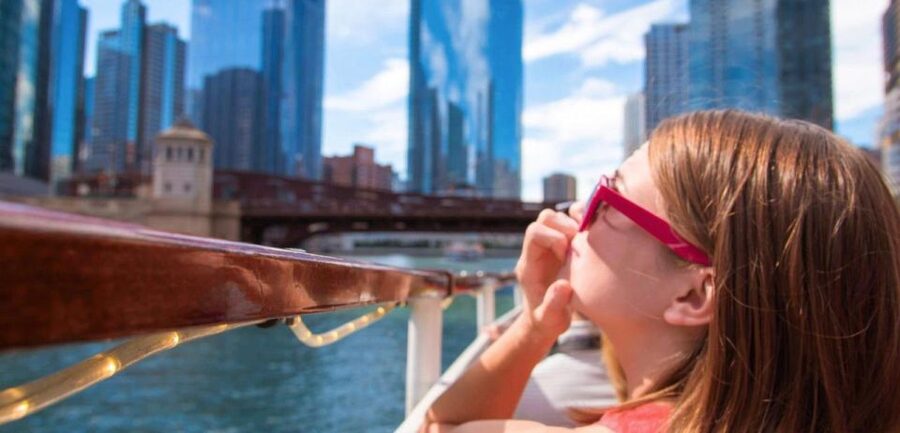
From street level, Chicago’s buildings can feel like a wall of stone and glass. From the river, you see how they meet, how their materials change, and how different eras sit beside one another. The water gives you the distance needed to read the buildings as a group.
The route passes examples of Art Deco, neoclassicism, mid-century modernism, and postmodernism. You are not simply looking at façades. The docent explains how design shaped daily life, how architects responded to changing technology, and how the river helped form the city’s identity.
That is the real value of this cruise. A regular sightseeing boat can show you the skyline. This one gives you a way to understand it.
The trip covers all three branches of the Chicago River, including the forks beyond the busiest central stretch. That matters because the river is not one straight corridor of famous towers. Its branches reveal a broader mix of buildings and help you see how the city changed over time.
A few more boat days around Chicago worth a look
- Chicago Architecture River Cruise
★ 5.0 · 15,756 reviews - Chicago River: 1.5-Hour Guided Architecture Cruise
★ 4.8 · 8,046 reviews - Chicago Architecture Center River Cruise aboard First Lady
★ 5.0 · 5,536 reviews
Boarding at Michigan Avenue and Wacker Drive
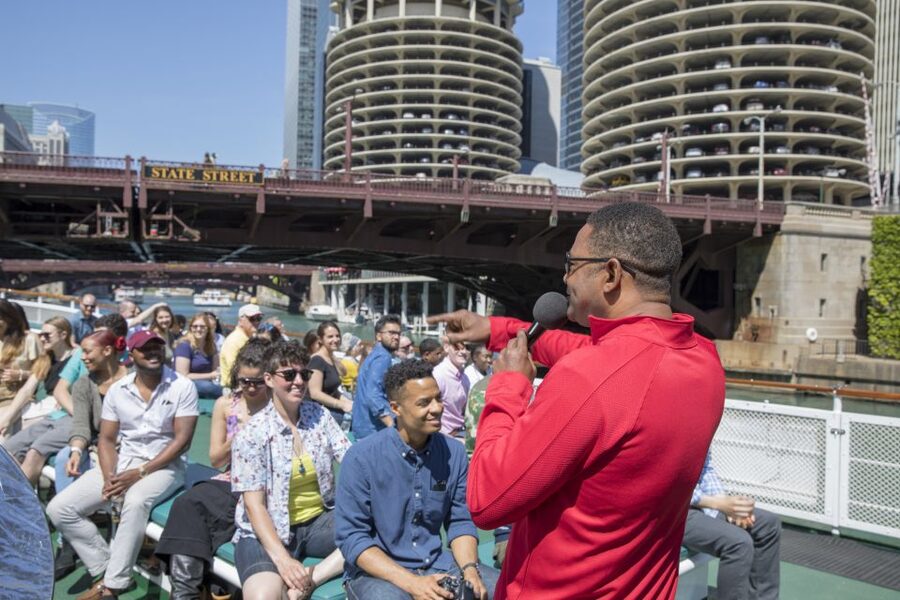
Check in at the black awning for Chicago’s First Lady on the Riverwalk level, at the southeast corner of the Michigan Avenue bridge where Michigan Avenue and Wacker Drive meet. Give yourself time to find the Riverwalk entrance and reach the boat. The meeting point is central, but the level changes and nearby streets can be confusing if you arrive at the last minute.
There is no elevator access to the boat dock. You should also know that the accessible route may involve a longer walk from another entrance. A manual wheelchair may be available from the operator for guests who can transfer, but it depends on availability. Electric wheelchairs and motorized scooters cannot be taken aboard for safety reasons.
Once you reach the boat, seating on the open-air upper decks is guaranteed. That is a useful detail, especially if you want an unobstructed view rather than a seat behind another passenger. The boat also has climate-controlled interior salons, bathrooms, and full-service cocktail and snack bars.
You cannot bring luggage or large bags. Leave them at your hotel or in a secure place before arriving. Assistance dogs are allowed, but other pets are not.
The first minutes: Chicago’s river canyon comes into focus
The opening stretch gives you an immediate change of scale. Downtown buildings that seem enormous from the sidewalk become easier to read from the water. You can compare older masonry construction with later glass and steel towers without constantly turning your head around traffic or pedestrians.
Your docent speaks live in English throughout the journey. The best guides make the subject easy to follow even if you know little about architecture. Recent departures have included Russel, Amy, Patricia, Claudia, Tim, Barbara, Mary Jo, Jessica, and others, with strong praise for their clear explanations and personal enthusiasm for Chicago.
The exact guide changes, so do not book this expecting one particular speaker. What you can count on is a Chicago Architecture Center certified volunteer docent rather than a recording. That distinction gives the cruise room to respond to the pace of the boat and the buildings in view.
A few practical matters affect how much you hear. One recent passenger found the audio too quiet, and another noted that a guide repeated filler words. These are minor points in an otherwise highly praised presentation, but sitting where you can hear clearly is sensible. The crew can also help with general onboard needs.
All three branches, not just the postcard stretch
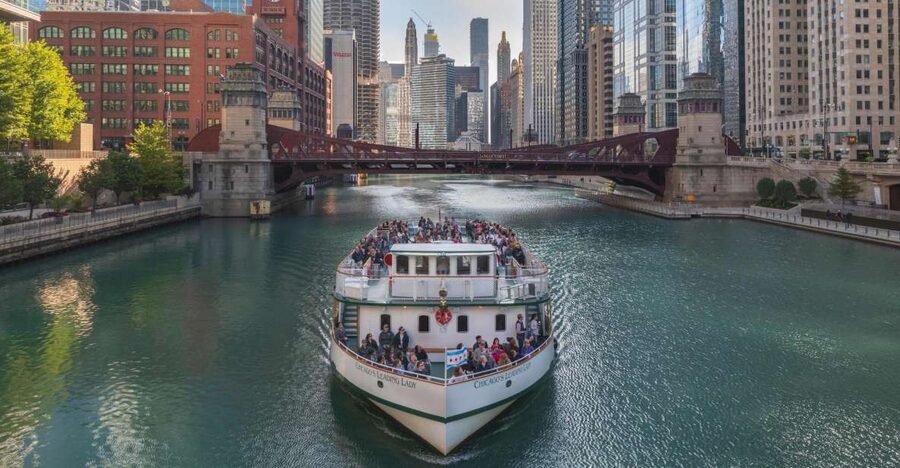
Many first-time visitors picture only the central canyon between tall downtown buildings. This cruise goes farther, covering all three branches of the Chicago River. The broader route gives you a more complete look at the city and makes the 90-minute length feel useful rather than padded.
Along the way, the docent discusses more than 50 buildings. Some are instantly familiar from skyline photographs. Others become interesting because of a detail you might miss from land: a change in materials, a setback, a decorative pattern, or the way a structure responds to its neighbor.
The commentary also connects buildings with the people behind them. You hear about architects and other figures who helped shape Chicago, along with the decisions that influenced how the city developed. This is where the cruise moves beyond a list of façades.
The forks are especially valuable if you have already seen the central river on foot. One passenger who had taken another river tour preferred this route because it included the branches rather than only the main section. That wider itinerary gives you a better sense of Chicago as a working city, not just a collection of famous downtown views.
Same harbour, a different day on the water:
- Chicago: Architecture River Cruise Skip-the-Ticket Line
★ 4.8 · 4,325 reviews - Chicago: 45-Minute Family-Friendly Architecture River Cruise
★ 4.7 · 2,304 reviews - Chicago: 1.5-Hour Lake and River Architecture Cruise
★ 4.7 · 2,050 reviews - Chicago by Night River and Lake Cruise
★ 4.6 · 791 reviews
Thirteen bascule bridges and the mechanics of the river
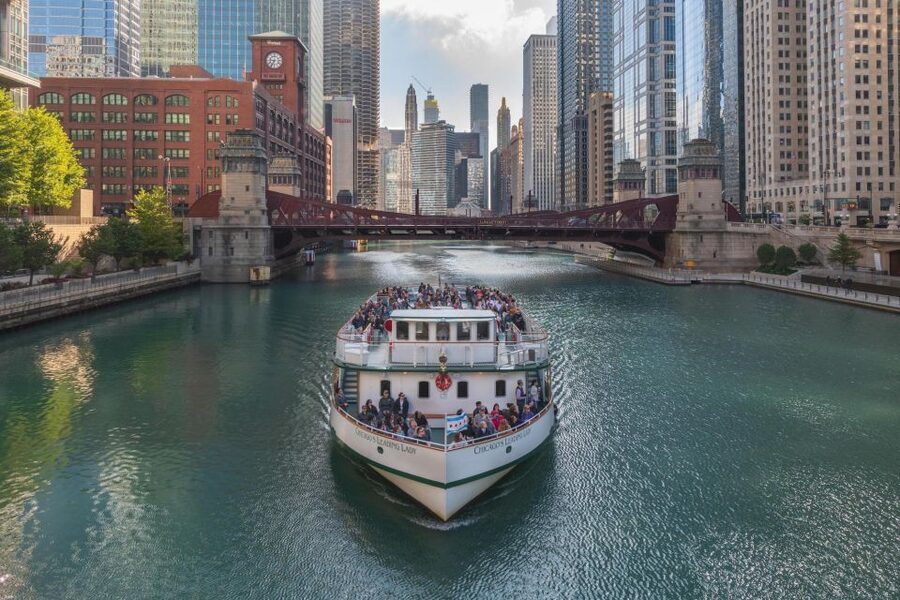
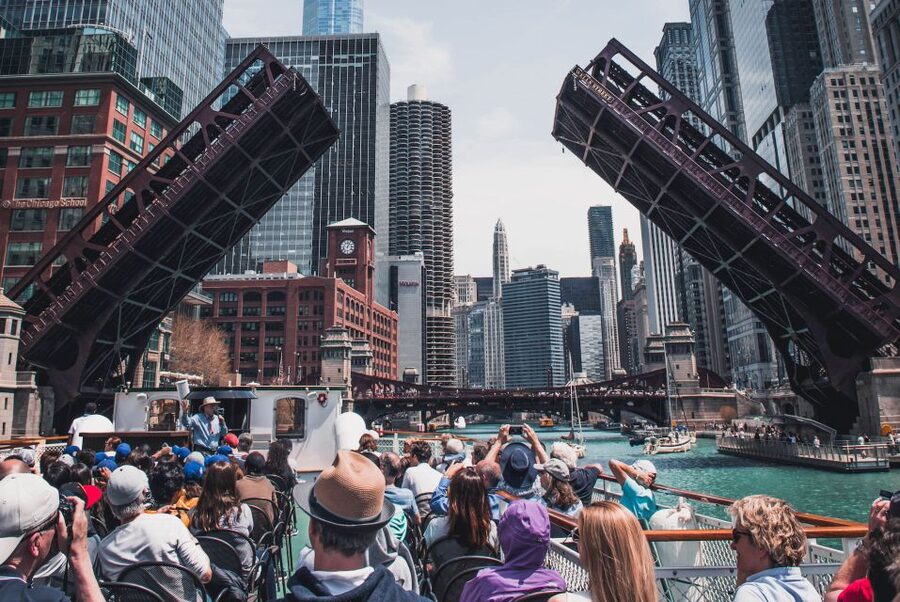
The bridges are not filler between the buildings. The cruise covers 13 bascule bridges, the movable bridges that lift to let boats pass. Their machinery and broad spans add a practical engineering layer to the architectural story.
You will see how bridges, streets, rail routes, and buildings fit around a river that once shaped the city’s growth. The docent places those structures in context, explaining how the river influenced Chicago’s form and how the city adapted around it.
Look up as you pass under or near the bridges. The open-air upper deck gives you a better view of structural details than a low enclosed cabin. Sunlight can be strong, though, so bring sunglasses and a hat. On hot days, the interior salon offers welcome air conditioning, but moving inside means giving up some of the open view.
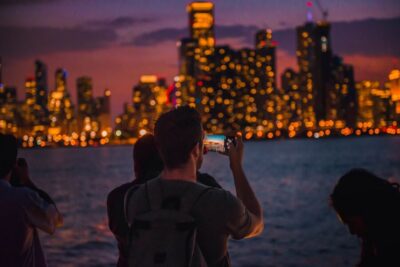
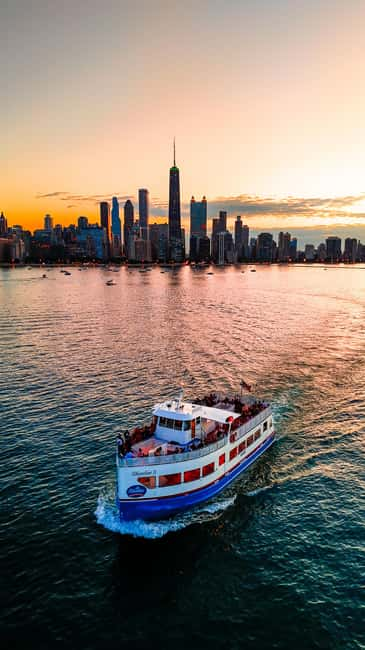
The cruise operates in rain or shine, with both open and covered seating available. Weather can change the mood of the trip. A clear afternoon gives you sharp building details, while a sunset departure can bring out illuminated façades as the city lights come on. One particularly well-liked departure took place just before sunset.
Why the live docent matters
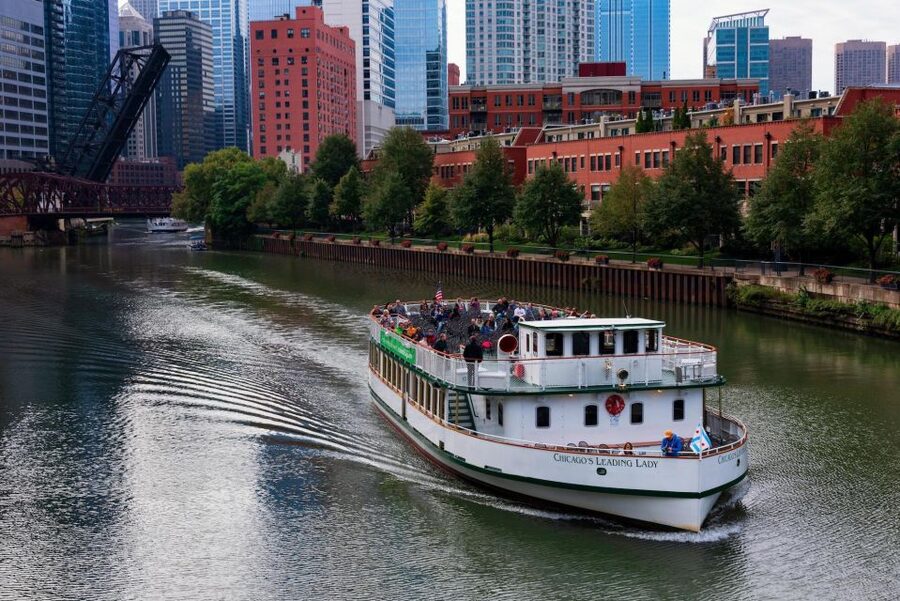
The strongest feature here is not the boat. It is the person speaking from it.
A good docent explains why a building looks the way it does, then links that design to a larger story. You may hear about architectural style, construction materials, city history, or the people who made a project possible. The result is easier to remember than a string of dates and names.
Recent guides have included Russel, Amy, Patricia, Tim, Tom C., Mary Jo, Judith, Jessica, and others. Several were singled out for keeping the presentation clear, warm, and entertaining for the full 90 minutes. The appeal is not limited to architects or design students. People with very little background can follow the explanations, while visitors with professional design experience can still find plenty to consider.
I also like the educational purpose behind the operation. A portion of each ticket supports the Chicago Architecture Center’s nonprofit educational mission. That does not make the ticket cheap, but it gives your payment a purpose beyond the boat ride itself.
The one tradeoff is that a volunteer guide’s delivery can vary. Most recent comments describe excellent presentations, but one guide may be more polished or more dramatic than another. If you prefer a tightly edited audio recording, this may feel less consistent. If you like a human voice and room for personality, that is part of the appeal.
Open-air seating, covered comfort, and onboard snacks
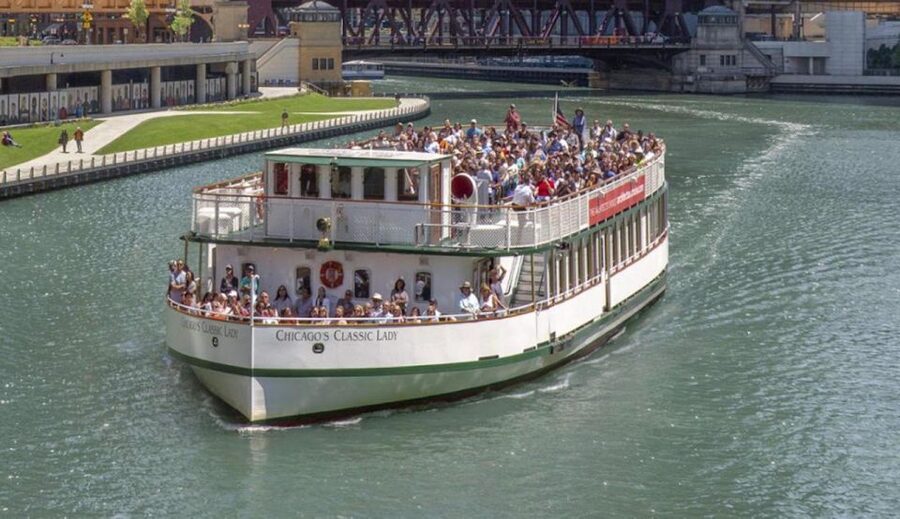
Your ticket includes guaranteed seating on the open-air upper decks. This is the place to sit if your priority is photography and a wide view of the buildings. You can look ahead, behind, and to either side without a cabin wall blocking part of the skyline.
The boat also provides covered seating in climate-controlled interior salons. That backup matters in Chicago, where strong sun, heat, wind, or rain can make an exposed deck tiring. You can move inside when needed, though the clearest views remain outside.
Food and drinks are not included. The onboard bars sell water, soda, wine, beer, cocktails, and snacks such as chips, cookies, and nuts. This is convenient, but remember that every purchase adds to the total cost. I would bring sunglasses and a sun hat, and avoid arriving with bags you do not need.
At 90 minutes, the cruise is long enough to teach you something without taking over an entire day. That timing works well as an introduction to Chicago before visiting the Architecture Center or walking the downtown streets.
Is $57 a fair price?
At $57 per person, this is not the cheapest way to see the river. You are paying for the boat, guaranteed seating, the extended route, and a live Chicago Architecture Center docent rather than a simple skyline ride.
The value improves if you care about architecture or want a well-organized introduction to the city. The route covers all three branches, the commentary addresses more than 50 buildings and 13 bridges, and the view from the water is difficult to reproduce on foot. A general sightseeing cruise may cost less, but it may also offer less architectural detail and a narrower route.
The $5 Chicago Architecture Center add-on is particularly good value. Standard admission is $14, so the cruise option saves you $9. You can visit the center at the same location, and one recent passenger used the admission after the cruise. The center gives you a useful next step: after seeing the city from the river, you can continue exploring its buildings and architectural story indoors.
Food and drinks cost extra, and parking in the area can be difficult to sort out. If you are driving, plan parking ahead of time. Public transport or a taxi may be less stressful than searching for a downtown space, though the supplied information does not specify a particular parking facility.
Who will get the most from this cruise?
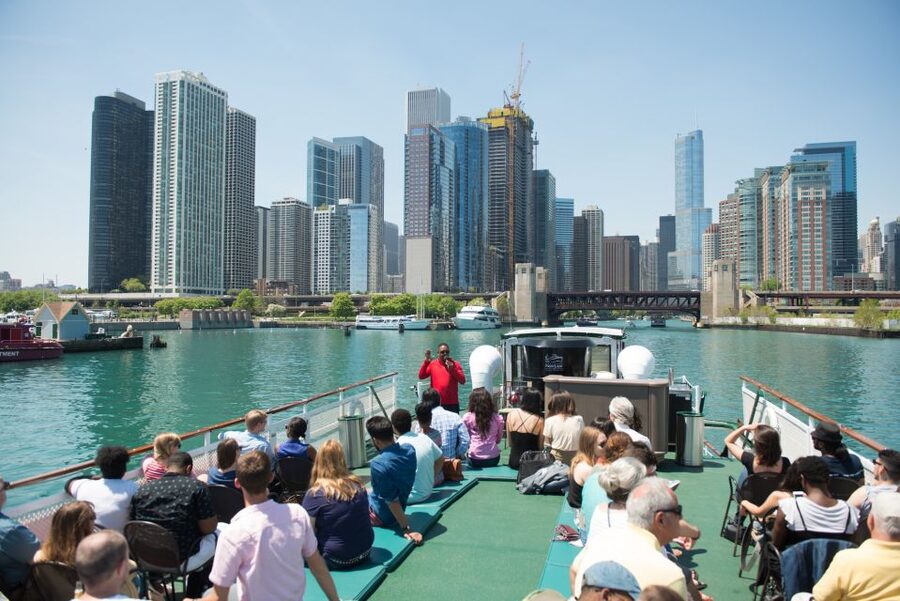
You should book this if you want more than photographs. It suits first-time visitors who need a quick orientation, design students, architecture fans, families with older children, and locals who want to see familiar buildings from a new angle.
It is also a strong choice for a mixed group. You do not need prior architecture training, and the 90-minute format is manageable for people who might not want a longer walking tour. The interior salon helps if someone in your party needs a break from the weather.
You may want to choose another activity if you dislike live English commentary, cannot manage the route to the dock, or need to bring a large bag, motorized scooter, or electric wheelchair. Also, late arrivals are not refunded, so build in extra time for the Riverwalk entrance and boarding.
Reservations are wise because departures often sell out. You can cancel up to 24 hours before departure for a full refund, and the reserve-now, pay-later option keeps your plans flexible.
Should you book Chicago’s First Lady?
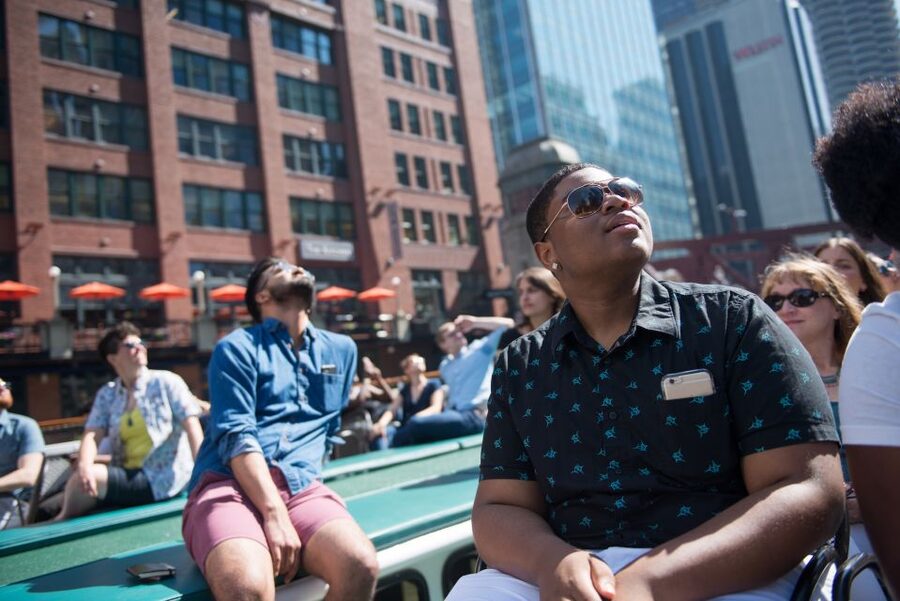
Yes, if Chicago’s buildings interest you even a little. The river views are excellent, but the real strength is the way the docent turns the skyline into a connected story of design, engineering, people, and city growth.
I would choose an open-air seat, bring sun protection, and consider a departure near sunset. Add the $5 Architecture Center visit if you have time. Skip it only if dock access is a serious problem for your party or if you want a quiet, non-narrated boat ride. For most visitors, this is one of the clearest and most useful introductions to Chicago.
FAQ
How long is the Chicago Architecture Center cruise?
The cruise lasts 90 minutes and covers all three branches of the Chicago River.
What language is the tour in?
The live tour is conducted in English by a Chicago Architecture Center certified volunteer docent.
How many buildings and bridges does the cruise cover?
The narration includes stories about more than 50 buildings and 13 bascule bridges along the river.
Is seating guaranteed?
Yes. The ticket includes guaranteed seating on the open-air upper decks. Covered seating is also available in the climate-controlled interior salons.
Does the cruise operate in bad weather?
Yes. Cruises operate rain or shine, and the boat has both open and covered seating.
Can I add admission to the Chicago Architecture Center?
Yes. You can add general admission for $5 instead of the regular $14 admission price.
Is the cruise wheelchair accessible?
The activity is described as wheelchair accessible, but there is no elevator access to the boat dock. Electric wheelchairs and motorized scooters cannot be accommodated. Guests who can transfer may use the provider’s manual wheelchair, subject to availability.
Just added around Chicago
- City Cruises Chicago: Premier Lunch or Dinner Cruise★ 4.3 · 334 reviews
- City Cruises Chicago: Seadog Lakefront Speedboat Ride★ 4.4 · 642 reviews
- City Cruises Chicago: 75-min Speedboat Architecture Cruise★ 4.5 · 268 reviews
- Chicago: Shoreline Lake Michigan Skyline Cruise★ 4.6 · 758 reviews
- Chicago by Night River and Lake Cruise★ 4.6 · 791 reviews
- Chicago: Narrated Sightseeing River and Lake Cruise★ 4.7 · 268 reviews
- Chicago: 1.5-Hour Scenic Sunset Lake Cruise★ 4.7 · 739 reviews
- Chicago: Fireworks Cruise with Lake or River Viewing Options★ 4.3 · 551 reviews
Chicago Boat Tours, compared.
Chicago Architecture Center River Cruise aboard First Lady
Read our review →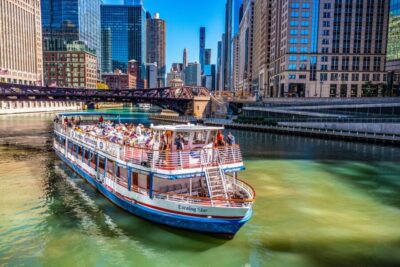
Architecture River Cruise Skip-the-Ticket Line
Read our review →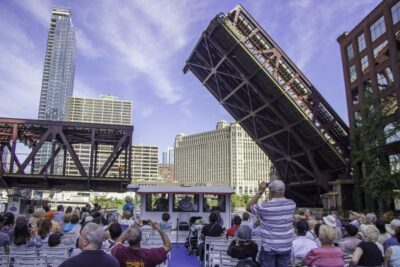
45-Minute Family-Friendly Architecture River Cruise
Read our review →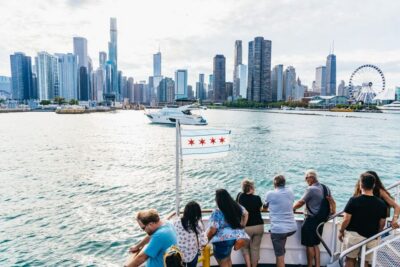
Browse the lists this tour appears in