
REVIEW · NEW ZEALAND
Akaroa: Dolphin Nature Cruise
Akaroa Harbour is one of the best places in New Zealand to look for Hector’s dolphins, the world’s smallest and rarest marine dolphin. This two-hour cruise takes you close to the action without turning the wildlife into a swimming attraction. You may also see fur seals, penguins, seabirds, and, on lucky days, bottlenose dolphins.
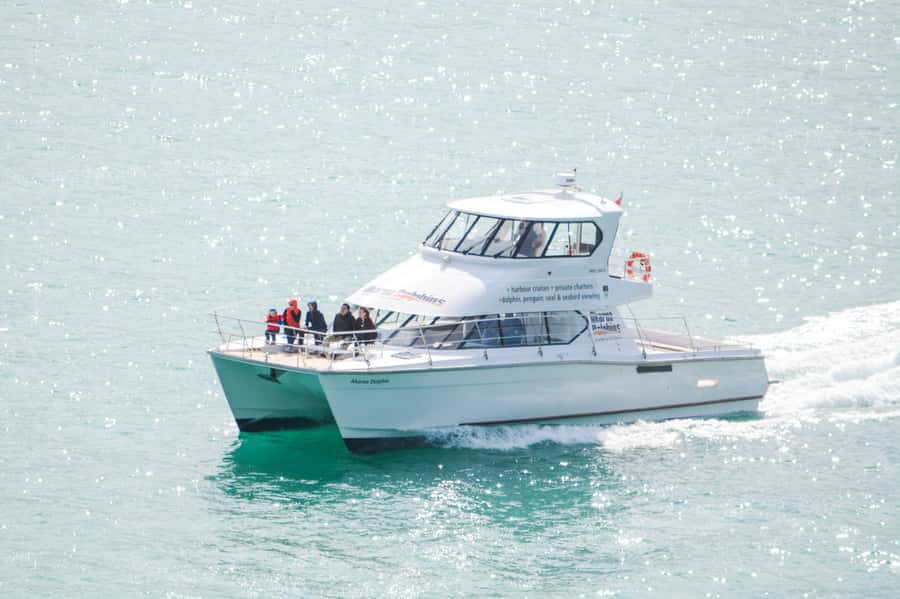
I like the low-lying catamaran, which gives you a good view from several outdoor and indoor areas, and I like the local touch: the crew shares stories tied to Akaroa, while the dolphin-spotting dogs, including Albie, Wilbur, Theo, and Archie, add plenty of charm. The main caution is simple: wild animals set the schedule. You may see several pods, or only one dolphin for a few minutes.
Key points
- Hector’s dolphins are the main event: The crew has a high sighting rate, but no wildlife encounter can be promised.
- The boat suits many ages: The stable catamaran has secure railings, indoor and outdoor seating, room for pushchairs, and infant and child lifejackets.
- The setting is part of the tour: Expect volcanic cliffs, sea caves, seabird colonies, and wide views toward the Tasman Sea.
- Local guides add substance: Skippers such as George explain Akaroa’s natural and human history in clear, lively commentary.
- Small comforts matter: You receive a drink, homemade cookies, filtered water, sunscreen, and warm jackets.
- The tour is conservation-minded: The company holds a Department of Conservation Marine Mammal Viewing Permit and does not offer dolphin swimming.
Why Hector’s dolphins make this cruise special
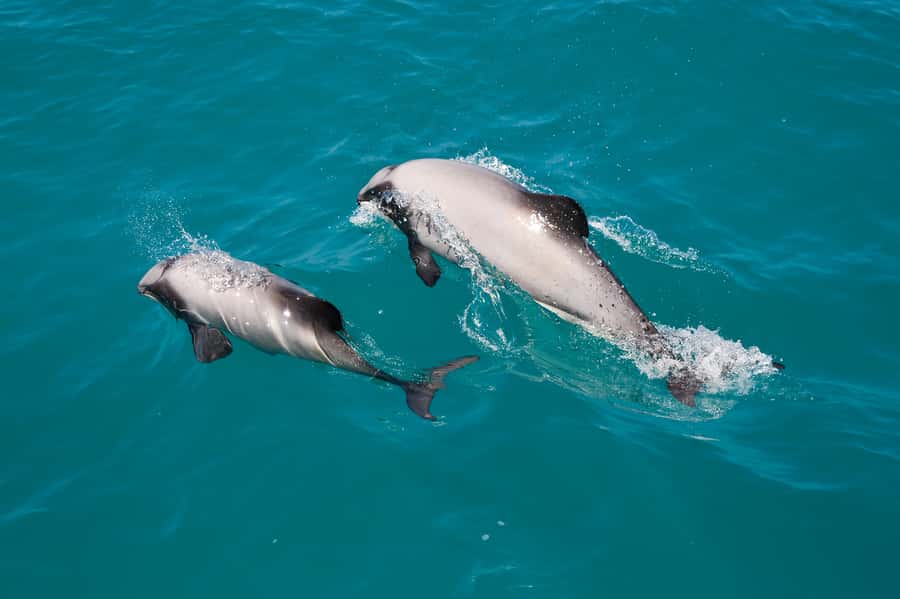
The attraction here is not simply the chance to see a dolphin. It is the chance to see a very particular New Zealand species in its natural home.
Hector’s dolphins are small, quick, and often curious around boats. They tend to appear in small pods rather than enormous groups, so you should expect short bursts of movement, fins cutting through the water, and perhaps dolphins riding the bow wave. A calm day can bring close views, while wind and chop can make sightings harder to follow.
The cruise has a strong record of sightings throughout the year because Akaroa Harbour is a known Hector’s dolphin area. Still, the company is clear about the limits of nature. If your trip sees no dolphins, you are offered another trip free of charge. That means you should not book this as if it were a guaranteed animal show, and no refund is given simply because the dolphins stay out of sight.
This approach is worth respecting. The company has a Department of Conservation Marine Mammal Viewing Permit, and it does not allow swimming with the dolphins. You watch from the boat, giving the animals room to behave naturally.
More Dolphin Watching Trips in New Zealand:
- Auckland: Whale and Dolphin Watching Half-Day Eco Cruise
★ 4.5 · 1,072 reviews - Paihia/Russell: Hole in the Rock, Dolphins & Island Cruise
★ 4.6 · 821 reviews - Auckland: Tikapa Moana Whales, Dolphins and Islands Cruise
★ 3.9 · 292 reviews
Leaving Akaroa and reading the harbour
Check in at the ticket counter at least 30 minutes before departure. Akaroa is about a 90-minute drive from Christchurch and Lyttelton Port, so you need to allow extra time for the road trip, parking, and check-in. The boat leaves on schedule. Arriving late means missing the cruise, with no refund.
Once aboard, you can settle into the catamaran’s indoor or outdoor areas. The low profile helps you feel close to the water, while the stable design makes the ride suitable for a wide age range. Reviews of the boat repeatedly highlight its space, cleanliness, and comfortable seating, with enough room to move around rather than feeling packed in.
The first part of the trip is about getting your bearings. Akaroa Harbour is framed by dramatic volcanic formations, and the water gives you a better sense of the area’s shape than a town street does. The commentary connects the rock formations with Akaroa’s past, including the challenges faced by early settlers and the area’s links to local families.
Skippers such as George have been praised for mixing facts with a relaxed style. The commentary is not just a string of animal names. You hear about the harbour, the geology, local settlement, marine life, and the aquaculture activity in the area, including salmon, kelp, and blue pearl operations.
Searching for dolphins with Albie and friends
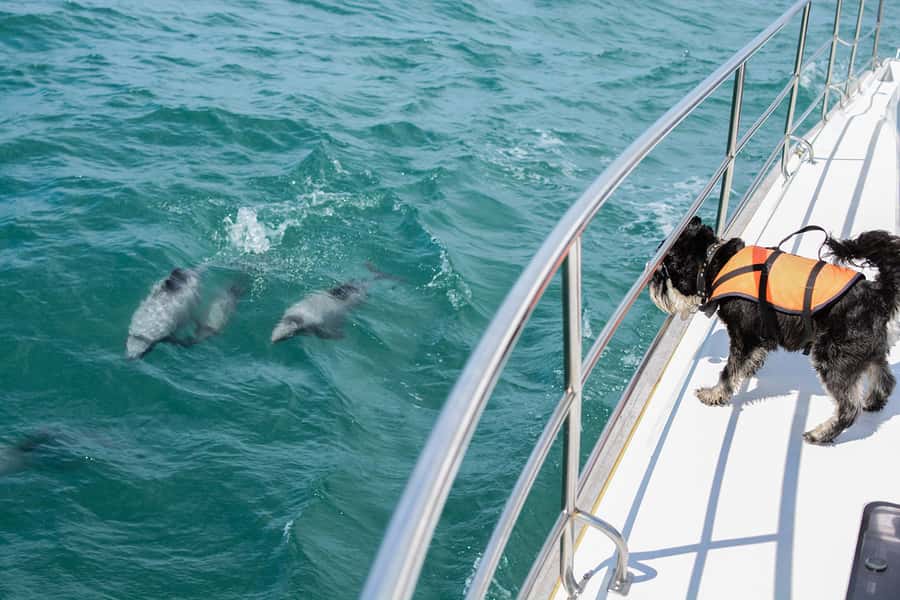
The dolphin search is the heart of the outing. The crew scans the water, watches for movement, and uses trained dolphin-spotting dogs to help locate nearby animals. Albie is the best-known of the canine crew, though you might meet Wilbur, Theo, or Archie depending on the day.
The dogs are not a gimmick glued onto the cruise. Their reactions help the crew focus attention when dolphins are close, and they give children and animal lovers another reason to watch the deck between sightings. Albie has become a real part of the experience, sometimes more interested in being petted than working, which is likely to make you smile.
Once dolphins appear, the boat slows and the crew gives you time to watch. You may see one animal surface beside the catamaran, a few dolphins moving together, or several pods spread across the water. Some cruise accounts describe dolphins bow-wave riding close to the boat. Other conditions produce briefer sightings, especially when the water is windy or rainy.
Bring a camera, but do not spend the whole trip looking through it. Hector’s dolphins surface quickly, and the best view may last only seconds. Keep your eyes on the water and use the camera when the animals come close enough for an easy shot.
Seals, penguins, and seabirds along the route
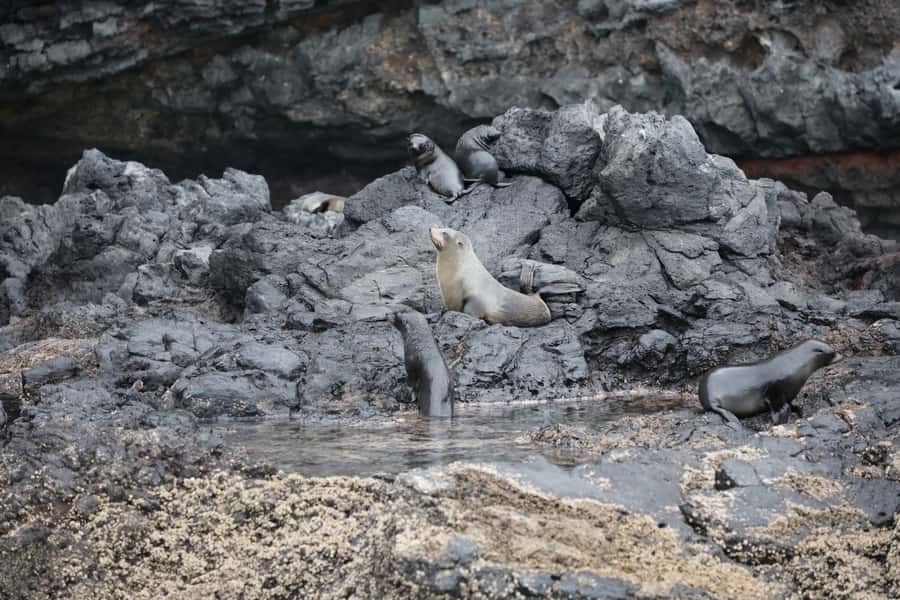
Dolphins are the headline, but the harbour has a full supporting cast. New Zealand fur seals may be resting on rocks or moving through the water. Penguins and seabirds appear along the shore and near the caves, though their presence is never guaranteed on every sailing.
Several recent outings have included penguins, fur seals, and even New Zealand sea lions. Bottlenose dolphins have also appeared on some trips, which is a bonus rather than something to expect. One particularly fortunate outing included Hector’s dolphins, bottlenose dolphins, seals, penguins, and an albatross.
The key point is that you are taking a wildlife cruise, not buying a fixed animal checklist. A day with dolphins and seals can be excellent. A day with dolphins, penguins, sea lions, and an albatross is simply unusually lucky.
The crew also points out seabirds and nesting areas near the sea caves. The caves and cliffs give the cruise a second focus, especially if dolphins take time to appear. You can enjoy the geology and birdlife even during a quiet stretch on the water.
A few more boat days around New Zealand worth a look
- Waitomo: Glowworm Caves Guided Tour by Boat
★ 4.5 · 4,908 reviews - Kaikoura: Whale Watching Cruise
★ 4.6 · 3,089 reviews - Premium Milford Sound Small Group Tour & Cruise from Queenstown
★ 5.0 · 3,001 reviews - Cruise Milford NZ Small Boutique Cruise Experience
★ 5.0 · 2,930 reviews
Sea caves and volcanic formations from the water
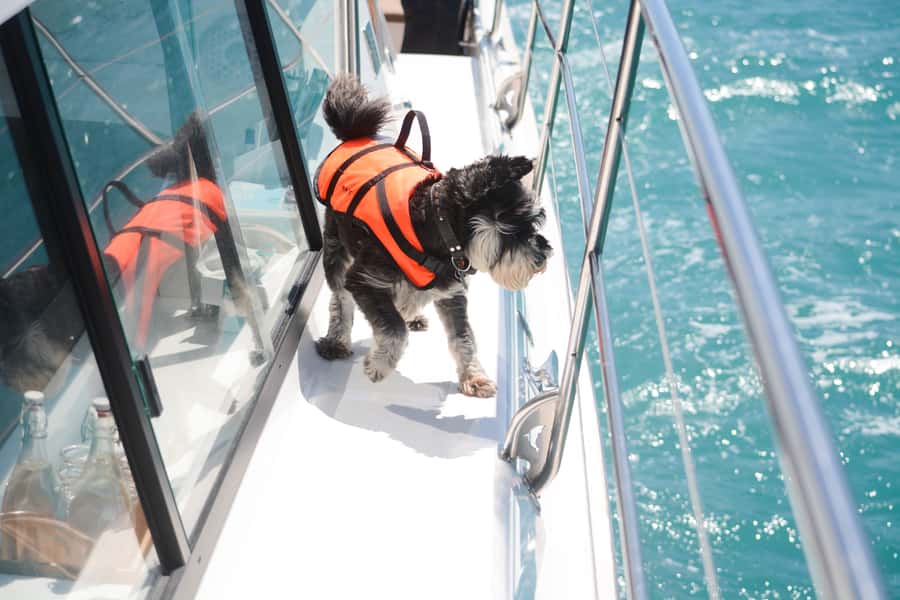
Akaroa’s scenery is not a flat coastal backdrop. The harbour sits within an old volcanic setting, and the cliffs, headlands, caves, and unusual rock shapes make the route interesting even without wildlife.
From the boat, you see angles that are difficult to appreciate from land. The crew explains how the area formed and points out details in the rock. On a clear day, the contrast between dark volcanic cliffs, open water, and small coastal inlets is especially striking.
The trip may also take you farther out toward the Tasman Sea. That gives you wider views and the chance to see more of the harbour’s outer reaches, though conditions can change. Wind, cold, and rain are possible even when Akaroa looks pleasant from shore.
Wear warm layers, even in summer. Sunglasses, a hat, comfortable shoes, sunscreen, and a camera are sensible additions. Warm jackets and sunscreen are available on board, but bringing your own layers is still the better plan.
Commentary that connects wildlife with local history
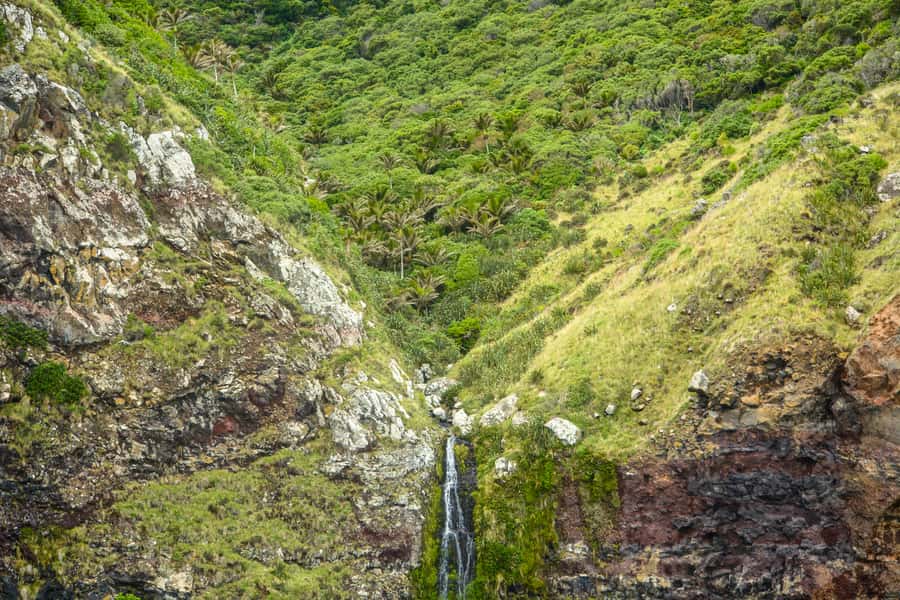
A good nature cruise gives you more than animal sightings. This one uses the route to explain how people have lived around Akaroa Harbour and how the natural setting shaped that history.
The local connection matters. The company is a family business owned and operated in the area for seven generations, and part of your fare supports conservation work for the marine environment and wildlife. That gives the outing a sense of place that a generic boat ride may lack.
Skippers and crew members have been praised for clear explanations of Akaroa’s social history, geology, plants, animals, and aquaculture. George is often singled out for his ability to move between town history and wildlife without making the talk feel like a lecture. Other crew members, including Elsa and Dave, have also been praised for friendly service and good humor.
I would especially value this if you have already seen plenty of scenery in New Zealand. The commentary gives names and context to what you are looking at. You begin to understand why the harbour looks the way it does, how communities used it, and why the marine habitat deserves care.
A drink, homemade cookies, and a comfortable boat
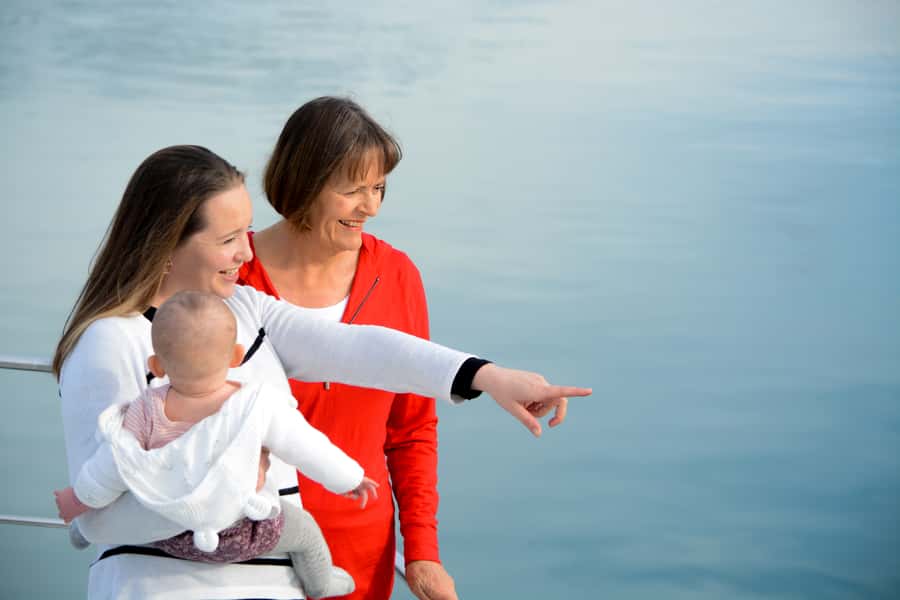
The included refreshments are modest but well chosen. You receive a complimentary glass of award-winning New Zealand wine, beer, or a non-alcoholic drink, along with homemade cookies. Juice and other hot or cold options are available, and one cold-weather outing began with hot chocolate.
These touches matter on a two-hour boat ride. They give you something pleasant to enjoy while the crew searches for wildlife, and they help take the edge off a cool day. The homemade cookies receive frequent praise, so do not treat the snack as an afterthought.
The catamaran includes a flushable toilet and filtered water. There are indoor and outdoor areas, which lets you move inside if the wind picks up or outside when the views are best. Secure railings and a stable platform make the boat suitable for children, older adults, and many people with limited mobility.
Wheelchair users are welcome with an able-bodied companion. The company also welcomes infants and has lifejackets for babies and children. Pushchairs can be accommodated, though young children must be supervised at all times. Smoking is not allowed.
How the cruise handles rough weather
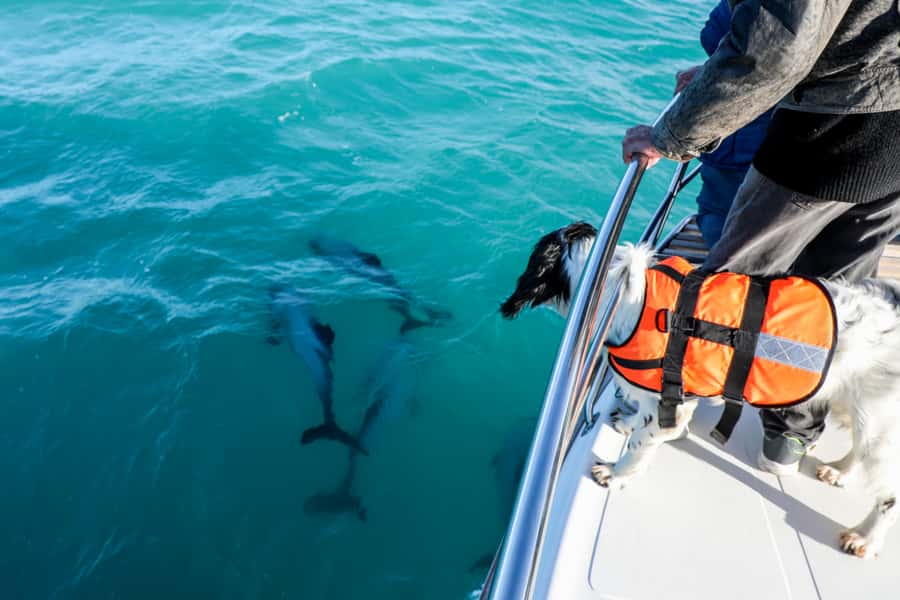
The harbour can look calm from town while conditions on the water feel quite different. One outing took place in wind, cold, and light rain, yet still included several pods of Hector’s dolphins, fur seals, and a rare sighting of bottlenose dolphins. Another had choppy waves but remained well managed.
That does not mean you should ignore the forecast. If you are prone to seasickness, sit where you feel most stable, look toward the horizon, and consider taking your usual precautions before departure. The catamaran is stable, but it is still a boat on open water.
The crew checks on comfort and safety, and warm jackets are supplied. Even so, pack a proper warm layer. You will enjoy the cruise more if you can focus on the water instead of wishing you had brought a fleece.
Is $77 good value for two hours?
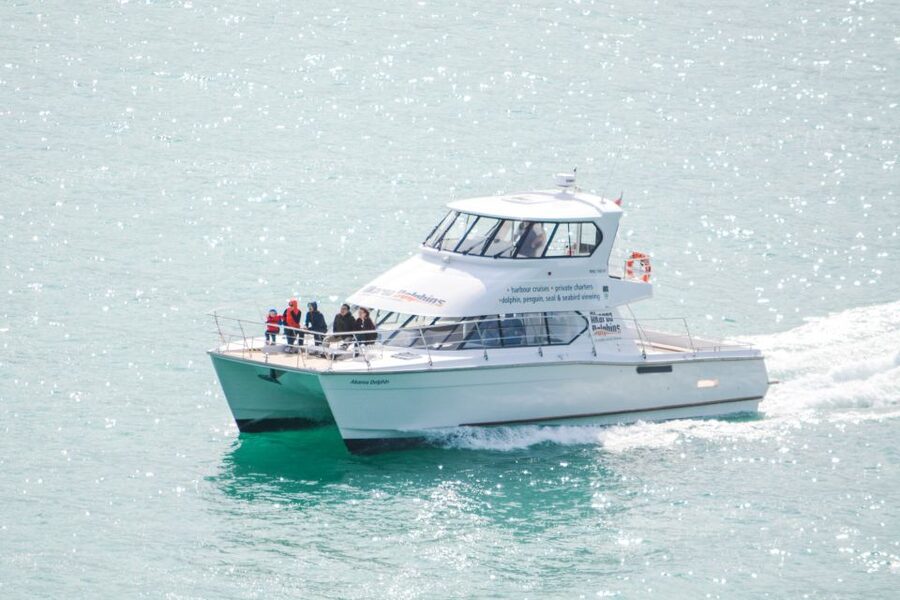
At $77 per person, the price is fair for a two-hour wildlife cruise in a permitted vessel, especially when you count the guide’s commentary, refreshments, equipment, and the chance to see several kinds of marine life.
The value is strongest if you appreciate the whole outing rather than measuring it only by the number of dolphins seen. The boat ride, volcanic scenery, sea caves, local stories, conservation connection, and wildlife search all form part of the package. If dolphins are your only goal, the price may feel less satisfying on a quiet day.
The included drink and cookies are small benefits, but they remove the need to buy refreshments separately. The stable, spacious boat also makes this more than a basic transport ride. You are paying for time on the harbour, interpretation, and a serious effort to find wild animals without offering a guaranteed performance.
Free cancellation up to 24 hours before departure and a reserve-now, pay-later option make planning easier. Just remember that the no-dolphin policy is a free return trip, not a refund.
Who will enjoy this Akaroa cruise most?
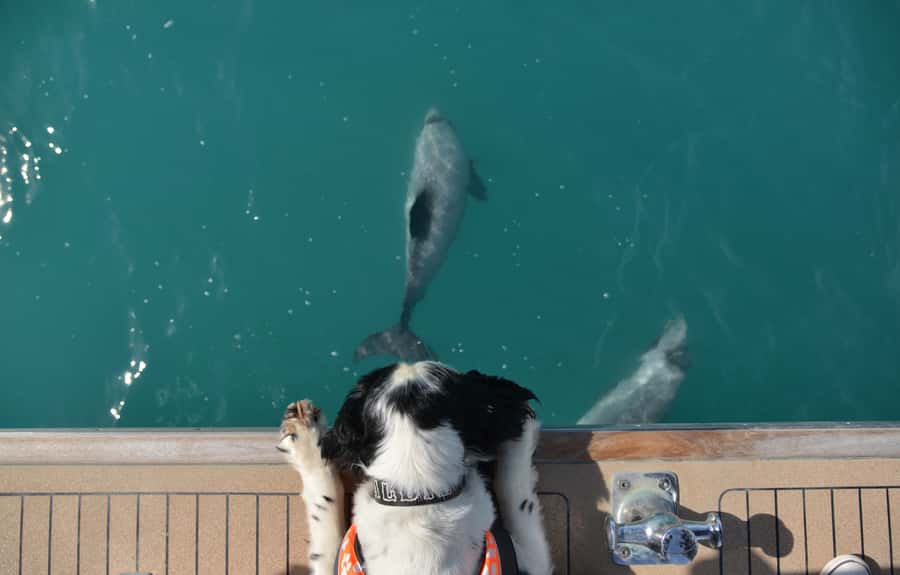
I would recommend it to families, couples, older adults, photographers, wildlife fans, and anyone who wants a scenic activity that does not require swimming or strenuous walking. Children have the excitement of dolphins and dogs, while adults get geology, history, and birdlife.
It also works well for a mixed-age group. Infants, seniors, and wheelchair users are welcome under the stated conditions, and the boat provides indoor and outdoor areas. Parents still need to supervise children closely near the water.
This is less suitable if you need a guaranteed wildlife encounter, dislike changing weather, or have only a very tight schedule after driving from Christchurch or a cruise port. The 90-minute journey to Akaroa each way can turn a two-hour cruise into most of a day.
Should you book Akaroa Dolphins?
Book this cruise if you want the best chance of seeing rare Hector’s dolphins while also learning about Akaroa Harbour and its volcanic setting. The strongest reasons are the high sighting rate, the respectful wildlife policy, the stable catamaran, and the warm local character of the crew.
Go with realistic expectations. Dolphins are wild, the sea may be cold or choppy, and a quiet trip remains possible. If you can accept that uncertainty, the combination of marine life, caves, cliffs, local stories, homemade cookies, and a working dolphin dog makes this a very worthwhile Akaroa outing.
FAQ
How long is the Akaroa Dolphin Nature Cruise?
The cruise lasts two hours.
How much does the cruise cost?
The listed price is $77 per person.
Can I swim with the dolphins?
No. Swimming with dolphins is not included, and the company does not offer it for conservation reasons.
Are dolphin sightings guaranteed?
No. The dolphins are wild, so sightings cannot be guaranteed. The company reports a high success rate and offers another trip free of charge if no dolphin is seen. No refund is given in that situation.
What animals might I see?
You may see Hector’s dolphins, New Zealand fur seals, penguins, seabirds, and sometimes bottlenose dolphins or New Zealand sea lions.
What is included in the ticket?
The ticket includes the two-hour cruise, an English-speaking guide, dolphin-spotting dogs, commentary, a complimentary drink, homemade cookies, filtered water, sunscreen, warm jackets, and use of the boat’s facilities.
How early should I arrive?
You must exchange your voucher at the ticket counter and check in at least 30 minutes before departure. The boat leaves on time, and late arrivals cannot join or receive a refund.
Is the cruise suitable for children and babies?
Yes. All ages are welcome, including newborns. The boat has secure railings, infant and child lifejackets, indoor and outdoor areas, and space for pushchairs. Children must be supervised at all times.
Is the cruise wheelchair accessible?
Yes. Wheelchair users are welcome with an able-bodied companion. The company states that it caters to passengers with disabilities.
Just added around New Zealand
- Queenstown: Milford Sound Small-Group Tour w Cruise & Lunch★ 4.9 · 523 reviews
- Queenstown: Lake Whakatipu Boat Trip★ 4.7 · 633 reviews
- Queenstown: Milford Sound Flight and Cruise★ 4.9 · 283 reviews
- Queenstown: Queenstown Lake Cruise and Walter Peak Farm Tour★ 4.8 · 950 reviews
- Queenstown: Lake Wakatipu Scenic Cruise★ 4.7 · 264 reviews
- Queen Charlotte Track: Cruise & Self-Guided Hike from Picton★ 4.8 · 383 reviews
- Queen Charlotte Sound Mail Boat Cruise from Picton★ 4.7 · 541 reviews
- Paihia: Glass Bottom Boat Tour to the Hole in the Rock★ 4.7 · 319 reviews
Dolphin Watching, compared.
Eco-Yacht Whale and Dolphin Watching and Swimming
Read our review →
Benagil Caves & Dolphin Watching Speed Boat Tour
Read our review →
Whale & Dolphin Eco-Cruise with Snacks & Drinks
Read our review →
Catamaran Dolphin Watch Cruise with Snorkeling
Read our review →Browse the lists this tour appears in