
REVIEW · IRELAND
Dublin: River Liffey Sightseeing Cruise
Dublin’s story reads best from the River Liffey. From the boat, you see the Jeanie Johnston, Custom House, the Ha’penny Bridge, Docklands, and the point where the river meets Dublin Port, while a local guide connects the sights to Vikings, canals, reclamation, and modern city life. It is a short cruise, but the commentary gives it real substance.
I like the friendly, funny guides, including Gerry, Jerry, Lucy, Tony, and Peter, who turn a simple boat ride into a lively history lesson. I also like the practical format: 45 minutes, a central departure point, an all-weather boat, and a return to the same pontoon. The main drawback is that 45 minutes can feel brief, and high tides or other tidal conditions may alter what the boat can reach.
Key points
- A compact view of Dublin: See bridges, Docklands, the Custom House, the Jeanie Johnston, and Dublin Port from the river.
- Local storytelling: Guides explain Dublin from the Viking arrival through 18th and 19th-century growth, decline, and docklands renewal.
- All-weather boat: The 48-passenger vessel operates in changing conditions, though weather can affect how comfortable the ride feels.
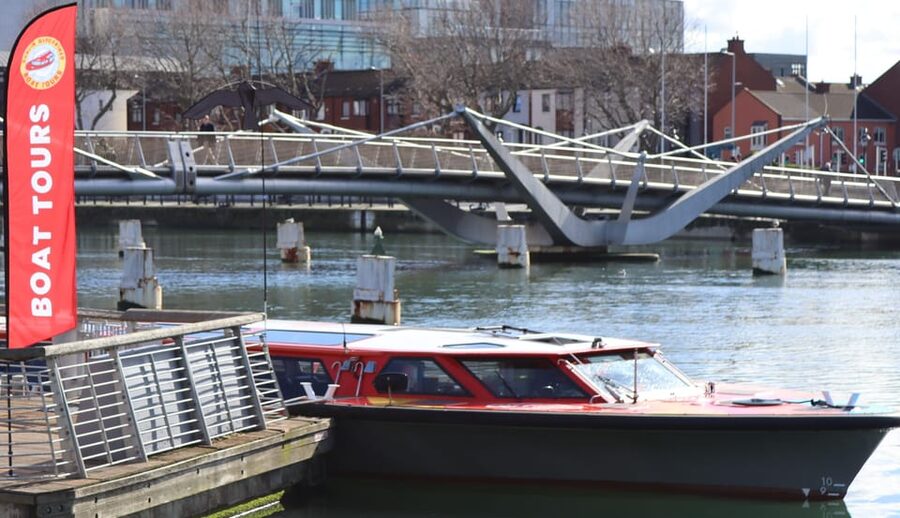
- Central meeting point: Depart from the pontoon beside the Sean O’Casey Footbridge on Custom House Quay, opposite CHQ.
- Tides matter: The route or sights may change according to water levels, and the crew will explain any adjustment.
- Good short-city activity: At $23 per person, it works well as a first look at Dublin or a low-effort break between walking stops.
Seeing Dublin from the River Liffey
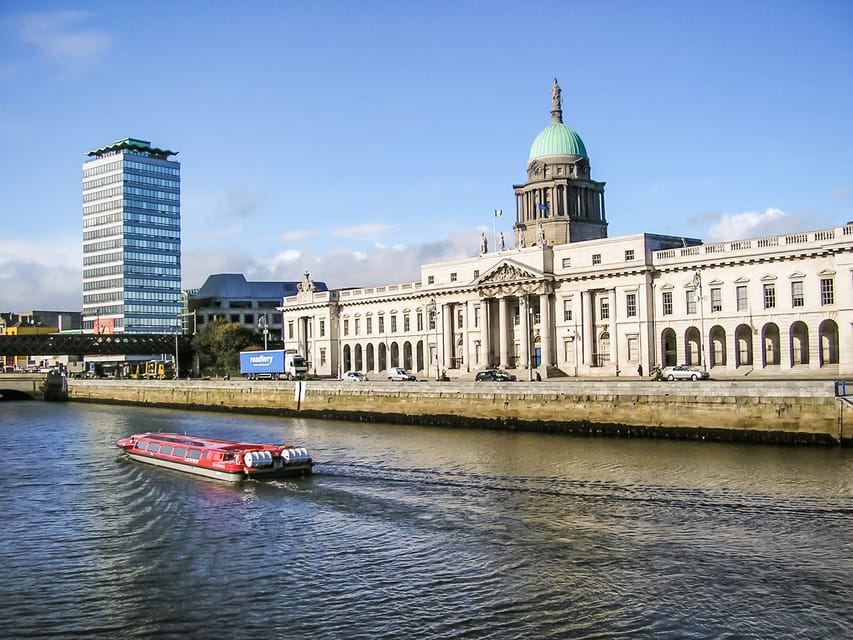
Dublin is easy to walk, but the Liffey gives you a different sense of the city. From street level, bridges can feel like separate landmarks. From the water, they become part of one long story, linking the north and south sides and showing how the river shaped trade, transport, and expansion.
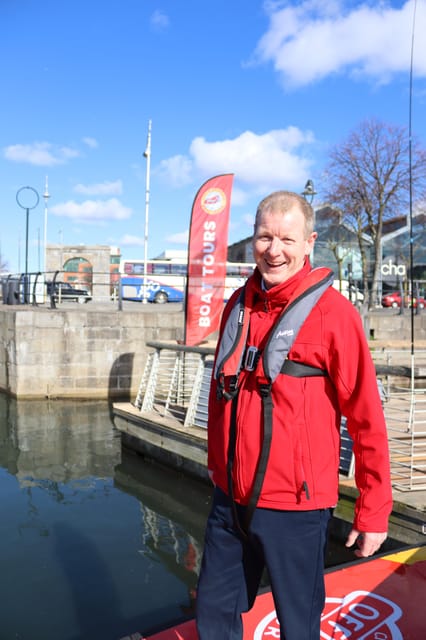
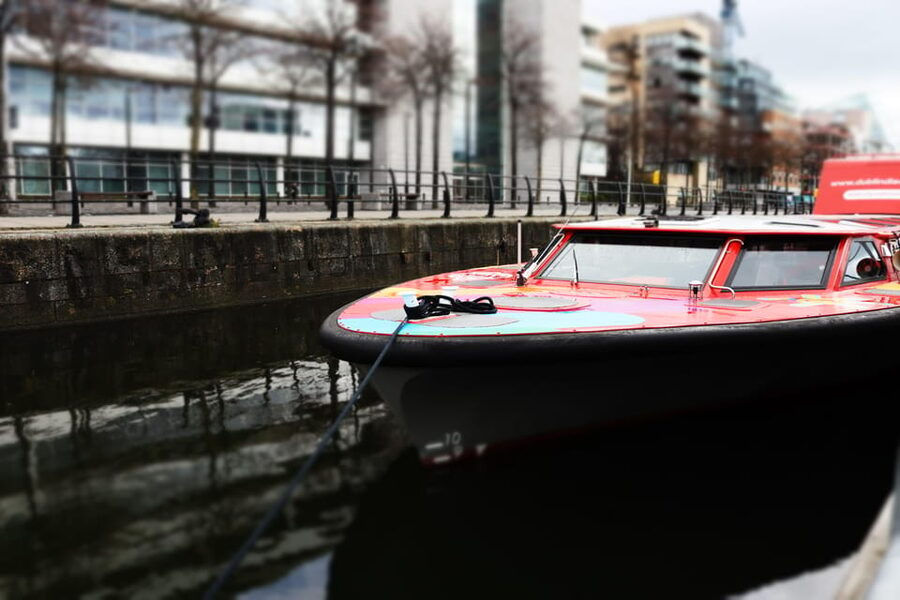
The cruise leaves from the north side of the river at Custom House Quay. The pontoon sits by the Sean O’Casey Footbridge, opposite the CHQ building, so you are in a useful central area rather than at a distant marina. Arrive about 10 minutes early. That gives the crew time to check you in and explain boarding.
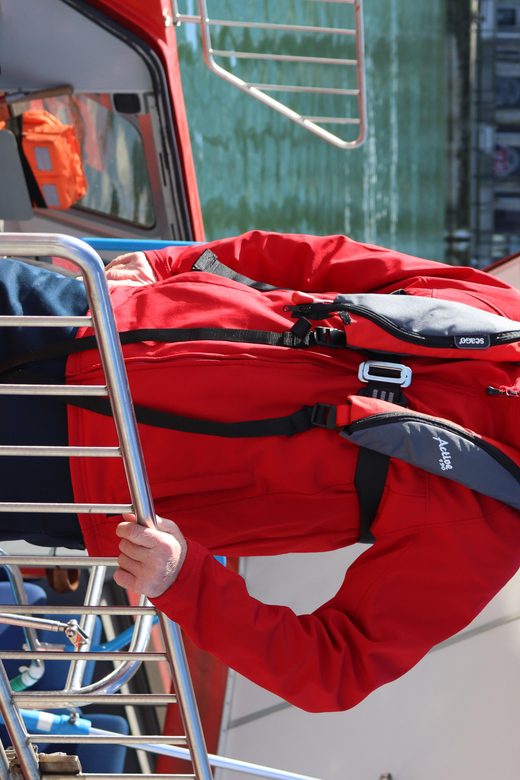
The boat carries up to 48 passengers and is designed for all-weather use. That does not make Dublin’s weather disappear, of course. On a sunny day, you will have an easy time looking outward and taking photos. In rain or wind, the boat still lets the tour operate, but you should dress for the conditions and expect the experience to feel more practical than scenic.
Once aboard, the guide begins the city’s story along the river. The emphasis is not simply on pointing at buildings. You hear how the river relates to Dublin’s growth and how much of the city now occupies land that was reclaimed from water.
More Sightseeing Cruises in the world:
- Budapest: City Highlights Sightseeing Cruise
★ 4.6 · 43,981 reviews - Prague: 50-Minute Sightseeing Evening Cruise
★ 4.2 · 33,780 reviews - Budapest: Nighttime or Daytime Sightseeing Cruise
★ 4.2 · 21,062 reviews
From Viking Dublin to the modern Docklands
The commentary reaches back more than 1,000 years to the arrival of the Vikings. That opening gives the river a useful role in the story: the Liffey was not just a pretty strip of water, but a route into the city and a reason for settlement and trade.
As the cruise continues, the guide moves through Dublin’s rapid development during the 18th and 19th centuries. You hear about the Royal Canal and Grand Canal, two major waterways that helped connect Dublin with other parts of Ireland. From the boat, these details make the river feel less like a backdrop and more like working infrastructure.
The trip also covers the later decline of the docklands and the more recent redevelopment of the area. Docklands can look polished and modern today, but the guide helps connect its present appearance with its working past. That contrast is one of the strongest parts of the cruise because you are looking at a district that has changed sharply over time.
The story includes Dublin’s reclaimed land, too. The city now contains major places such as Trinity College and the Spire on O’Connell Street on ground that was not always dry land. You do not see every one of those places directly from the boat, but the explanation helps you understand why Dublin’s shape is not entirely natural.
Bridges, landmarks, and the view from below
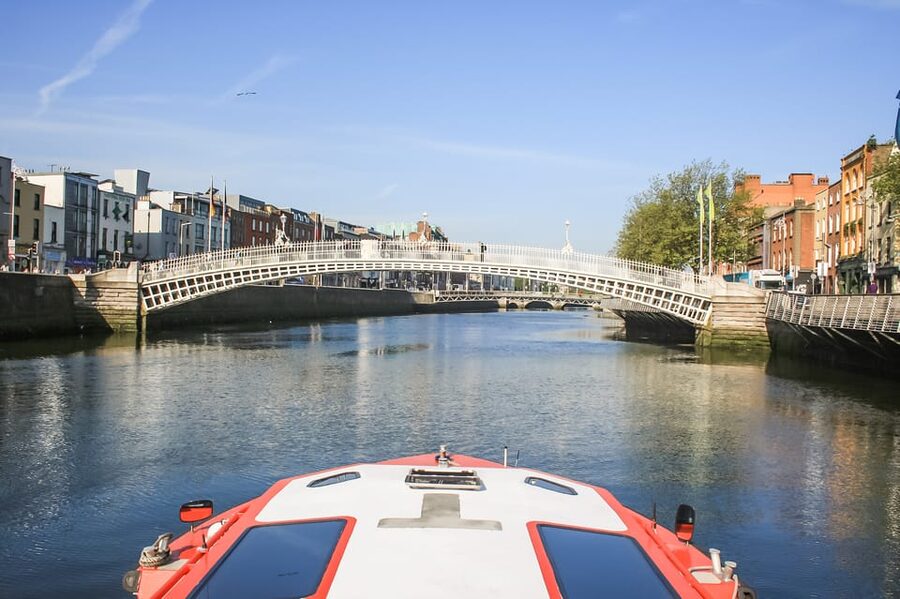
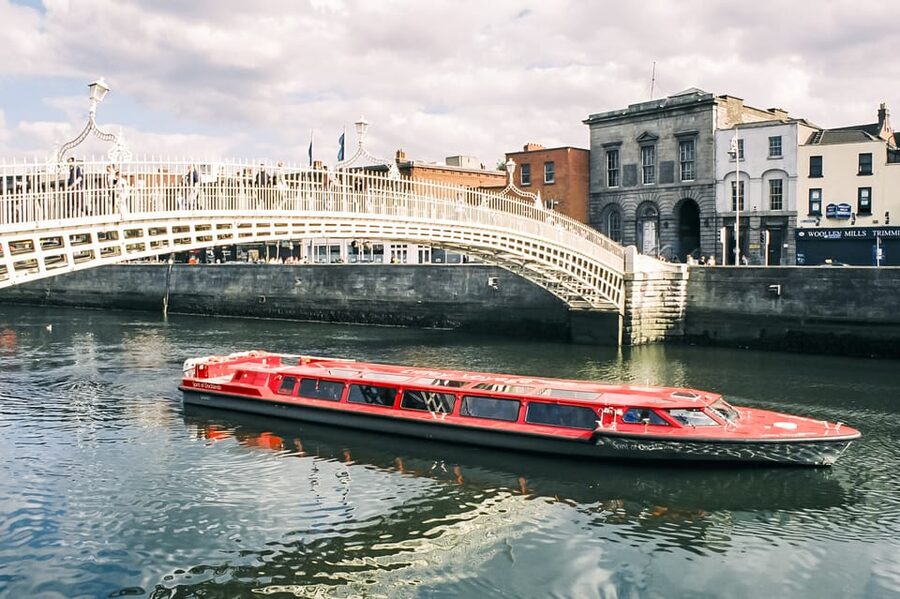
The Ha’penny Bridge is one of the clearest highlights. From the river, you get the angle that pedestrians miss, looking up at its structure and seeing how it links the two sides of central Dublin. The guide adds the background, so the bridge becomes more than a photo stop.
Custom House is another major sight. James Gandon’s building is a powerful presence beside the Liffey, and the water gives you room to take in its full frontage. The commentary places the building within Dublin’s development rather than treating it as an isolated monument.
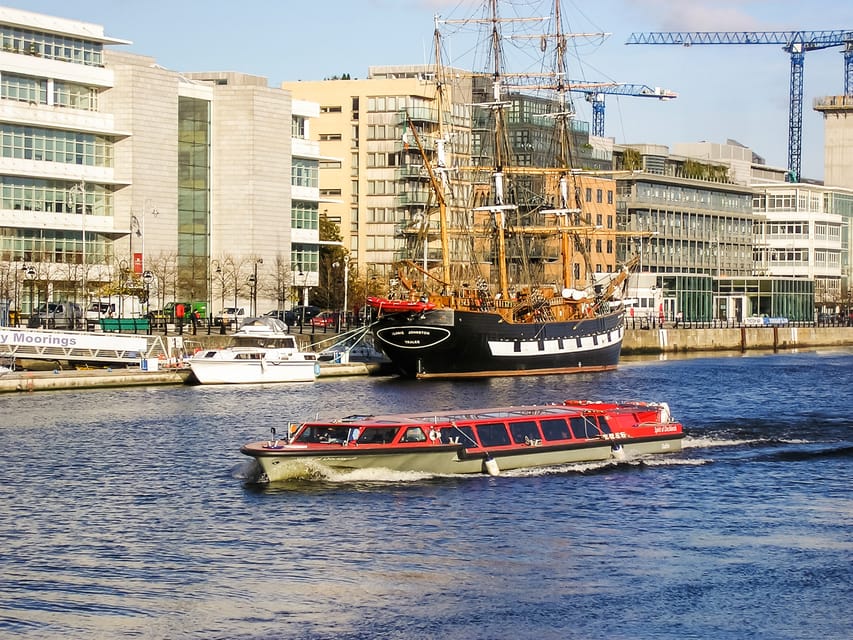
The Jeanie Johnston is a particularly useful sight for anyone interested in Irish history. The ship is tied to the river and to the story of emigration, and passing it from the boat gives you a strong visual reminder of Dublin’s maritime past. You will not be touring the ship as part of this activity, but seeing it from the water adds context if you plan to visit it separately.
The route also heads toward the edge of Dublin Port, described as the point where the city meets the sea. This is a different Dublin from the central bridges and grand buildings. The river widens, the port takes over, and the trip shows how the Liffey connects the city center with the wider bay and sea.
A short cruise with a strong guide
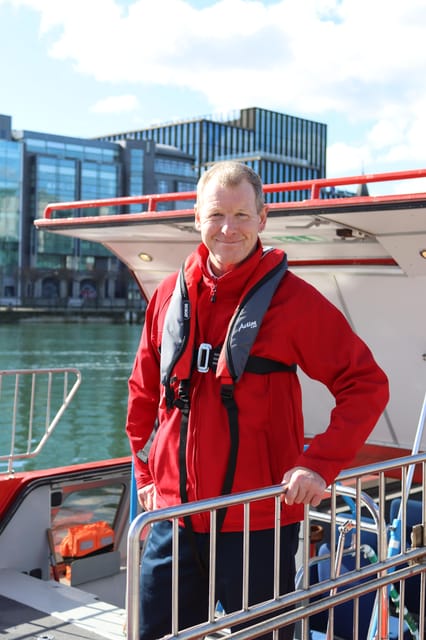
The guide makes or breaks a sightseeing cruise, and this one puts real weight on live commentary. The English-language narration covers dates and buildings, but it also includes stories, humor, local observations, and occasional urban myths.
Several guides receive especially warm mention by name. Gerry is praised for his history and easy manner, while Jerry is described as a strong storyteller. Lucy is noted for clear explanations that give plenty of information without overloading the group. Tony and Peter work together on some sailings, with Peter handling the main storytelling and Tony helping settle people aboard. The exact guide depends on your departure time, but these names give you an idea of the personal style you may encounter.
The best guides do not simply recite facts. They explain why the bridges matter, how the docks changed, and how Dublin’s story reaches from Viking settlement to present-day redevelopment. That approach suits you if you want orientation before exploring on foot.
The tone is generally light and conversational. That is useful in a compact tour because a dry lecture would make 45 minutes feel long. Instead, the humor keeps the pace moving. The trade-off is that live group commentary can be harder to hear if other passengers talk loudly. Sitting where you can hear the guide clearly matters, and it is worth asking the crew if you are unsure where to position yourself.
A few more boat days around the world worth a look
- Paris: 1-Hour Seine Cruise departing from the Eiffel Tower
★ 4.4 · 77,472 reviews - Istanbul: Bosphorus Dinner Cruise & Show with Private Table
★ 4.8 · 62,058 reviews - Budapest: Unlimited Prosecco, Beer and Aperol Spritz Cruise
★ 4.8 · 37,304 reviews - From Marrakech: Ouzoud Waterfalls Guided Hike and Boat Trip
★ 4.7 · 33,630 reviews
Why the 45-minute length works, and where it falls short
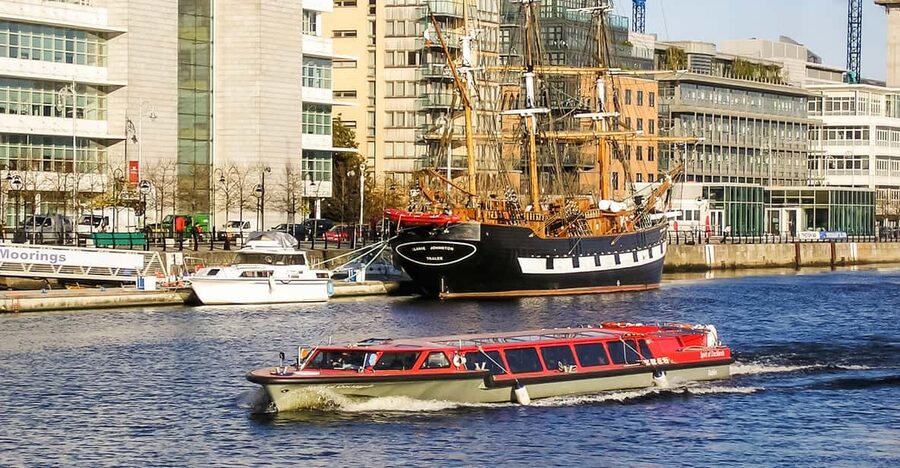
Forty-five minutes is long enough to see several major river sights without turning the cruise into a half-day commitment. I would use it early in a Dublin visit, when you want a broad sense of the city before deciding which districts deserve more time.
It also fits neatly between other activities. You can take the cruise, return to Custom House Quay, and continue on foot toward central Dublin or the Docklands. Since the boat returns to the same pontoon, you do not need to arrange transport back from another part of the city.
Still, the short duration limits the depth of each stop. The boat passes landmarks rather than offering extended time beside them. If you want detailed visits to the Jeanie Johnston, Custom House, or a museum, you will need separate admission and time on land.
The quick pace is also why the guide’s commentary matters so much. Without it, the cruise might feel like a simple loop along the river. With it, the same 45 minutes becomes a compact lesson in Dublin’s physical and political development.
Tides, weather, and what can change
The cruise is subject to availability and tidal conditions. This is not a minor technical note. Water levels affect how easily the boat moves along the river and how close it can pass beneath bridges.
At high tide, the bridges can feel surprisingly close to the top of the boat. That can add a little drama, but it may also affect which parts of the route are possible. The crew is expected to explain what can be covered on your sailing, and the route may be adjusted when needed.
If your selected date or time cannot operate as planned, the company will contact you to arrange another sailing. Keep that in mind if you are building a tightly timed day around the cruise.
Weather is another factor. The all-weather boat allows the activity to run in less-than-perfect conditions, and a rainy cruise can still be useful because the guide provides a strong sense of place. But the experience is most comfortable when the river is calm and the air is mild. Bring a layer, and do not plan on the boat as a guaranteed dry escape from Dublin weather.
There are no toilets on board, so use facilities before boarding. Toilets across the road are available according to the operating information. That small bit of planning matters during a short activity where leaving the boat is not convenient.
Is $23 a fair price?
At $23 per person, the cruise sits in the reasonable range for a guided Dublin activity. You are paying for a 45-minute boat trip, a captain, a live English-speaking guide, and a city overview that would be difficult to assemble from street level alone.
The value is strongest if you enjoy history and want orientation. The guide covers Vikings, canals, bridges, reclaimed land, port development, and the changing Docklands in one sitting. A self-guided walk could show you some of the same buildings, but it would not give you the same river-level view or continuous commentary.
The value is weaker if you want a long boat ride or a full tour of Dublin’s waterfront. Forty-five minutes goes quickly, and several people find themselves wishing the cruise lasted longer. You should book it for the combination of views and storytelling, not for a slow, extended sail.
There is also a useful flexibility benefit. You can reserve now and pay later, and cancellation is free up to 24 hours before departure for a full refund. That makes the activity easier to fit into an uncertain city schedule, although you still need to monitor any message about availability or tides.
Who will enjoy this Liffey cruise?
I would recommend the cruise to first-time visitors who want a quick introduction to Dublin’s layout. It is especially useful at the start of a stay because the river provides a simple line through the city, and the guide points out places you may later visit on foot.
Families may also like the format. Forty-five minutes is manageable, and the mixture of landmarks, boats, bridges, and stories gives younger passengers more to watch than a long indoor history talk. The all-weather design helps, though comfort still depends on the day.
It suits repeat visitors, too, if you want to see familiar parts of Dublin from a new angle. The Docklands and port views can add something even if you have already walked across the Ha’penny Bridge or visited Custom House.
The cruise is wheelchair accessible, making it a practical option for many visitors who want a city sightseeing activity without a long walking route. You should still arrive early for boarding instructions.
I would be more cautious about booking if your schedule is extremely tight, if you dislike live group commentary, or if you want guaranteed access to every part of the route. Tides can affect the sailing, and loud passengers may occasionally make the narration difficult to follow.
My practical booking advice
Choose a departure time that leaves room before and after the cruise. The trip itself lasts 45 minutes, but you should arrive 10 minutes early and allow a little extra time in case the crew needs to discuss tidal conditions.
Meet at the pontoon on the north side of the Liffey, at Custom House Quay by the Sean O’Casey Footbridge, opposite CHQ. Do not go to a generic city-center meeting point and assume the boat will find you. The riverfront location is clear once you know what to look for, but advance attention saves time.
If hearing the guide is important to you, sit where the live commentary carries clearly and avoid staying beside a loud group. The tour depends on spoken storytelling, so this small choice can change the experience.
I also suggest taking the cruise before visiting the Docklands on foot. The guide’s explanation of the district’s decline and renewal gives the later walk more meaning. You begin to see the area not as a collection of modern buildings, but as part of a much longer waterfront story.
Should you book the Dublin River Liffey Sightseeing Cruise?
Book it if you want a short, social, story-led introduction to Dublin. The price is fair, the departure point is central, and the combination of bridges, port views, Docklands, and local commentary gives you something a standard walking route cannot.
The strongest reason to go is the guide. Gerry, Jerry, Lucy, Tony, Peter, and other local guides bring humor and personality to the history, and the best sailings feel like a conversation with someone who cares about Dublin.
Skip it if you want a long cruise, a quiet private ride, or a guaranteed route unaffected by tides. Otherwise, this is a sensible 45-minute addition to a Dublin itinerary, especially on your first day or when the weather makes a short guided activity more appealing than a long walk.
FAQ
How long is the Dublin River Liffey sightseeing cruise?
The cruise lasts 45 minutes and returns to the same pontoon where it begins.
Where does the cruise depart?
All cruises leave from the pontoon at the Sean O’Casey Footbridge on the north side of the river, at Custom House Quay opposite the CHQ building.
How early should I arrive?
Arrive 10 minutes before your booked departure time to check in and receive instructions from the crew.
Is the cruise wheelchair accessible?
Yes, the activity is wheelchair accessible.
What language is the tour conducted in?
The live tour guide speaks English.
Can tides change the cruise route?
Yes. Sailings depend on tidal conditions, and parts of the route may change. If there is a problem with your selected date or time, the company will contact you about an alternative sailing.
Just added around the world
- Savannah: Riverboat Sunset Cruise★ 4.2 · 669 reviews
- Sarandë: Ionian Coast Hidden Beaches and Caves Boat Tour★ 4.9 · 549 reviews
- Sarandë: Boat Tour Turtle Cave Kakome & Krorez Snorkeling★ 4.9 · 286 reviews
- Sardegna: Tavolara Boat Tour with Snorkeling★ 4.9 · 921 reviews
- Sarandë: Boat Tour to Kroreza with Snorkel and free Umbrella★ 4.6 · 262 reviews
- Sarande: Boat Tour to Krorez with Snorkle&Drinks&Swimming★ 4.8 · 324 reviews
- Savannah: Buffet Dinner Cruise with Live Entertainment★ 4.2 · 875 reviews
- Saranda: Boat Tour to 7 Destinations with Beach Umbrella★ 4.8 · 530 reviews
Sightseeing Cruises, compared.



By Night Sightseeing Cruise with Welcome Drink
Read our review →
Daytime or Sunset Sightseeing Cruise & Audio Guide
Read our review →
City Archipelago Sightseeing Cruise with Guide
Read our review →
1-Hour Guadalquivir River Sightseeing Eco Cruise
Read our review →
Browse the lists this tour appears in