
REVIEW · MADEIRA
Funchal: Whale and Dolphin Watching Speed Boat Tour
Madeira’s Atlantic waters are the star here. You race out from Funchal in a compact speed boat, then slow down to watch dolphins, whales, and pilot whales in the wild. I like the small boat format, which gets you closer to the water and can cover ground quickly. I also like the land-based spotters, who help the crew find animals before you spend the whole trip searching.
The trade-off is simple: this is a brisk, open-water ride, not a calm cruise. You may get splashed, and rough conditions can lead to changes or cancellation. Still, with a maximum of 18 people, a marine biologist on board, and a second trip offered if no cetaceans are seen, this is a strong choice for wildlife fans who want action as well as information.
Key points at a glance
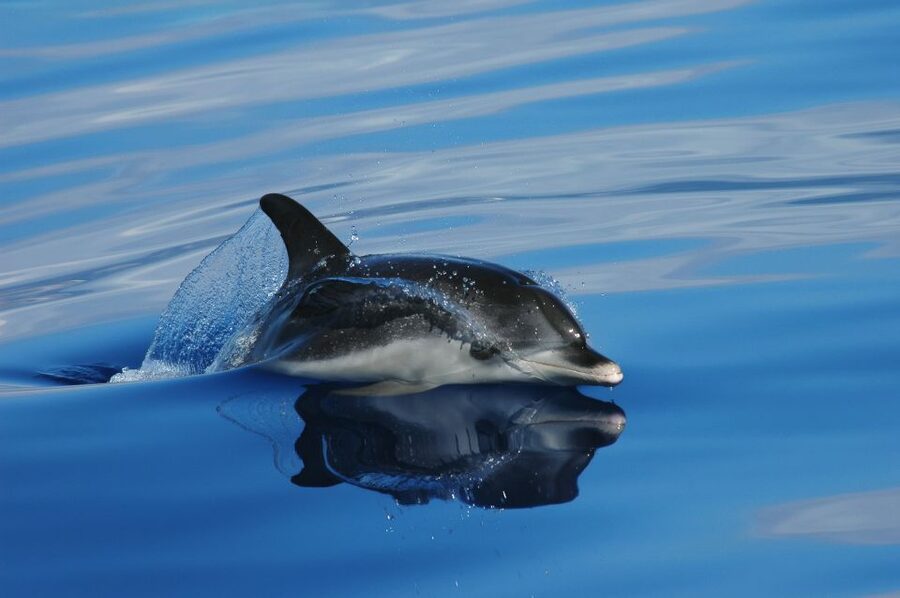
- Land-based spotters help find wildlife: The boat can head toward known sightings rather than searching blindly.
- Up to four species in one trip: Sightings vary, but the tour may include dolphins, whales, pilot whales, and other cetaceans.
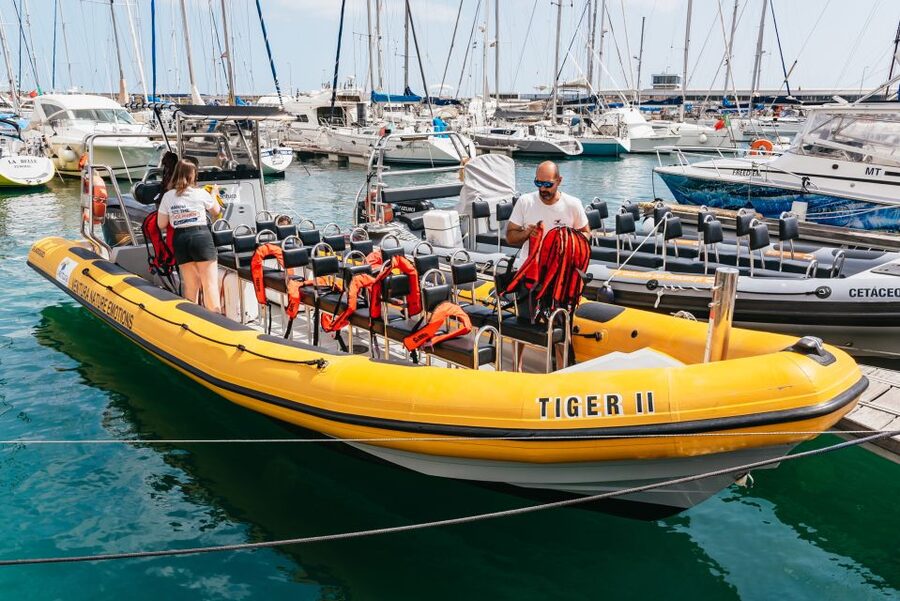
- Small speed boat, maximum 18 people: You stay close to the water and move faster than a large sightseeing boat.
- Marine biologist guides the outing: Guides such as Felipe, Francisca, Ana, Dominique, and Raquel have helped identify species and explain their behavior.
- A free second trip protects against bad luck: If you see no cetaceans, you can return for another outing.
- Plan for wind and spray: Bring a windbreaker, wear comfortable clothes, and keep your camera protected.
Leaving Funchal Marina from Pier 8
The tour starts at the Ventura Nature Emotions kiosk at pier 8 in Funchal Marina. This is a convenient base if you are already spending time in Funchal, and the trip returns to the same place after roughly two and a half hours.
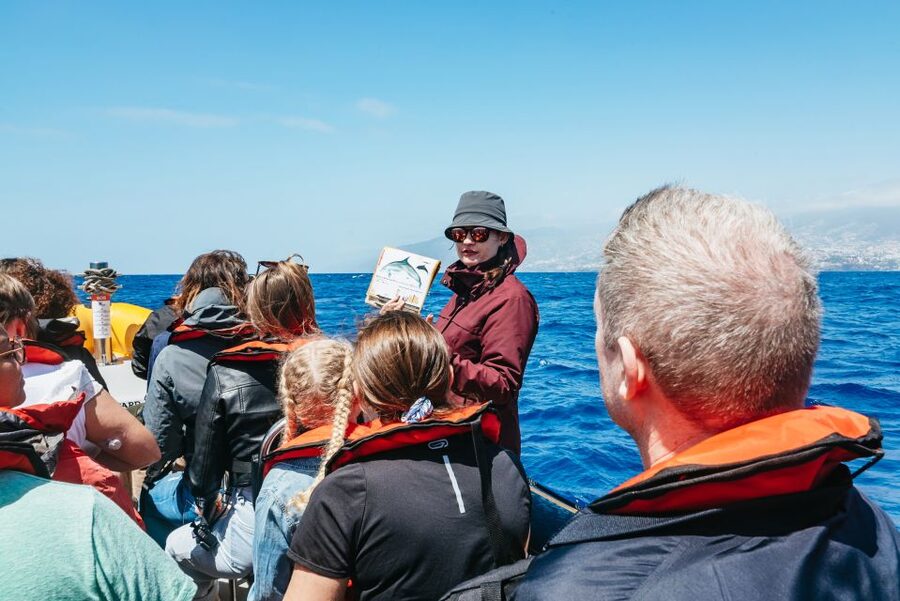
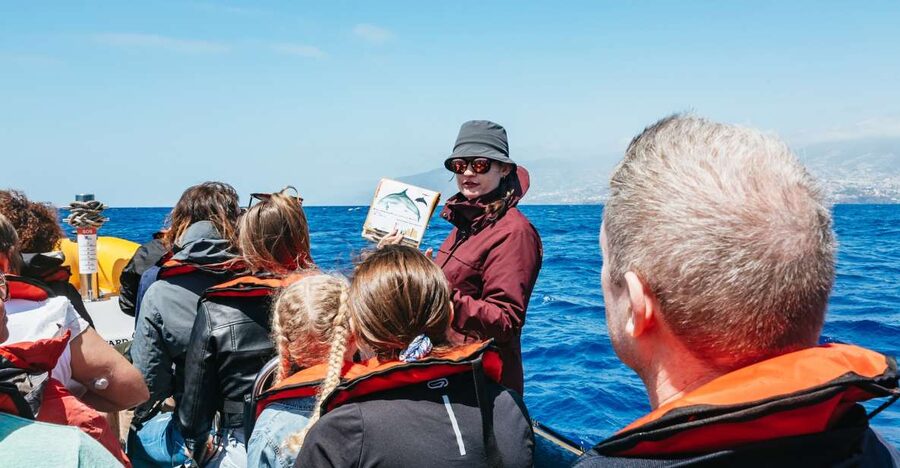
Before setting off, the crew gives you an educational briefing. You learn the basic safety rules, receive a life jacket, and get an introduction to the trip ahead. That short briefing matters on a fast boat. It tells you how to sit, how to stay secure, and what to expect once the skipper opens the throttle.
The group size makes a real difference. The boat carries no more than 18 people, so you are not looking over a crowd several rows deep. The skipper can give clear directions, and the guide can point toward a fin, blow, or splash without competing with a large group.
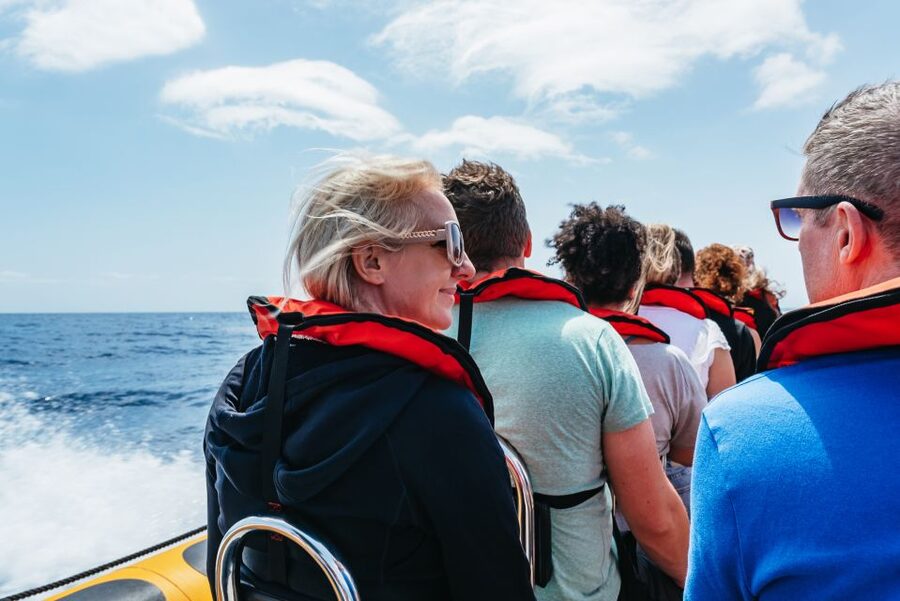
You should arrive ready for an outdoor activity, not a polished harbor cruise. Wear comfortable clothes and bring a windbreaker, sunglasses, and a camera. Smoking is not allowed. The boat sits close to the sea, and spray is part of the deal, so avoid bringing anything you cannot risk getting wet.
More Dolphin Watching Trips in Portugal
- From Funchal: Ecological Catamaran Dolphin Whale Watching
★ 4.5 · 8,204 reviews - Albufeira: Benagil Caves & Dolphin Watching Speed Boat Tour
★ 4.6 · 6,316 reviews - Funchal: Dolphin and Whale Watching Catamaran Cruise
★ 4.5 · 5,697 reviews
The ride across Madeira’s Atlantic waters
The speed boat is not just transportation to the wildlife. For many people, it becomes a major part of the experience. You get the thrill of moving quickly across the water, with Madeira’s cliffs and coastline opening up from a low sea-level viewpoint.
I like this perspective because the island looks different from offshore. Instead of viewing the coast from a road or lookout, you see the rock faces, folds, and sea cliffs from below. One trip included a memorable view of a famous sea cliff, and the boat can travel far enough along the coast to give you a broader look at Madeira.
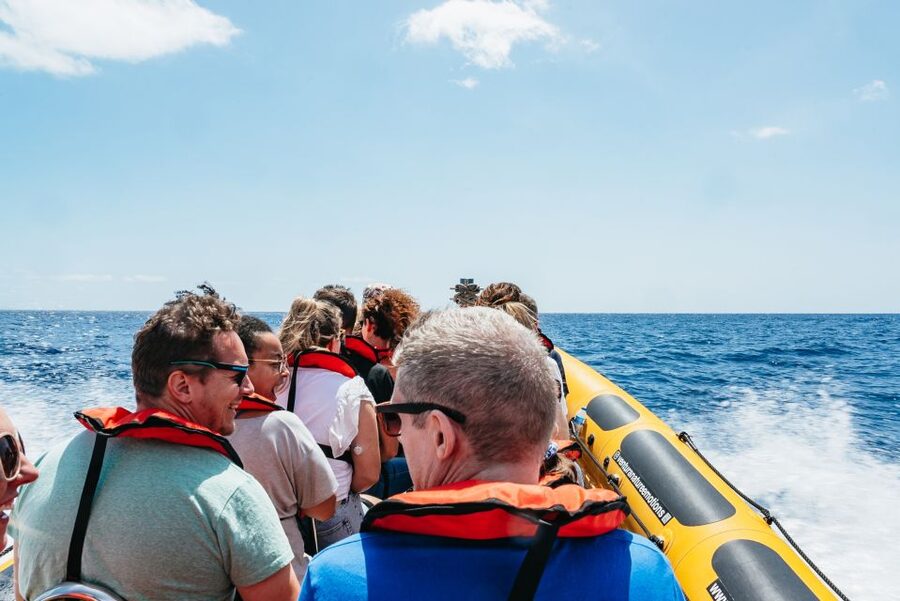
The ride can be lively. Several people found the speed and turns to be a highlight, while others noted that the boat can splash you heavily. One useful detail is that the padded seats are designed to keep you secure, but the bow receives the most movement. If you prefer a gentler ride, you may find a seat farther back more comfortable.
A speed boat can also reduce the rolling motion that causes seasickness on larger boats. That does not mean you are guaranteed a smooth trip, especially if the ocean is active, but the smaller, faster craft may suit you better than a wide catamaran that sways from side to side. If you are prone to motion sickness, consider your usual tolerance before booking.
Finding dolphins and whales with help from shore
Wildlife watching depends on conditions, animal movement, and luck. The crew improves the odds by working with lookouts on land. These spotters watch the water and relay information to the boat, helping the skipper head toward active areas.
That system is valuable because the ocean is vast and a whale can surface only briefly. Rather than spending the entire outing scanning empty water, the crew has another set of eyes from the coast. The boat’s speed then helps it reach sightings in less time.
The tour aims to show one to four species during a trip, though no exact mix can be promised. You might see several groups of dolphins, a pod of pilot whales, or a combination of dolphins and larger whales. The range of sightings is part of the appeal, but you should keep your expectations realistic. Wild animals do not follow a timetable.
The operator guarantees a cetacean sighting in the practical sense that if you see none, you are offered a second trip at no cost. That is a useful safety net, especially if your schedule allows you to return. It does not guarantee a particular species, close approach, or number of animals.
Watching dolphins at water level
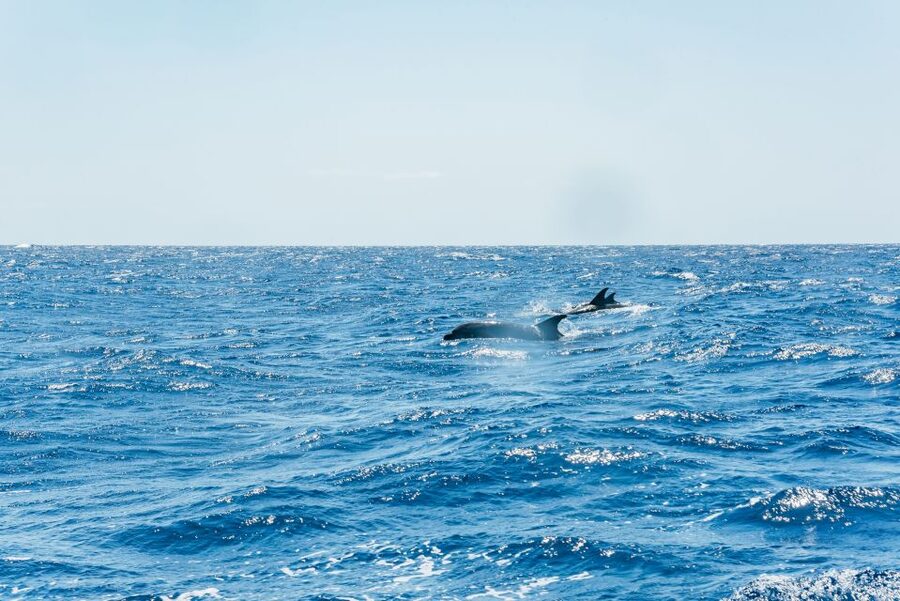
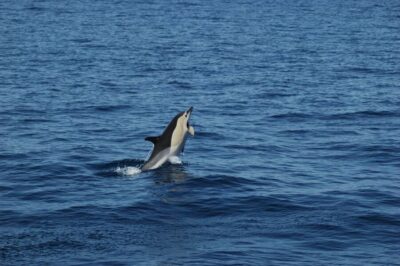
Dolphins are often the most active part of the trip. They may travel in groups, change direction quickly, and appear beside or ahead of the boat for only a moment. The guide helps by telling you where to look and explaining features that separate one species from another.
This is where the small boat feels especially useful. You are lower to the water, so a dolphin beside the hull can feel remarkably close. At the same time, the low viewpoint means you need to keep watching. A phone screen can make you miss the animal that appears just outside the frame.
I would keep your camera ready but spend most of the time looking with your own eyes. Dolphins move quickly, and the best moment may last only a few seconds. Several species can appear in the same outing, and the guide may explain their markings, body shape, or behavior as the boat watches from a respectful position.
The crew’s approach to the animals is an important part of the experience. The aim is to observe cetaceans in their natural setting, not to turn the encounter into a performance. The boat may slow down, wait, and reposition so you can watch without treating the animals like targets.
More Speedboat Tours in Portugal:
- Portimão: Benagil Caves Speed Boat Tour with Sunset Option
★ 4.8 · 11,663 reviews - Albufeira: High-Adrenaline Jet Boat Ride
★ 4.8 · 780 reviews - Pico Island: Azores Whale & Dolphin Watching on Zodiac Boat
★ 4.8 · 408 reviews - From Calheta: Whale and Dolphin Watching RIB Boat Tour
★ 4.9 · 298 reviews
The chance to see whales and pilot whales
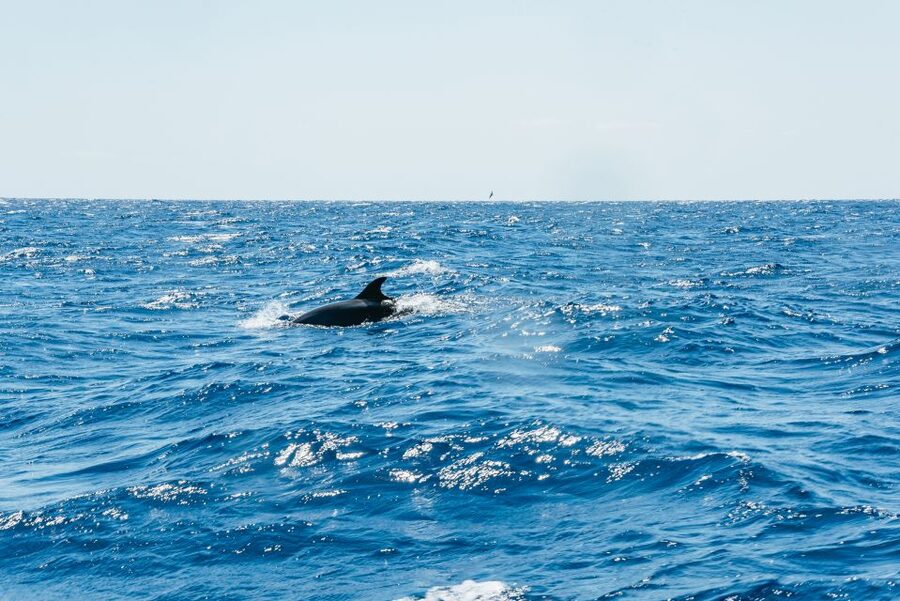
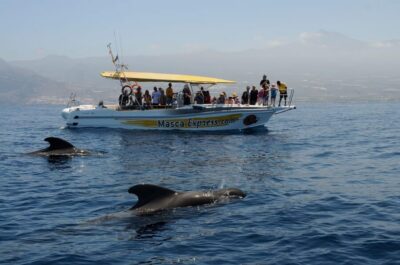
Whales require more patience and more luck. They may surface farther from the boat, stay down for periods of time, or appear only briefly. You could see sperm whales, pilot whales, or other large cetaceans, but the exact species depends on what is in the area that day.
Some outings have included multiple groups of pilot whales. Other lucky trips have seen sperm whales, including a particularly large individual. One memorable sighting involved three whales and a calf, which shows how varied the day can be. These moments are not standard promises, but they are possible rewards for heading into open water.
The guide’s role becomes even more useful with whales. A large animal at the surface can still be hard to identify when you are looking at it from a moving boat. The marine biologist or naturalist guide explains what you are seeing, points out the direction of the next surfacing, and helps you understand the animal rather than simply chase a photograph.
The crew also seems alert to the wider marine setting. On one outing, the team stopped briefly to collect a large piece of floating rubbish. That small action does not turn the trip into a conservation course, but it gives you a clear sense of the care expected on the water.
A guide who adds more than simple identification
This is not a trip where the skipper merely points at a fin. A marine biologist or naturalist guide travels with the group and provides information in Portuguese or English. Audio guidance is also available in those languages.
Several guides have received especially warm praise for their manner and explanations, including Felipe, Francisca, Andrei, Ana, Dominique, and Raquel. You should not assume a specific guide will lead your departure, but the team has a strong record of combining clear instructions with useful natural history.
The best guides explain what to look for before the animal surfaces. They may describe the body shape, markings, or behavior, then tell you which direction to watch. That preparation helps you notice more than you would on your own.
The information also adds value to the sightings. Seeing dolphins is exciting, but learning why a group moves together or how to distinguish species gives the encounter more meaning. The tone is practical rather than academic, with room for questions and a little humor.
What the $56 price includes
At $56 per person, this tour sits in a reasonable range for a two-and-a-half-hour marine wildlife trip, especially if you value speed, a small group, and a specialist guide. You are paying for the boat, skipper, experienced crew, marine biologist or naturalist guide, land-based spotting support, insurance, and life jackets.
The price also includes something a larger, slower boat may not provide: a fast return to an active sighting area. A speed boat can cover more water in less time, which may improve your chances of finding several groups during the outing.
The value depends on what you want. If your main goal is a quiet ride with lots of room to stretch out, a larger vessel may suit you better. If you want a more physical ride, a low viewpoint, and a better chance of moving quickly between sightings, this option makes good sense.
The free second trip also matters. If the crew sees no cetaceans, you are offered another tour. You still need enough time in Madeira to use that option, but it reduces the risk of paying for a wildlife trip that produces no wildlife.
Who should book this speed boat tour?
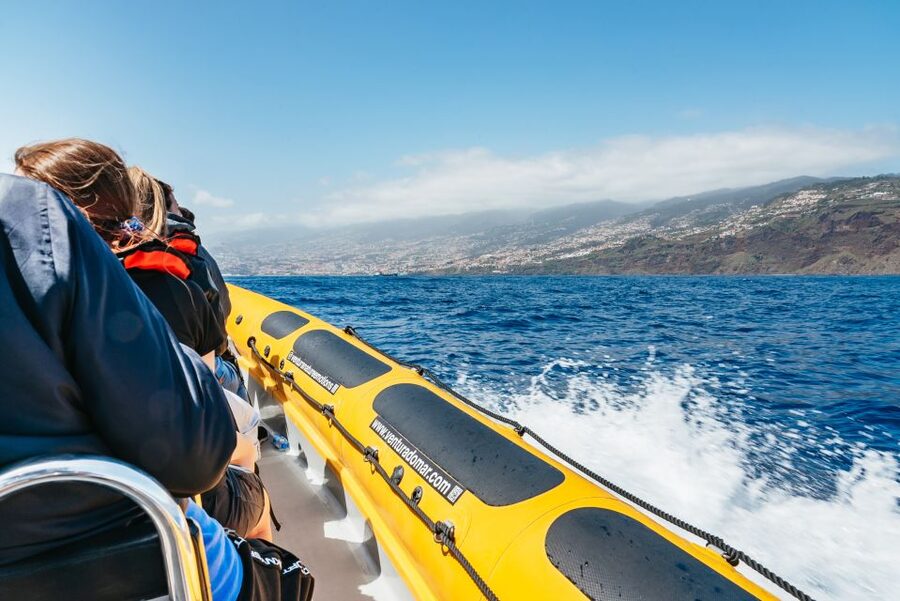
I would recommend it most strongly to you if you enjoy nature but also want some speed and excitement. It suits couples, families with older children, and active visitors who would rather be close to the sea than seated high above it.
It is also a good fit if you are comparing a speed boat with a catamaran. The speed boat is closer to the water, usually more agile, and capable of covering a wider area. It may also produce less side-to-side rolling than a larger boat, though it can hit waves more sharply and create more spray.
This is not suitable for pregnant women, people with back problems, people with mobility impairments, or wheelchair users. The operator also warns that weather and minimum group size can lead to changes or cancellations, so avoid placing this activity on the one day when your schedule has no flexibility.
You can cancel up to 24 hours before departure for a full refund, and reserve now while paying later. Check the available start times before booking, since the exact departure schedule can affect how you arrange the rest of your day.
Smart ways to get more from the outing
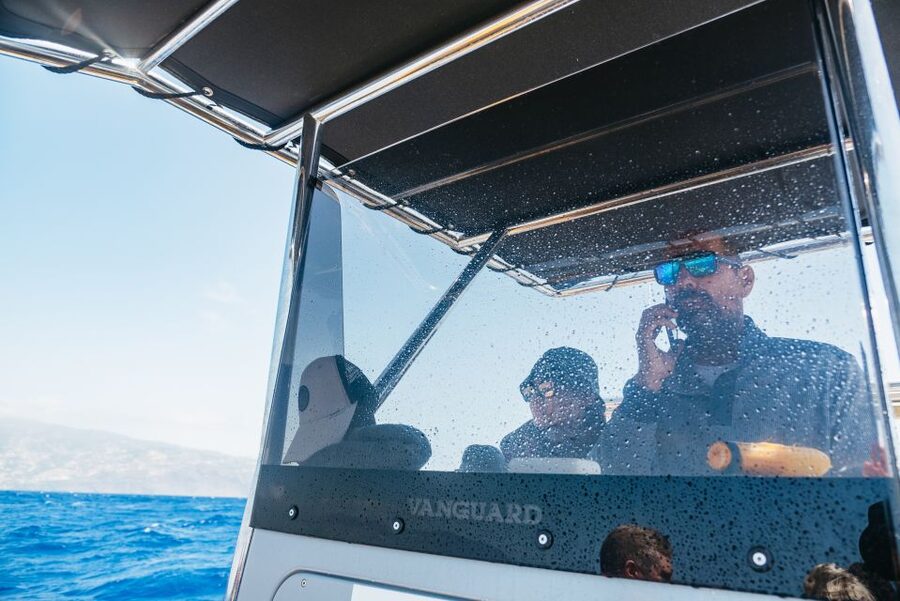
Keep your camera accessible, but use a secure case or waterproof protection. You may get sprayed, especially toward the front, and salt water is hard on phones and cameras.
Wear layers rather than heavy clothing. The marina may feel mild, but wind offshore can make the ride cooler. Sunglasses help with glare, while a windbreaker gives you useful protection from spray.
Pay attention during the briefing. On a fast boat, comfort and safety depend on following the crew’s directions. Sit securely, watch where the guide points, and do not spend the full trip staring at your phone.
If you hope to see whales, allow room in your itinerary for a second attempt. Dolphins may appear more readily, while whales need a favorable combination of location, timing, and luck. The operator’s return-trip policy is most useful when you have time to use it.
Should you book the Funchal whale and dolphin tour?
Yes, if you want a wildlife trip with real movement and a small-group feel. The strongest reasons are the fast boat, land-based spotters, marine biologist guide, and backup trip if no cetaceans appear.
I would skip it if you need a fully smooth ride, require wheelchair access, have back problems, or want a dry and quiet cruise. For everyone else, $56 buys a lively look at Madeira’s coast and a well-supported chance to see dolphins and whales in the wild. The animals remain unpredictable, but the crew gives you a fair shot and helps you understand what you see.
FAQ
Where does the whale and dolphin tour start?
It starts at the Ventura Nature Emotions kiosk at pier 8 in Funchal Marina.
How long does the tour last?
The guided speed boat tour lasts about 2.5 hours and returns to the Funchal Marina.
How much does the tour cost?
The listed price is $56 per person.
How many people can join the boat?
The boat has a maximum capacity of 18 people, keeping the group relatively small.
What animals might I see?
You may see dolphins, whales, pilot whales, and other cetacean species. Sightings can vary between one and four species per trip.
Are whale or dolphin sightings guaranteed?
If no cetaceans are seen during your tour, you are offered a second trip free of charge. A particular species or close encounter is not guaranteed.
Is a marine biologist included?
Yes. A marine biologist or naturalist guide accompanies the tour and helps identify the animals and explain local marine life.
What languages are available?
Live guiding and audio guidance are available in Portuguese and English.
What should I bring?
Bring a windbreaker, sunglasses, a camera, and comfortable clothes. Expect possible spray from the boat.
Who should not take this tour?
The activity is not suitable for pregnant women, people with back problems, people with mobility impairments, or wheelchair users.
More Whale Watching Trips in Portugal
- Azores: Whale Watching & Islet Boat Tour w/ Marine Biologist
★ 4.7 · 2,945 reviews - Funchal Bay: Dolphin & Whale Watch Luxury Catamaran Cruise
★ 4.2 · 2,684 reviews - Funchal: Dolphin and Whale Watching by Luxury Catamaran
★ 4.5 · 1,709 reviews - Funchal: Dolphin and Whale Watching Sailing Trip
★ 4.6 · 1,325 reviews
Just added around Portugal
- São Miguel: Glass Bottom Boat Tour with Snorkeling★ 4.7 · 633 reviews
- São Miguel: Whale-Watching Cruise with Marine Biologist★ 4.6 · 1,311 reviews
- From Faro: Catamaran Boat Trip to Deserta Island with Stop★ 4.6 · 636 reviews
- Ria Formosa: Armona and Culatra Islands 3-Hour Boat Tour★ 4.7 · 407 reviews
- Douro Valley: Tour with Wine Tastings, Lunch, and Boat Ride★ 4.8 · 821 reviews
- Porto: Luxury Yacht Tour of the 6 Bridges and Douro Estuary★ 4.9 · 521 reviews
- Porto: Aveiro, Cruise, Costa Nova & Capela da Pedra Full Day★ 4.6 · 1,039 reviews
- Porto – Régua – Porto Upstream Douro Cruise & Tour★ 4.2 · 729 reviews
Whale Watching, compared.
Eco-Yacht Whale and Dolphin Watching and Swimming
Read our review →
Whale & Dolphin Eco-Cruise with Snacks & Drinks
Read our review →
Dolphin & Whale Watching Cruise with Swim Stop
Read our review →Browse the lists this tour appears in