
REVIEW · REYKJAVIK
Reykjavik: Whale and Puffin Watching RIB Boat Tour
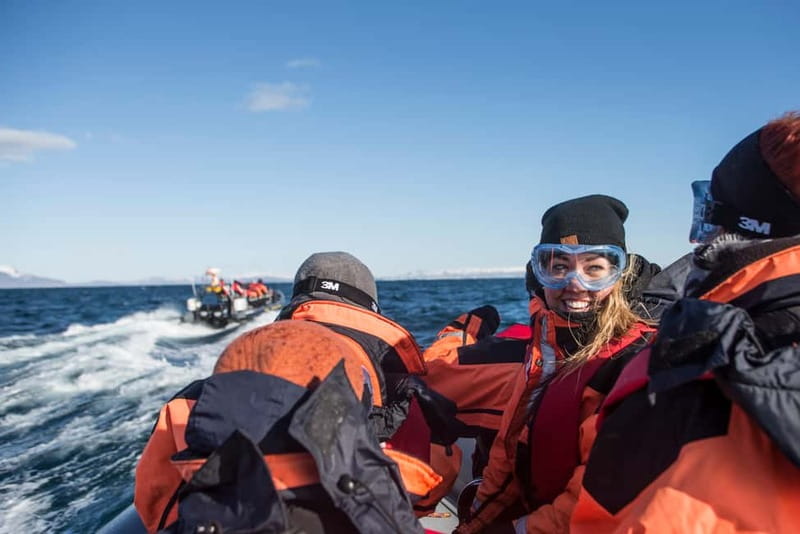
The best part of this two-hour RIB tour is the mix of wildlife search and speed. You leave Reykjavik’s Old Harbour in a small, stable boat, race across a wider patch of water, then slow down for puffins, dolphins, and whales. On the way home, Harpa Concert Hall and the Sun Voyager sculpture give you a fine city view from the sea.
I like the small group of up to 12 and the marine biology guide, who can explain animal behavior instead of simply pointing at a fin. I also like that the crew supplies warm overalls, gloves, and goggles, then shares the photos they manage to take. The catch is simple: this is a bouncy, windy ride, and wildlife never follows a timetable.
Key points to know
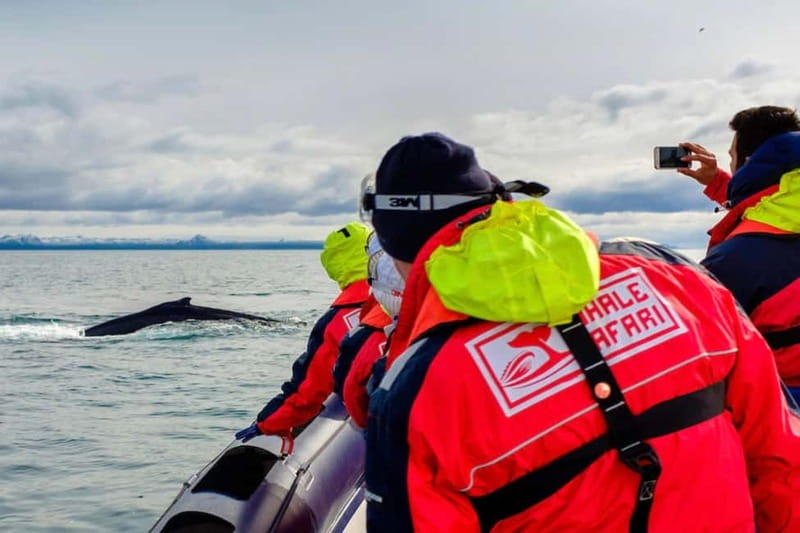
- Fast, nimble RIB boat: Cover more water than a large sightseeing boat and get closer to wildlife without approaching carelessly.
- Seasonal puffins: Puffins are expected from April 20 through August 20, with the strongest chance during the main summer months.
- Marine biology guidance: Guides such as Maya, Alex, Emily, Max, and Sam have provided clear wildlife and geography commentary on different departures.
- Real exposure to Icelandic weather: Waterproof outerwear is supplied, but you should still wear warm layers and sturdy shoes.
- Wildlife can be excellent: Sightings have included humpback and minke whales, white-beaked dolphins, harbour porpoises, puffins, and many seabirds.
- A thrilling ride, not a calm cruise: Comfortable shock-absorbing seats help, but the boat can still bounce hard, especially near the front.
Leaving Reykjavik’s Old Harbour
You meet at the ticket office in the Old Harbour at least 30 minutes before departure. That early arrival matters because you need time to check in, sign the waiver, and get fitted with the supplied gear.
The harbor is an easy starting point for a day in central Reykjavik. It also gives you a quick city view before the boat heads into open water. As you pull away, the waterfront changes from working harbor to postcard scene, with Harpa Concert Hall and the Sun Voyager sculpture helping you get your bearings.
This is not a large ferry with an indoor cabin, café, and onboard toilet. There is no toilet on the RIB, and food is not provided. Plan accordingly before you leave the harbor.
The crew supplies warm overalls, gloves, and goggles. Several departures have also included hats or neck coverings, and one participant received a neck gaiter to keep. The outer layer helps block spray and wind, but you should still wear a warm base layer, a fleece or insulated jacket, and sturdy hiking shoes.
More Speedboat Tours in Iceland:
- Reykjavik: Whale Watching Tour by RIB Boat
★ 4.7 · 393 reviews - Portimão: Benagil Caves Speed Boat Tour with Sunset Option
★ 4.8 · 11,663 reviews - Albufeira: Benagil Caves & Dolphin Watching Speed Boat Tour
★ 4.6 · 6,316 reviews
Why the RIB changes the whale search
A RIB, or rigid inflatable boat, sits close to the water and can move quickly between possible wildlife areas. That gives the captain more room to search during a two-hour trip. A larger boat may offer more indoor shelter, but the RIB can reach places that are less practical for a big vessel.
The boat has comfortable seats designed to reduce the shock from the waves. That does not turn the ride into a smooth lake cruise. You will feel the sea, particularly at the bow, and the captain may use the boat’s speed as part of the fun.
The crew gives safety instructions before departure and checks on the group during the ride. Sit as directed and hold your position. If you want the roughest, most exciting ride, the front seats offer it, but they also take the most movement. If you prefer a steadier trip, the back may suit you better.
You should be comfortable with fast movement, spray, and repeated bumps. The minimum age is 10, the minimum height is 145 centimeters, and the maximum weight is 140 kilograms. The experience is not suitable for pregnant women, people with mobility impairments, or anyone over 75.
Puffin islands before the open-water search
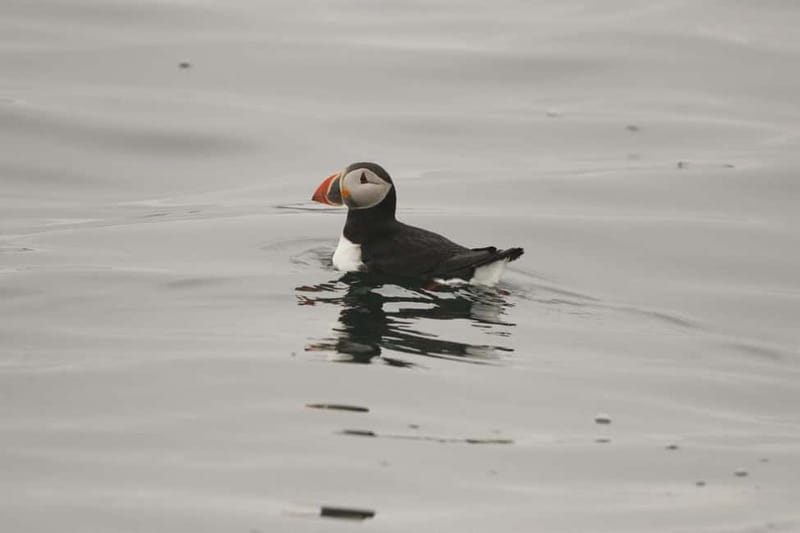
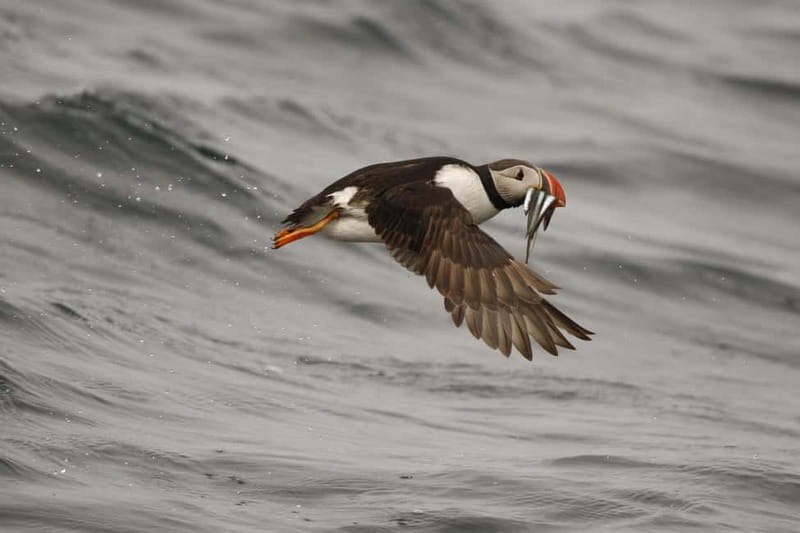
During puffin season, the boat heads toward nearby islands where puffins gather in their natural setting. The official season runs from April 20 to August 20, within the wider operating period of April 1 through October 31.
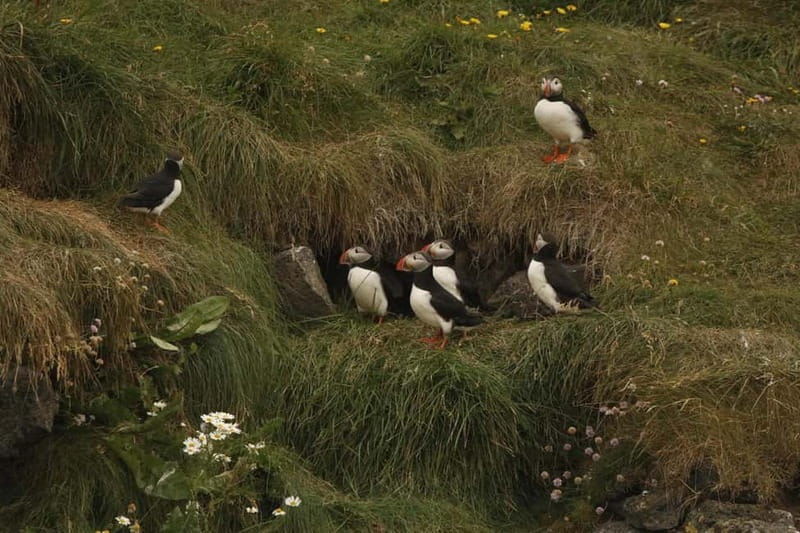
Puffins are a major reason to choose this outing in late spring or summer. You may see them perched on the water, flying low, or gathered around nesting areas. Their presence is seasonal, though, and the end of the season can bring fewer birds or none at all. One late-August departure still found puffins, while another found that they had already left.
The islands also give you a chance to see seabirds and take in the coast before the boat heads farther out. If puffins are your main goal, book during the heart of the season rather than treating August 20 as a guarantee. The guide can explain what you are seeing and why the birds use these islands.
Do not expect a quiet, close-up bird photography trip. The boat is moving, the wind is strong, and puffins may remain far from the RIB. The ride is better for seeing wildlife in its setting than for collecting perfect photographs.
Finding whales, dolphins, and porpoises
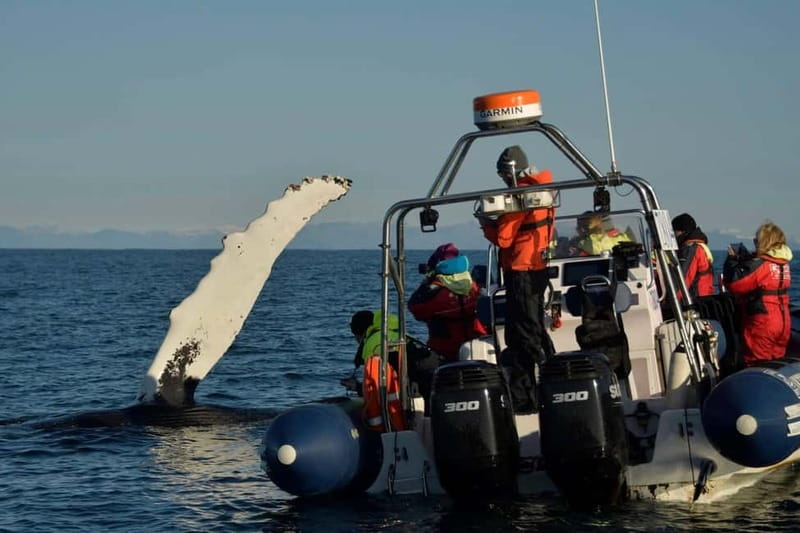
After the island visit, the captain searches a broader area for whales and dolphins. The crew uses local experience and the guide’s eye to watch the water for blows, backs, tails, and movement at the surface.
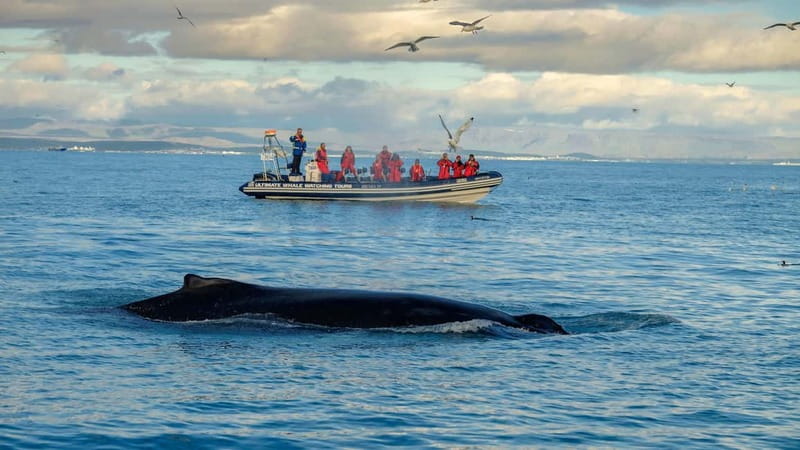
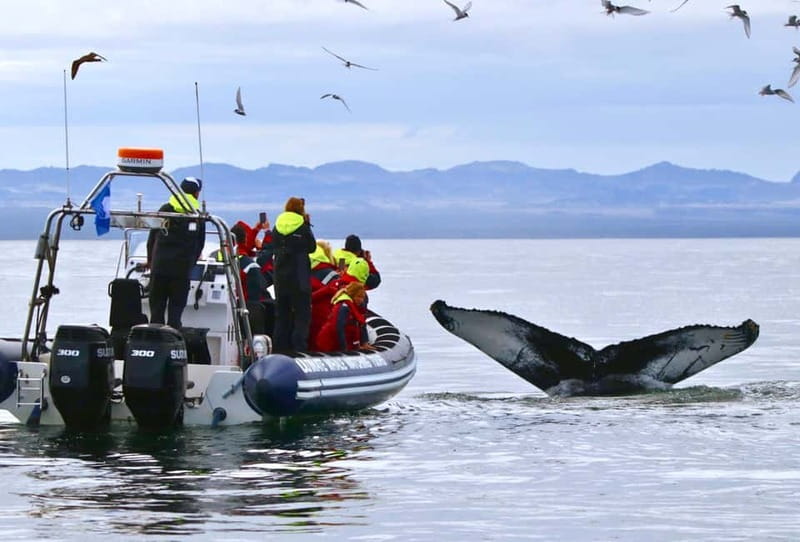
Sightings have included minke whales and humpback whales, plus white-beaked dolphins and harbour porpoises. Some departures have seen several humpbacks, while others have found only one whale. A few especially fortunate trips have recorded whales close to the boat, a breaching humpback, or a mother and young whale traveling nearby.
That range is worth keeping in mind. You are paying for the boat, the search, the guide, the equipment, and the chance to see wild animals. You are not buying a guaranteed whale performance. Even during summer, whales may stay below the surface or appear only briefly.
The RIB gives you a useful advantage when an animal surfaces. Because you are close to the water, a whale’s blow, back, or tail can feel remarkably near. Some participants have heard animals exhale as they surfaced. The crew still needs to keep a respectful distance, and the most responsible encounter may not be the closest one.
The guide’s role adds real value here. Guides with marine biology training, including people such as Max, Emily, and Maya on different trips, can explain behavior, species, and the geography around Reykjavik. The best part is not only seeing a whale but understanding why it surfaced, how it moves, and what else lives in the bay.
More Whale Watching Trips in Iceland:
- Reykjavík: Whale Watching and Marine Life Cruise
★ 4.6 · 9,838 reviews - Reykjavík: Whale Watching Cruise on the Amelia Rose Yacht
★ 4.5 · 2,911 reviews - Reykjavik: Whale Watching and Dolphin Watching Yacht Cruise
★ 4.5 · 707 reviews - Reykjavik: Whales and Puffins Express Cruise Combo Tour
★ 4.4 · 552 reviews
What the two-hour itinerary feels like
The first part is usually a quick ride away from the harbor and out toward the islands. This is where you learn how the RIB handles the water. It can feel like a small amusement-park ride, though the sea decides how rough it gets.
Near the puffin islands, the pace changes. The guide watches the birds and points out other seabirds. You may spend a short time observing the colonies before the captain opens the throttle again and begins the whale search.
The open-water section is the least predictable and often the most exciting. The crew may cover a broad area, stop to watch an animal, then move again. You may see dolphins racing beside the boat, porpoises surfacing in a group, or a whale showing its back and tail.
The final run brings you back along Reykjavik’s shore. Harpa is especially striking from the water, and the Sun Voyager looks different when seen against the bay rather than from the city promenade. This return section gives the trip a pleasant finish, even if the wildlife sightings are modest.
Two hours is a useful length. It is long enough to reach wildlife areas but short enough that you are not committed to a full day on a small boat. If you tend to get cold, tired, or seasick, the shorter format is easier to manage than a much longer expedition.
The guides, the captain, and the photos
The guide and captain shape the experience. The guide handles wildlife interpretation and spotting, while the captain manages speed, safety, and positioning. Past departures have included guides named Maya, Alex, Sam, Emily, Max, Matt, and Kylie, though the person assigned to your trip may be different.
The strongest guiding combines humor, clear safety instructions, and patience. A good guide gives the group time to watch instead of treating every distant bird as a major sighting. The marine biology background is particularly useful when several species appear in a short period.
The crew also takes photographs when conditions allow and sends them to you after the trip. This is a genuine benefit because holding a phone steady on a moving RIB is difficult. The ride can be too rough for sharp video, especially near the front, so let the crew handle some of the picture-taking.
You should still bring your camera or phone if you want to try. Just protect it from spray and do not let photography distract you from watching the animals. The clearest memory may be a whale surfacing beside the boat, not a blurry frame caught during a hard bounce.
Weather, clothing, and comfort
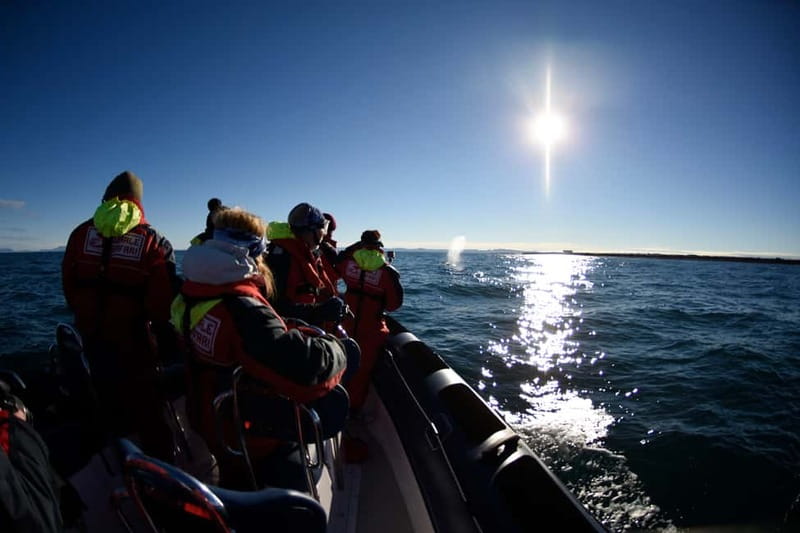
Iceland’s weather can shift quickly, and the bay may feel cold even when Reykjavik feels mild. Rain, hail, wind, and bright sun have all been part of different departures. The supplied waterproof gear is important, not optional.
Wear hiking shoes or other secure footwear. High heels are not allowed, and ordinary fashion shoes are a poor match for a wet, moving boat. Add warm layers underneath the supplied suit, plus your own hat if you have one.
Bring sunglasses if possible. The goggles supplied by the operator protect your eyes from wind, but sunglasses can be useful in brighter conditions. Gloves are provided, though a second pair of warm gloves may help if your hands chill easily.
The boat seats are designed for comfort, but this is still a physical activity. People with mobility limits may find boarding and the bumpy ride difficult. Pregnant people and those who are not comfortable with sudden movement should choose a calmer harbor or wildlife outing.
Is $200 a fair price?
At $200 per person, this is not a budget activity. The value depends on what you want from a whale trip.
You are paying for a small group, a fast boat, trained staff, safety equipment, warm protective clothing, and a two-hour search that can cover more water than a slower craft. The included photographs add value, especially if the crew captures a whale or dolphin close to the boat.
The price is easier to justify if you want the ride itself as much as the wildlife. Several departures have produced memorable combinations of humpbacks, minke whales, dolphins, porpoises, puffins, and seabirds. Other trips have had fewer sightings, which is always possible with wild animals.
A larger boat may be a better value if you want indoor shelter, a toilet, more room to move around, or a gentler ride. The RIB is the better choice if you want speed, a small group, close views, and the feeling of being on the water rather than looking at it through a large vessel’s windows.
Free cancellation is available up to 24 hours before departure, and you can reserve while paying later. Weather can force schedule changes. The operator has moved trips and communicated with people when conditions were poor, so keep some flexibility in your Reykjavik plans.
Who should book this RIB tour?
I would choose it for active adults, families with children who meet the age and height rules, wildlife fans, and anyone who wants a strong sense of motion. It works especially well as a two-hour break between city sights, since it leaves from the Old Harbour and returns there.
It is also a good choice for people who want expert explanation without joining a large group. A dozen people is small enough for the guide to check on the group and answer questions.
I would not choose it for a calm sightseeing cruise, serious wildlife photographers, or anyone who dislikes cold, wind, and bouncing. You should also avoid it if a guaranteed puffin or whale sighting is essential to your plans.
My verdict: book it if the ride matters too
Book this tour if you want a lively trip that combines Reykjavik views, seasonal puffins, and a serious search for whales and dolphins. The small RIB, marine biology guidance, supplied gear, and shared photographs make the $200 easier to defend than a simple harbor cruise.
Go in with the right promise to yourself: you are entering wild Icelandic water, not an animal theater. If you can accept cold fingers, spray, bouncing seats, and the possibility of limited sightings, this can be one of your trip’s most memorable hours. If you need shelter and smooth water, choose a larger boat instead.
FAQ
Where does the whale and puffin tour leave from?
The tour leaves from the ticket office at Reykjavik’s Old Harbour.
How early should I arrive?
You should arrive at least 30 minutes before your scheduled departure.
How long does the tour last?
The RIB tour lasts two hours.
When can I see puffins?
Puffin season is listed as April 20 through August 20. Puffin sightings are seasonal and are not guaranteed.
What wildlife might I see?
Possible sightings include puffins, humpback whales, minke whales, dolphins, harbour porpoises, and other seabirds.
Is the tour conducted in English?
Yes. The live guide speaks English.
How many people are in the group?
The tour is limited to 12 participants.
What clothing and equipment are provided?
The operator provides warm overalls, gloves, goggles, and all necessary safety equipment.
What should I bring?
Bring hiking shoes, weather-appropriate clothing, and a signed waiver. Sunglasses and extra warm layers may also be useful.
Who cannot join the tour?
The tour is not suitable for children under 10, people under 145 centimeters, people over 140 kilograms, pregnant women, people with mobility impairments, or people over 75.
Just added around Iceland
- Reykjavik: Whale Watching Tour by RIB Boat★ 4.7 · 393 reviews
- Reykjavik: Whales and Puffins Express Cruise Combo Tour★ 4.4 · 552 reviews
- Reykjavik: Whale Watching and Dolphin Watching Yacht Cruise★ 4.5 · 707 reviews
- Reykjavik: Best Value Whale Watching Boat Tour★ 4.5 · 300 reviews
- Reykjavik: Small Group Golden Circle from Cruise Terminal★ 4.6 · 293 reviews
- Húsavík: Whale-Watching Cruise and Puffins Guided Tour★ 4.6 · 444 reviews
- From Reykjavik: Northern Lights Sightseeing Cruise★ 4.3 · 438 reviews
- From Akureyri: Lake Mývatn and Godafoss Cruise Ship Day-Trip★ 4.7 · 269 reviews
Whale Watching, compared.
Eco-Yacht Whale and Dolphin Watching and Swimming
Read our review →
Whale & Dolphin Eco-Cruise with Snacks & Drinks
Read our review →
Dolphin & Whale Watching Cruise with Swim Stop
Read our review →Browse the lists this tour appears in